Many pest control “solutions” are far more harmful than the pests they aim to get rid of. Here are some of the most effective, safe and humane methods. Please note that even natural foods and oils can be highly toxic to pets, so pet owners should use with caution and check for any toxicity.
General Advice
Prevention
Seal food. Use boxes, bags and the fridge. Use sealed containers for food scraps. Ensure garbage bags aren’t left open.
Clean away all traces of food.
Seal openings such as holes or cracks where the pests can come through, but make sure you don’t trap any of the creatures inside an enclosed space.
Keep windows and doors closed.
Don’t leave areas of standing water (various creatures such as ants and cockroaches may survive by drinking the water).

Silicon lid over plug
Keep drains and plug holes covered. Using silicone cup covers* is one way. This can stop mosquitoes from laying eggs in the water, save insects from being washed away when the tap is running, stops them from drinking the water and possibly from coming in.
(Henceforth any techniques marked * were invented by Luc the author and the founder of the Peacemaker Foundation)
How to catch pests
Put some food at the base of a container and leave it for a while. Once the creatures are in the container seal it and take outside to release.
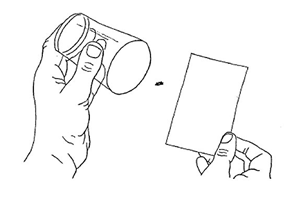
Pursue and trap the creature within a transparent plastic container and then slide card underneath. Hold the card in place, take outside and release. For creatures such as mosquitoes, spiders, ants and cockroaches a plastic tub or cup small enough to be held with one hand is usually big enough. Not a recommended method for catching rodents, however; this is also possible with a larger container

Use a bug vacuum, such as the Bug Buster or Bug Zooka. Especially effective with small cockroaches, spiders and mosquitoes.
White walls make spotting many creatures easier, especially mosquitoes.
Mosquitoes
Mosquitoes Prevention
Use mosquito screens (normally over windows).
Use mosquito nets (usually over beds if needed).
Don’t leave areas of standing water where mosquitos can breed.
In order to not attract mosquitoes, avoid black clothing, smoking, alcohol and excessive amounts of perfume.
Natural Mosquito Repellents (NOTE: many essential oils are highly toxic to cats and dogs and other pets. Avoid using them if you have a pet or check toxicity carefully.)
• Lemon grass
• Rosemary
• Eucalyptus oil
• Peppermint oil
• Lavender
• Basil
• Garlic
Mosquito Repellent Techniques
Apple Cider Vinegar (apply to bites on skin to help swelling go down and may also repel mosquitoes).

Mosquito lure: To reduce the chance of being bitten place some pieces of fruit right (apple works) near you on an ant free plate or in a bottle. This can attract the mosquito away from you. Especially suitable when sleeping, – place nearby your pillow. This could attract more mosquitoes so only do this if doors and windows are sealed and mosquitoes are already in the room!

Fans
Direct the breeze from a fan or air conditioning unit to just above where you will lie or sit.* The breeze will blow the mosquitos away as well as the carbon dioxide in your breathe to which they’re attracted.* *(invented by author)
Use a hand-held paper fan, umbrella, newspaper or similar object to waft away mosquitoes, especially when going in or out of a building. You can dab natural repellent oils onto the fan’s paper or cloth but beware of any eye irritation from some oils.* *(invented by author)
When exiting or entering a building you can use the door as a fan: quickly open, partly close, and then reopen the door and quickly enter.*

How to catch mosquitoes

Use a bottle trap. Also works for other flying bugs. The bugs often don’t survive for long in the bottle so check it frequently and release any bugs. You could set an alarm to periodically ring to remind you to check. To get more mosquitoes you can also wrap the bottle in a removable dark cloth, paper or sock (remove when checking).
picture taken from thehealthyhomeeconomist.com
Ants, cockroaches & other crawling bugs
DIY Moat plates

Although it’s often best to limit the amount of exposed standing water, water is also an effective barrier. You can take a plate and fill slightly with water and then add another smaller plate on top to create a bug-free moat plate.* The bigger the bugs, the bigger the moat needs to be.
Push down five suction cups onto the top surface of a large tray. To stop all crawling bugs fill the tray with water. Then add a smaller tray on top to create a DIY bug-proof tray.* A problem is that bugs may drink the water and ants may get trapped in it. For ants only then instead of filling with water simply add petroleum jelly/Vaseline onto the suction cups.
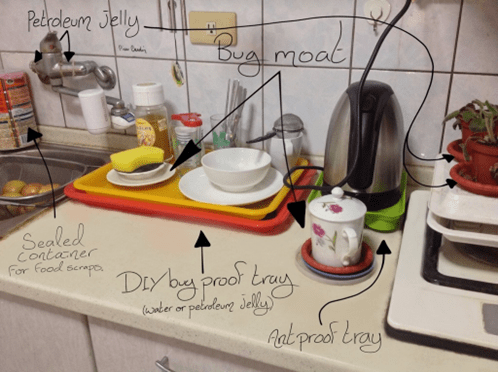
Ants
Ants Prevention
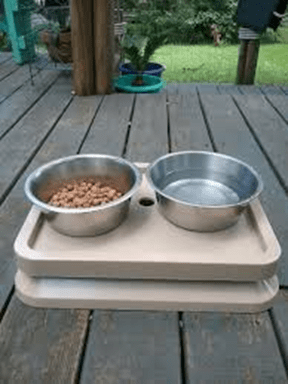
Ant proof trays. Some ant-proof trays available to buy use water and are often effective. If the ant-proof trays just use physical barriers within the design (without water) they may not be 100% effective. However; you can add Petroleum jelly (henceforth P.J) to the barriers making them close to 100% effective.
P.J or Vaseline is a great ant barrier. Make a ring of P.J around ant holes. This is preferable to blocking the holes because it won’t trap them inside. Put P.J around the legs of tables or beds to make them ant-proof. Also put P.J under the rims of plant pots to stop ants from nesting in the soil.
Other materials that can serve as ant barriers (but are usually less effective than P.J or water) are chalk, talcum powder, dolomite, hot chilli powder, cayenne pepper, cinnamon, and coffee grounds. Also effective are cinnamon oil, citrus oil, and lemon juice (all of which can also be soaked into a piece of string). These barrier materials are often unpleasant for ants so you can put some in corners of cubbies and drawers as a deterrent as well as the other natural repellents listed below.
Natural Ant Repellents
(NOTE: many essential oils are highly toxic to pets)
• (Apple cider) vinegar
• Lemon juice
• Cinnamon
• Garlic
• Peppermint
• Sodium bicarbonate (Baking soda)
• Cucumber (peels work fine)
How to catch ants

Put vegetable oil around the rim of a jar. Place food that ants like inside the jar. Can also put the jar into a hole in the ground.
Cockroaches
Cockroach prevention
Geckos eat cockroaches. So if you don’t want cockroaches and see a gecko just leave it be.
Clean surfaces with vinegar mixed with water.
Get rid of cardboard (cockroaches love it).
Natural cockroach Repellents
(NOTE: many essential oils are highly toxic to pets)
• Tea tree oil (highly toxic)
• Cypress oil
• Peppermint oil
• Mint
• Bay leaves
• Cucumbers
• Garlic
• Catnip
(but be aware of its effects on some cats)
Natural cockroach repellent techniques
Some plug-in devices are available which emit frequencies supposedly unpleasant for cockroaches (but results are often mixed).
How to catch cockroaches

Humane cockroach traps allow cockroaches in but not out. To stop ants while still attracting cockroaches put the trap onto an ant-proof tray or draw a line of chalk or P.J around the traps.
Rodents (Rats & Mice)
Rodent Prevention
It cannot be emphasised enough: prevention is better than cure. Prevent access to food, water, shelter and nesting sites.
One way is to block holes. Using steel wool is a quick and effective way. Just be sure to not trap any animals inside an enclosed space. To reduce risk of this you could add one of the repellents below to the area you wish to seal off, wait a period of time for the animals to vacate and then seal the opening(s).
Put sources of food and drink in sealed containers wherever possible, or if left open then on surfaces beyond jumping distance from any other ledges or surfaces that a rodent could access. For example, food on a high table with a single central leg, placed in the middle of a large room would be safer than food on a table with adjoining furniture.


Natural Rodent Repellent
Peppermint oil. Place peppermint oil onto cotton pads and place in the corners of the space. Add more cotton pads every day or two for a week or two, and then seal any holes. You can also add some oil of Oregano for extra potency. Another way is to place the peppermint oil in a diffuser. Note that Peppermint oil, while generally safe for humans, is toxic to cats and dogs! They absolutely cannot be in the room if you use this method.
Balsam Fir Oil. This is used in the FDA approved ‘Fresh cab’ repellent available to buy. (avoid use around dogs and especially cats).
In Africa the roots of the Whitethorn/Witdoring tree (Senegalia polyacantha subsp. campylacantha) emit chemicals that repel rats, snakes as well as crocodiles.
Note that adding small amounts of cat urine to infested areas also works but the ammonia in the urine can be unhealthy to inhale beyond a certain amount and may also attract other animals. If you do this then use with caution and wear a good mask or ventilate as you place the urine. Alternatively, just get a cat, but the cat may not be a mouser, and with cats around rodents there is the risk of Toxoplasma.
Rodent Repellent Techniques
Plug-in devices that emit frequencies unpleasant for rodents but supposedly inaudible to humans (this method does not always work, or sometimes only works for a short time).
Strobe lighting (limited effectiveness as the rodents can become used to it).
Mix salad oil, horseradish, garlic and cayenne pepper. Let the oil sit several days, then strain. Use a spray bottle to coat surfaces.
How to catch rodents
Note: The trapped creatures undergo a lot of stress and may not survive for very long in the trap, especially in extreme temperatures. So please do remember to check traps regularly and set the creatures free as soon as possible in a suitable place!
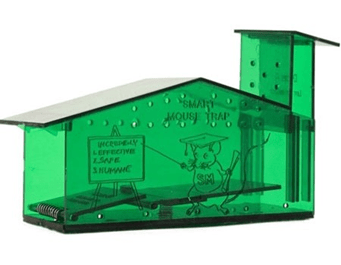
Humane mouse and rat traps are widely available. Add the bait and set so the door will shut once the rodent goes inside. Take to a suitable place and release. Some traps allow for capture of multiple rodents.

A large, smooth, plastic dustbin with food at the bottom or on a little walkway over the bin. The rats or mice may jump in, or be lured to fall in, but cannot get out as long as the bin is high and smooth enough. Please note: if there is even a little water in the container there is a very real risk of the animal drowning! If outside, then make sure it cannot catch the rain. Alternatively, you can place a stone or something for the rodent to stand on and check it regularly.
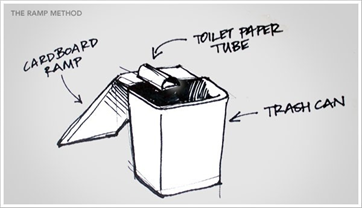

journal.chrisglass.com
Download this post as a PDF below
中英版請點這裡 For Mandarin English version click HERE
‘‘Work is love made visible’’ (Khalil Gibran)
(工作是看得見的愛。)
原始文字與部分圖片由作者提供,翻譯由 ChatGPT 協助完成。
Original text & some images by author, translated with the help of ChatGPT
地球和事佬
The Peacemaker Foundation
促進健康與福祉的免費學習資料
Free Learning Resources to Promote Health & Well-being
 The Peacemaker Foundation