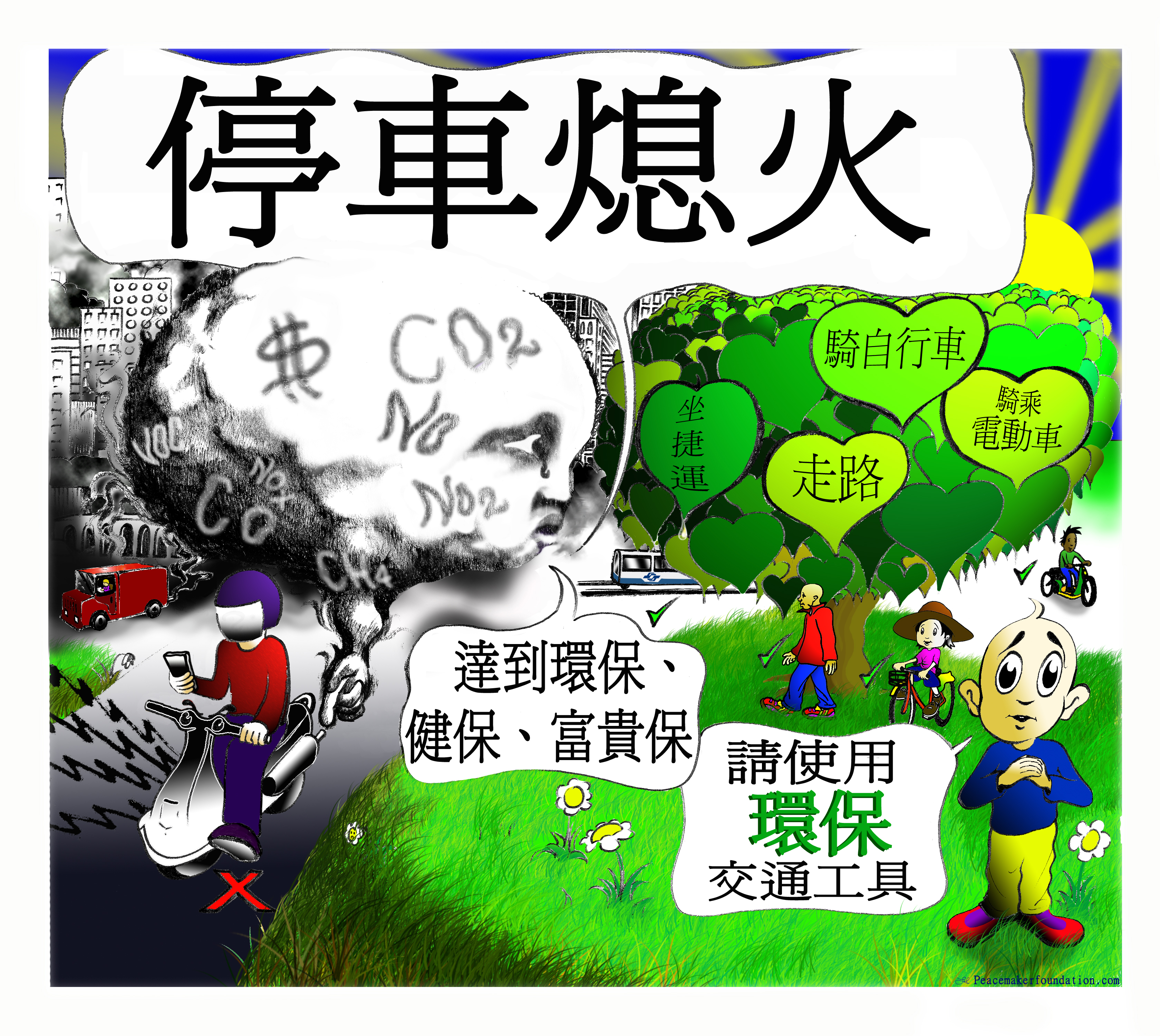
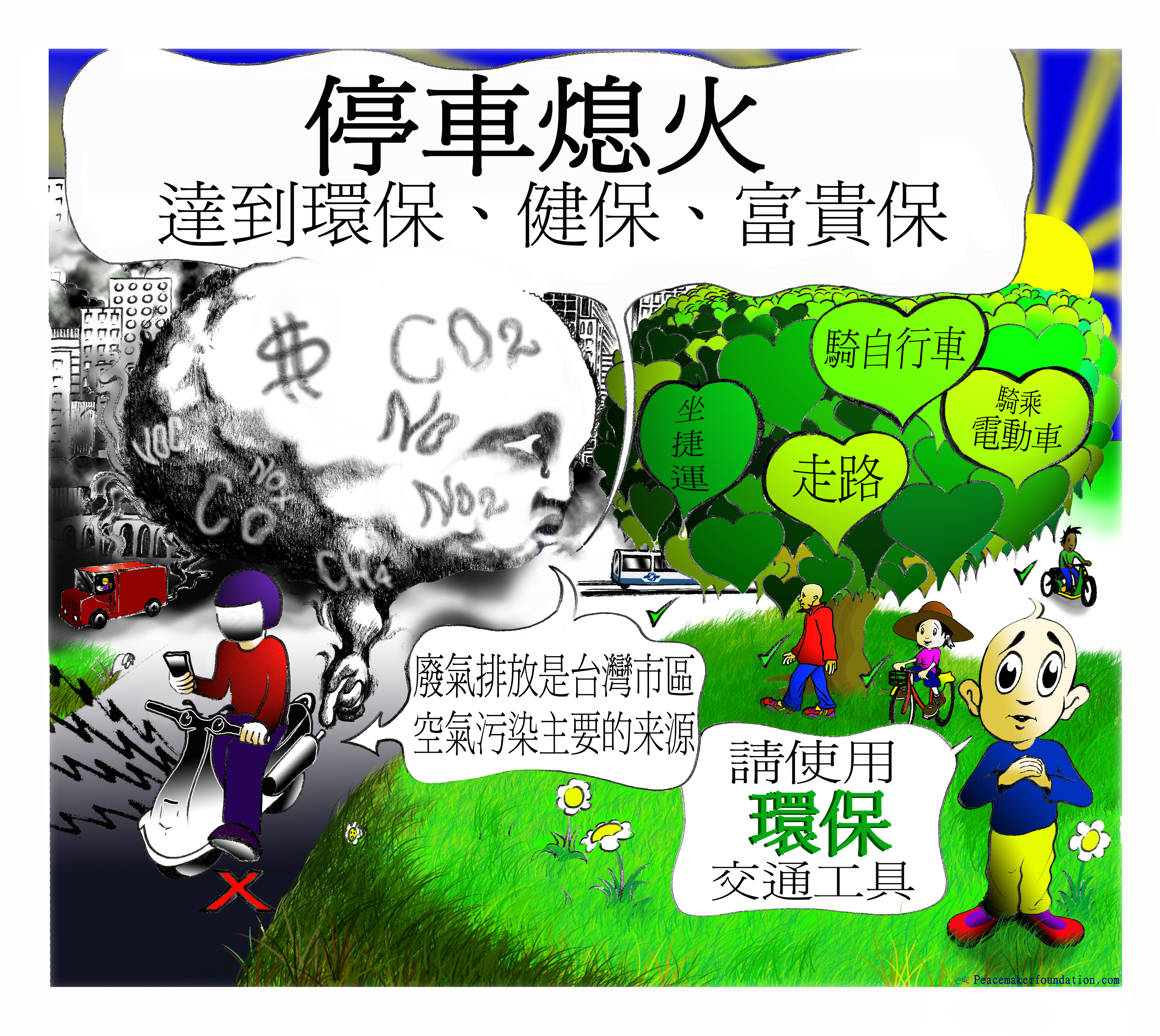
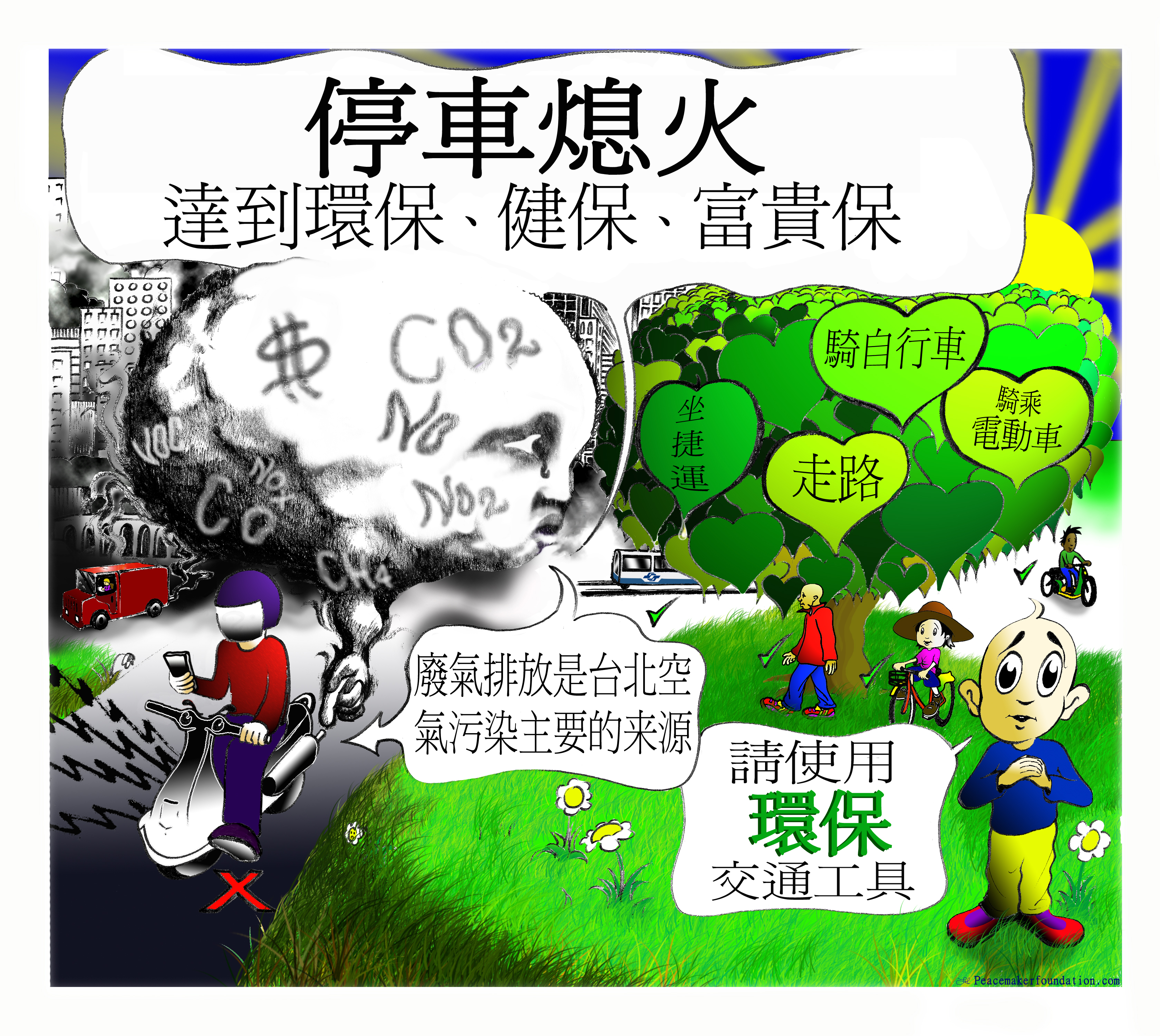
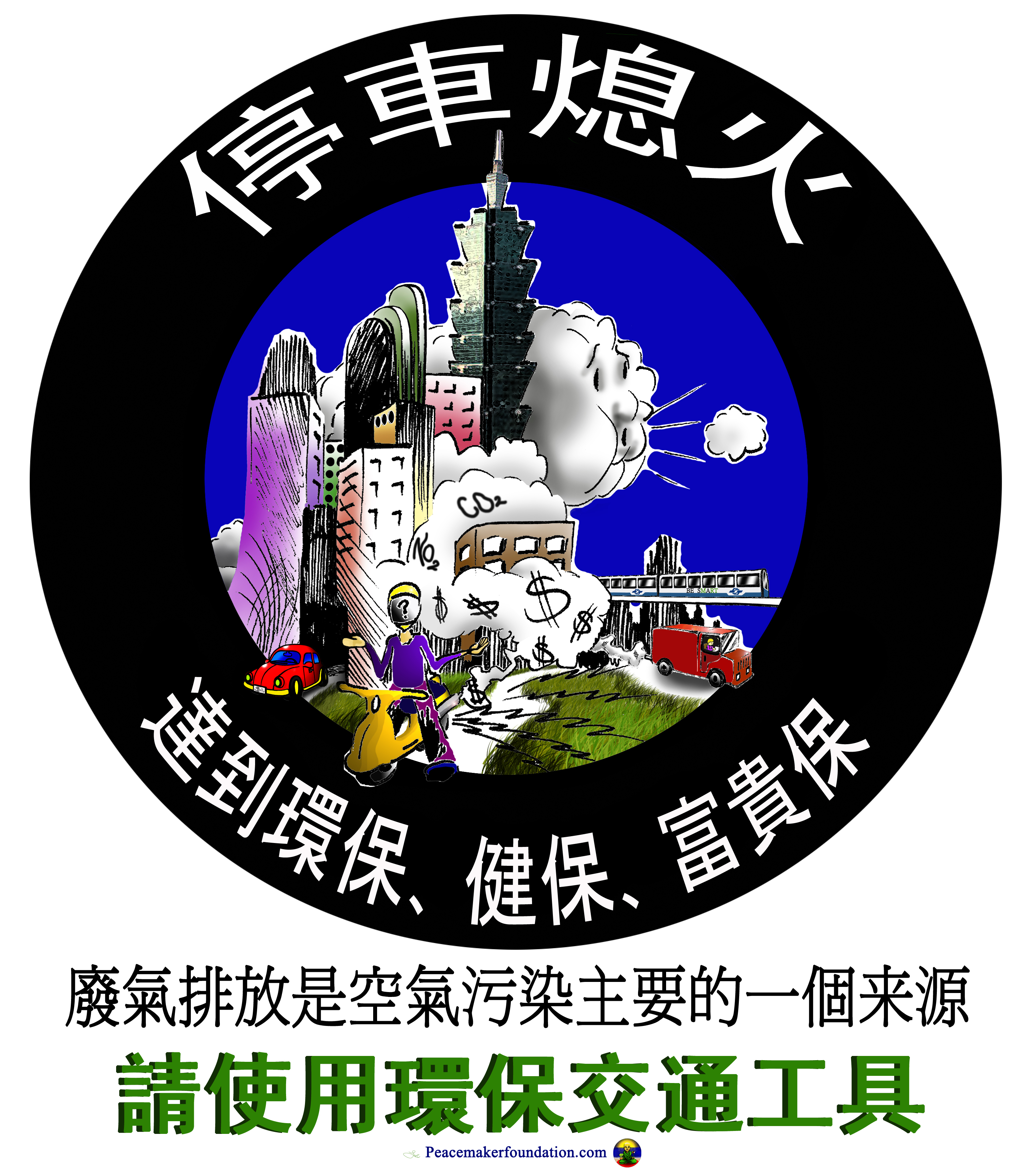
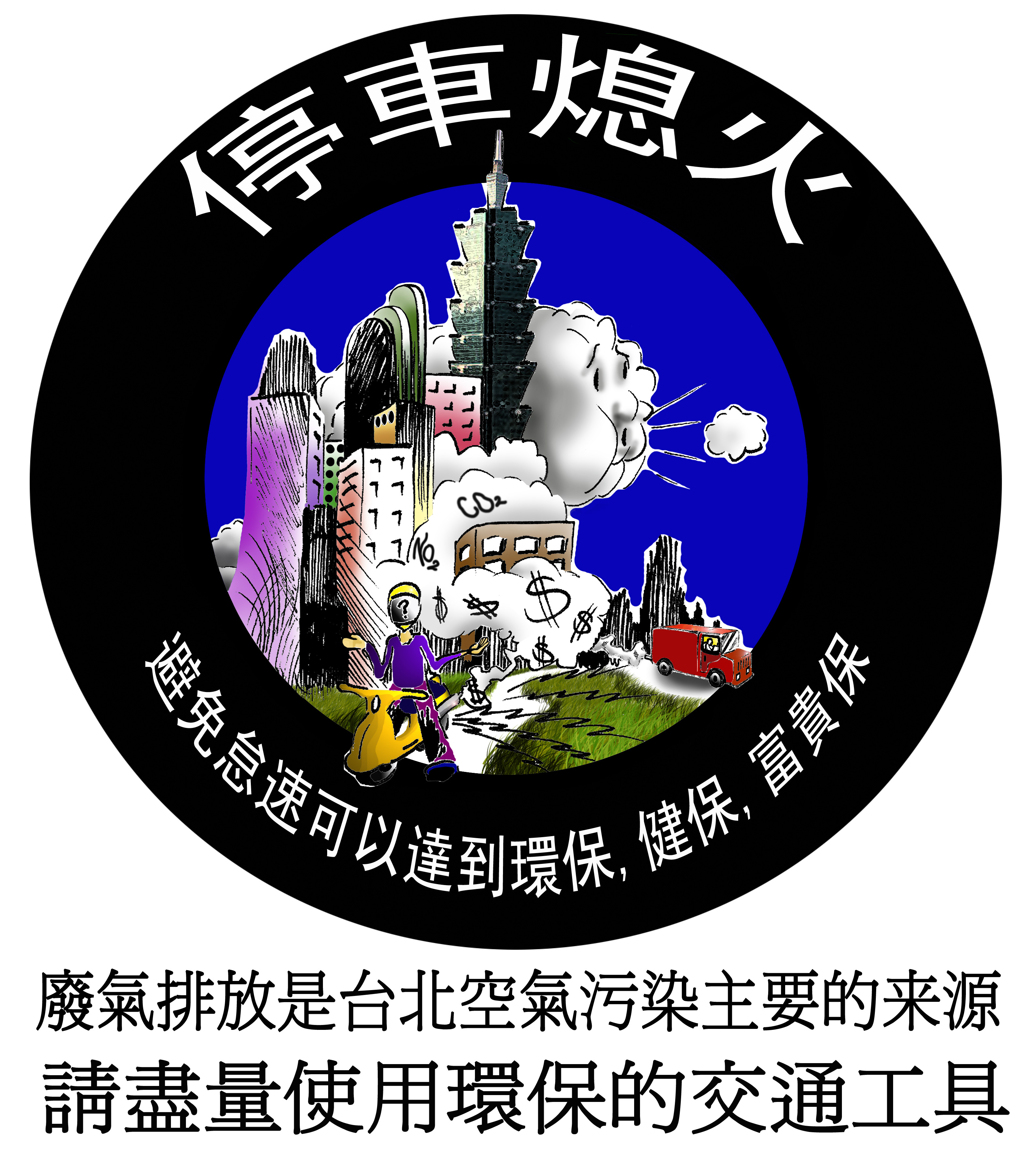
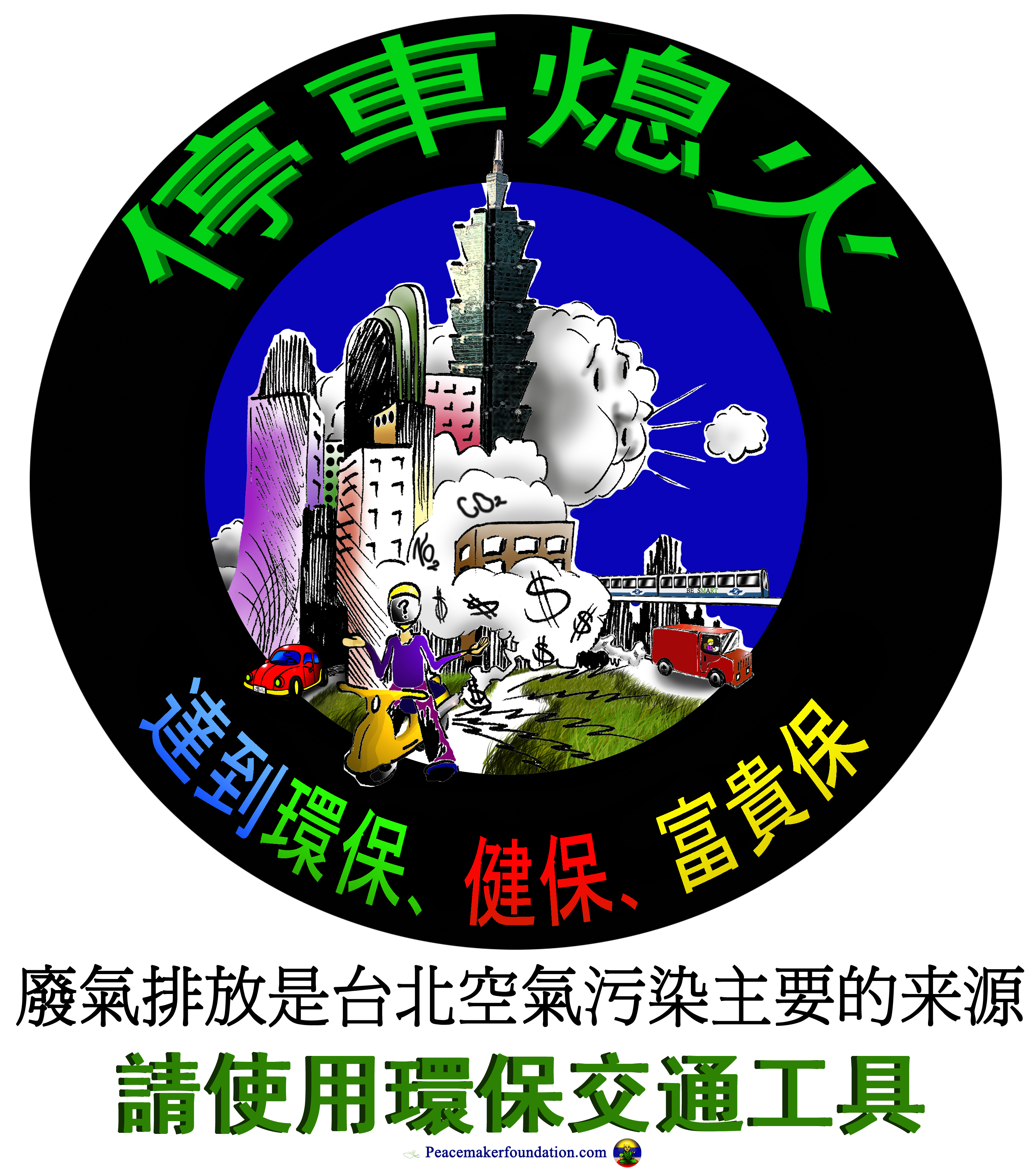
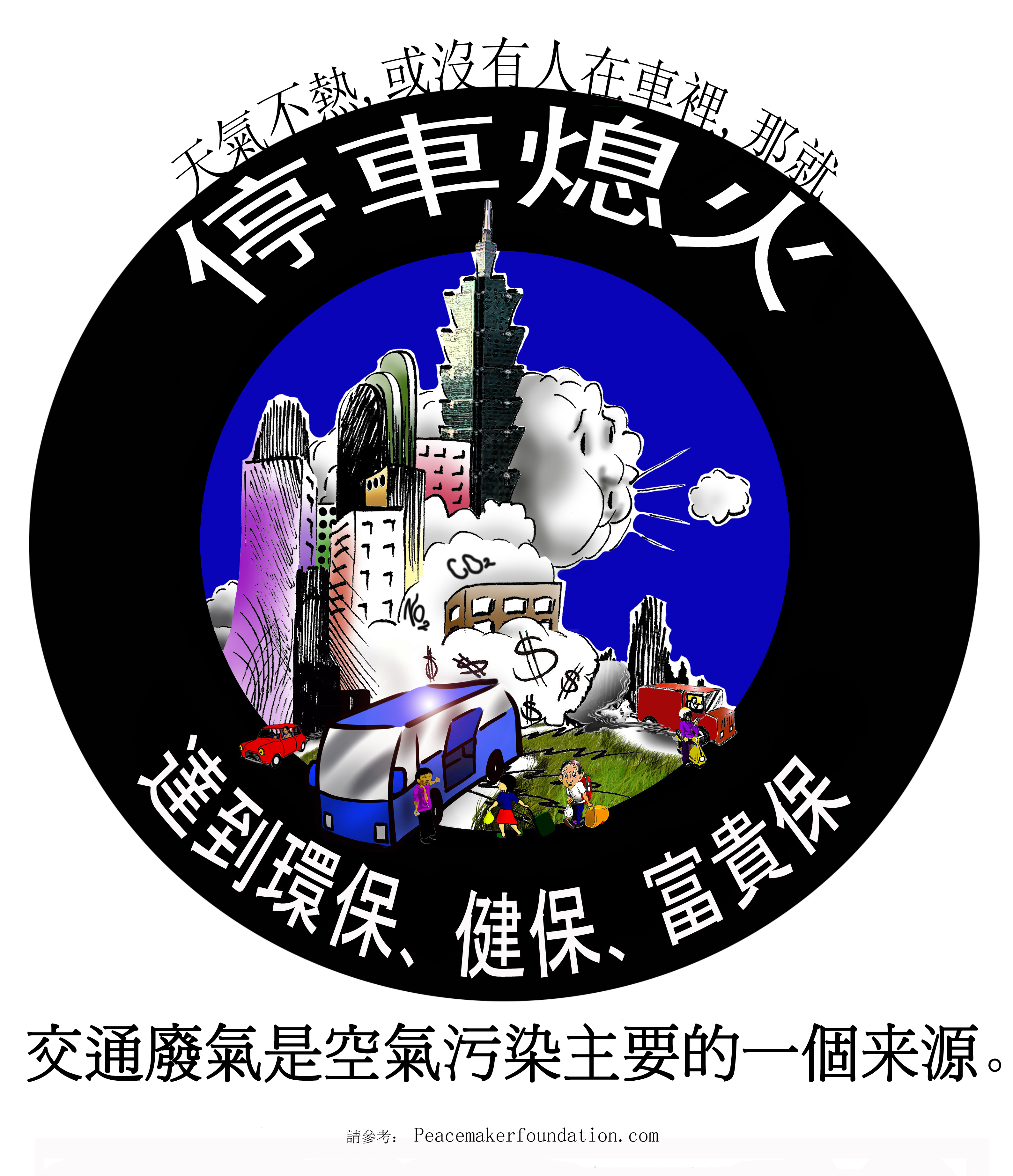
Idling engines wastes fuel and money, reduces engine life, emits greenhouse gases, and creates harmful air and noise pollution. If you would like to help improve the air quality wherever you are then you can print the pictures out yourself and distribute (copyright free). Good places to display or distribute the images include within schools, school gates, driving schools, scooter and car dealerships, bus and train stations, refuse collection vehicle compounds, car parks and construction sites. Putting up images by elevators, urinals, or anyplace where people stop is likely to be effective. If you want to help this campaign then please like and share this post. You can also contact Luc via the contact form or send an email to: Luc@peacemakerfoundation.com.
If you work for a bus, coach, taxi or delivery company then click HERE
LPT*(輕量便攜式運輸)正在興起,地球的氣溫也在上升。這個想法是:只要選擇城市裡幾條較長的道路或路線,讓它們成為無車區。一開始可以在週末實施,使用路障封路,之後也許可以永久禁止汽車通行。這個方法簡單、便宜、有效,而且完全可逆。下面的照片大多來自台北,但這個點子幾乎可以應用在任何城市。 LPT* (Lightweight Portable Transport) is on the rise and so is the Earth’s temperature. The idea: Just take a few long roads or routes in a city and make them car-free. At first on weekends, using road blocks, and later perhaps keep them permanently car-free. Simple, cheap, effective, and completely reversible. The pictures below are mostly of Taipei, but this idea could be used in almost any city.
未來新增項目,依照「都市綠流計畫」(詳見此處) Future additions as per ‘the urban flow plan’ (see HERE)
What about the residents parking? Residents would be given free parking nearby, compensation or special access to a side lane along the road on condition they drive below 5mph. Electronic ID could automatically open the gate or barrier if there is one.
This is called induced demand and makes sense when you think about it. As nearby roads have more cars they become less pleasant to drive along so less people will. On the other hand if people have far more pleasant and safer LPT journeys as an option some of them will make that switch.
It’s also worth noting that in the early phase roads nearby the Greenway are likely to have less cyclists and others on LPT allowing more space for drivers in that respect.
What about emergency service vehicles and delivery vehicles? They would be given special access (electronic ID could automatically open the gate or barrier if there is one). It’s highly likely that small lightweight delivery vehicles would emerge rapidly.
我不相信這真的能實現。 「那些說做不到的人,請不要打擾正在做的人。」——喬治·伯納·蕭(George Bernard Shaw)
I don’t believe this can be done. “People who say it cannot be done should not interrupt those who are doing it.” (George Bernard Shaw)
In many places around the world various roads have been made car free and the feedback generally has been very good. See HERE and HERE for examples. The only addition with this plan is to devote the road to LPT rather than just give it to pedestrians alone. As technology improves and transport tools become lighter, smaller, safer and more efficient, and as cities become taller and more densely populated this is just one of those things that will need to happen anyway because it makes sense. Let’s just make sure we do it right.
We also really need to do this to allow people to avoid enclosed spaces together and give them safe, healthy travel options. Bike lanes will quickly become too busy to accommodate everyone safely. This can be done immediately with zero infrastructure!
*LPT (Lightweight Portable Transport) is a term coined by the Peacemaker Foundation meaning any transport tool that is small and light enough to be carried or moved by hand. Examples are bikes, skateboards, rollerskates, scooters, electric wheels (Eucs), self balancing foot scooters (Hoverboards) and Segways.
The following copyright free images can be used in the classroom, either for colouring in and adding text or as a reference. Especially suitable for language, science, and art classes. Some text ideas are provided to help ‘kickstart’ the children’s inspiration. Hopefully they won’t be idle.
Just remember: kids like games, stories, and cartoons. If we help children to see learning as fun – as the greatest game – then we’ve already done them a great service.
The great thing about using art in language classes is that students can use and hear a variety of language in the process and it can also help them to achieve a relaxed focus beneficial to learning. Furthermore auditory and visual tasks are easily performed in unison so as students draw they can still talk or listen to stories and music. The students generally love it, it can help them to focus, you get some peace, and you’ll probably get very happy parents who have visual proof that their children are actually learning or doing something constructive. If the artwork can help the World then all the better. In some cases the artwork can be part of a wider campaign. For example, in America various schools took part in an anti-idling campaign in which students drew posters, displayed them, and then even went out to remind parents in cars to not idle their engines.
While students create posters I sometimes read aloud stories or articles they have previously learned. You can also make it a game by pausing in mid-speech. The student that can recall the next sentence, word or idea can get a point for their team.
Tip: Each student must first create a sketch including all the text in pencil. Then a teacher checks and only once the teacher says or writes that it’s OK can the student start to use pen. It’s often good to use plenty of the target language in the artwork, such as in speech bubbles and so on.
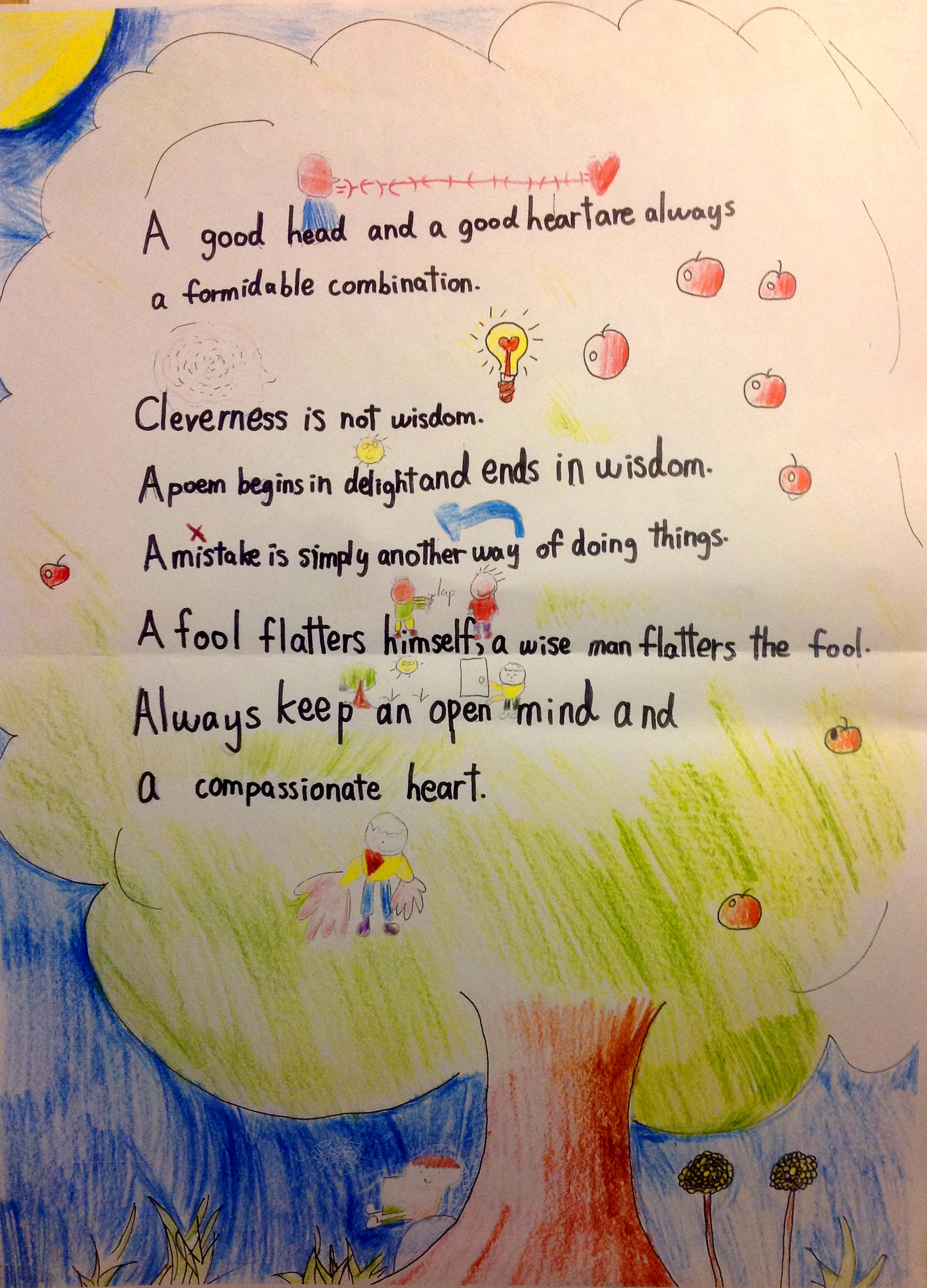
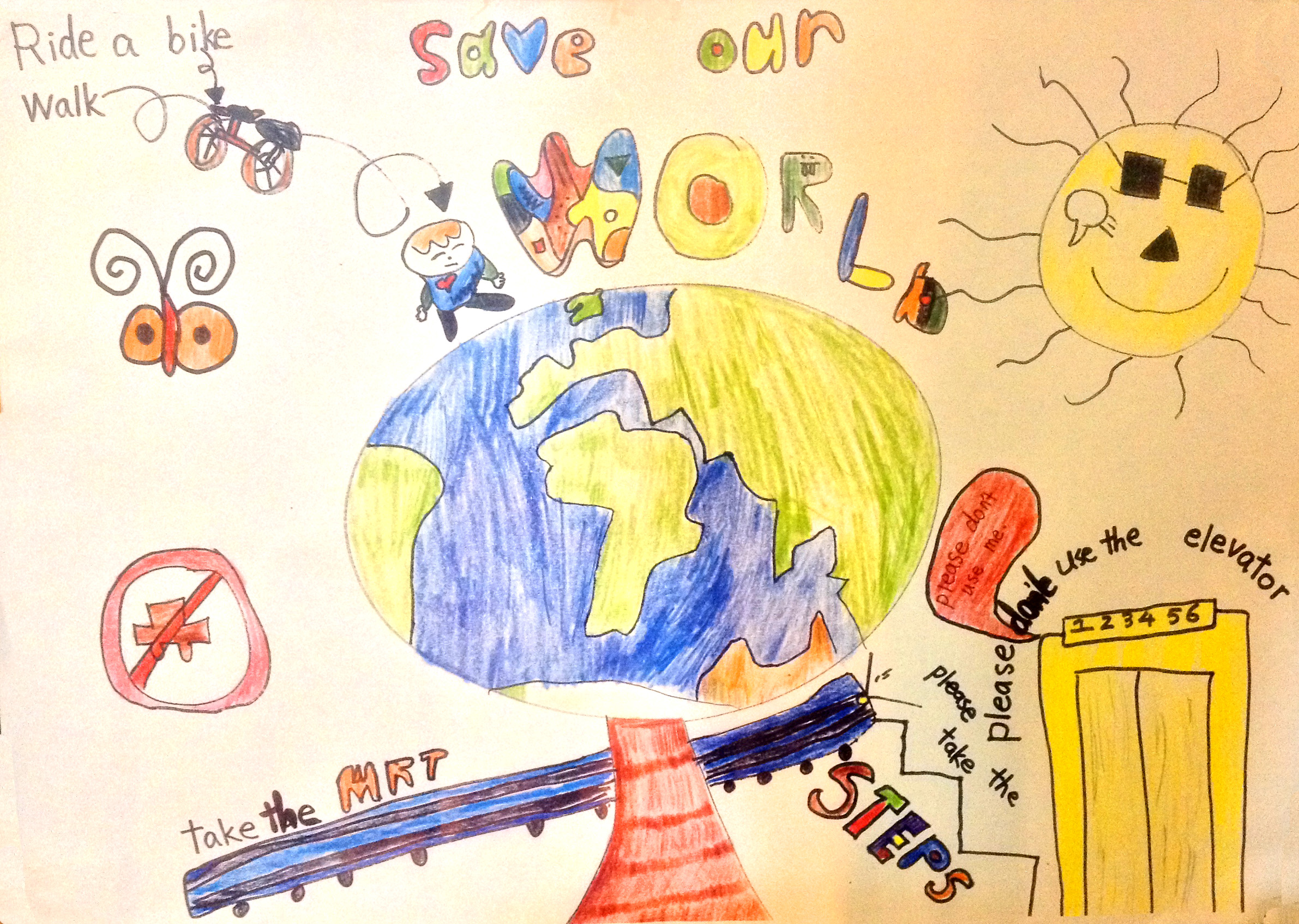
Example artwork from English classes:
Feel free to get in touch and send images by your students. High quality artwork with beneficial messages could be put online.
If you have a school in Birmingham, Taipei or HK and would like to hire Luc (the Peacemaker founder) for a poster making session with students then feel free to get in touch. Free for orphanages, charities, and non-profit organizations.
For resources to help when making posters with students see HERE
To see the winning entries in our 2015 poster contest see HERE














 The Peacemaker Foundation