Rather than creating many low quality bike lanes I would devote a few entire avenues to lightweight portable transport and create cycle-scooterhighways.
Polluting vehicles.
Polluting vehicles.
Polluting vehicles but with more LPT (lightweight portable transport) such as bikes, escooters & so on.
Electric vehicles & more LPT (lightweight portable transport).
STEP 1 (OF URBAN FLOW PLAN) One or two roads in a city chosen to become ‘Greenways’. Only open to non-polluting LPT. No large polluting vehicles other than emergency vehicles & essential large deliveries.
STEP 1.1 (optional extra) As above but with improved flow.
STEP 2 Pedestrians above. Safety & continuous flow achieved: noone has to wait for anyone else. Pedestrians could be on travelators.
STEP 3 Pod cars or travelators above. An optional addition for later on pending popularity of earlier steps.
STEP 1 UNDONE (IN CASE NEED BE) Greenway changed back to regular road but still with pedestrians & pod cars above. Step 1 is reversible at any time which is a huge safety feature of this plan.
View as a slideshow below
1. Polluting vehicles
2. Polluting vehicles 2
3. Polluting vehicles but with more LPT (lightweight portable transport)
4. Electric vehicles & more LPT (lightweight portable transport)
STEP 1 urban flow plan, no vehicles, only non-polluting LPT
STEP 1.1 urban flow plan, no vehicles, only non-polluting LPT with improved flow
STEP 2 urban flow plan, no vehicles, only non-polluting LPT, pedestrians above (continuous flow)
STEP 3 urban flow plan, only non-polluting LPT, pedestrian walkways above & pod cars (2)
Another example of the Urban flow plan is shown below, this time using a junction in Hong Kong and adding extra options. To open slideshow viewer just click on any picture.
All pictures in this post were hand painted by the author over countless hours on an iPad using the Procreate app. (HK photo credit ze big-trip.com)
“If you think you’re too small to make a difference try sleeping in a room with a mosquito.” (The Dalai Lama)
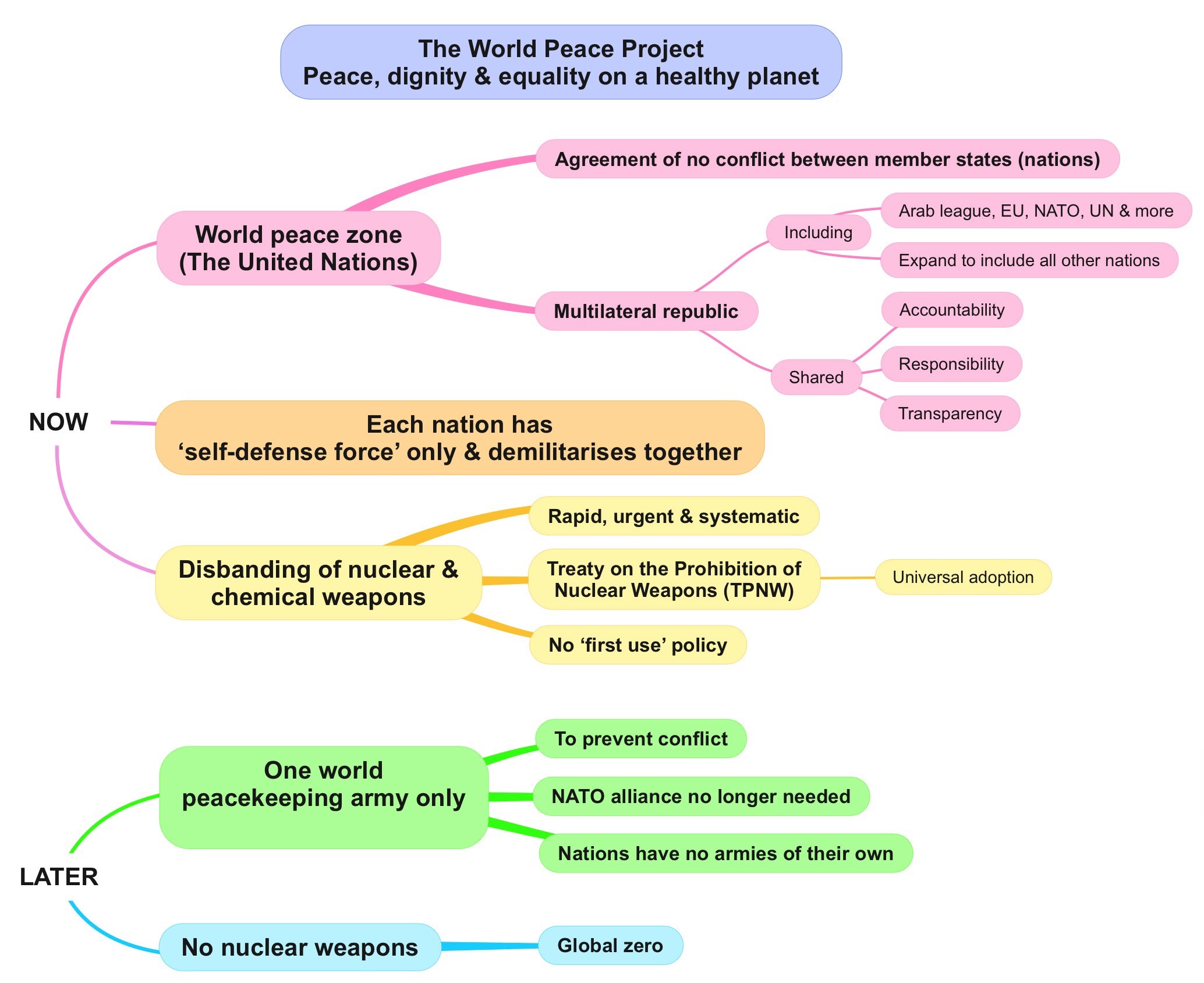
Personally I believe that allowing individual nations to have nuclear weapons as a means of keeping the peace is like allowing kids to carry guns to prevent fist fights at school. It’s time for the United Nations to become the headmaster and for our consciousness to evolve allowing our wisdom to catch up with our technology.
“Our scientific evolution has outrun our spiritual evolution. We have guided missiles and misguided men.” (Martin Luther King)
Presently we have enough problems to face, let’s all play our role in making sure that collectively we can at least get this one thing right by helping wisdom to triumph over cleverness by dismantling these terrible things and forever banning them. Success goes to the mug who has the bottle to say “I can.”
Showing the value of active travel using data. Statistics refer to the UK unless mentioned otherwise.
Money & the economy
Public sector spending on roads in the United Kingdom has been over 12 billion British pounds each year since 2021. sources: Statista and Office for National Statistics
Spending on walking, wheeling and cycling infrastructure can have a maximum return of up to £19 per £1 spent. The health benefits associated with increased physical activity are a large contributor to these returns. Investments in the strategic road network have an average return of £2.50. https://publications.parliament.uk/pa/cm5803/cmselect/cmtrans/1921/report.html
According to a European study looking at a range of societal impacts, such as land use and cost pollution, as well as individual impacts, such as health benefits and travel time, driving a car was found to have a cost to society of €0.11 per kilometre (or 9 pence per mile). By contrast, cycling generated a €0.18 net benefit to society for every kilometre cycled (or 15 pence per mile), primarily due to the health benefits of physical activity and walking was found to generate the greatest net benefit to society. https://doi.org/10.1016/j.ecolecon.2018.12.016
Another earlier study by two of the same authors (Stefan Gössling and Andy Choi) calculated that one kilometre by car costs €0.15 (13 pence), whereas society earns €0.16 (14 pence) on every kilometre cycled. https://doi.org/10.1016/j.ecolecon.2015.03.006
Building more roads and car lanes to improve traffic flow only works temporarily, in the long term it usually increases car traffic. https://doi.org/10.7922/G22805Z9
Sutton Coldfield, a large town north of Birmingham, has a population of nearly 100,000 and yet has no segregated cycle lanes. The local government installed one at a cost of £75,000, but following an outcry by local ‘motorists’ and Conservatives it was removed before it even had the chance to open. The removal meant even more expense. Many locals, likely some of the same people who complained, then said what a waste of money it was to build a bike lane and then never use it! https://suttoncoldfieldtowncouncil.gov.uk/wp-content/uploads/2020/10/email-response.pdf
Author’s conclusion The evidence clearly shows that well designed projects in the right places that allow for more cycling and active travel can benefit physical, mental, environmental and financial well being. Stopping such projects claiming that they are a waste of tax payers’ money and so on, is untrue and highly unhelpful. Our obsession with cars is fuelling the problem.
Do you agree?
Look at the quotes and pictures below.What are they trying to say and how do you feel?
“Either you’re part of the problem or you’re part of the solution.” (a saying based on an original quote by Harry Emerson Fosdick)
Original quote attributed to Peter Drew
Picture made using chat GPT & then added to by author
Quiz!
True or false style quiz based on the above information:


 The Peacemaker Foundation