Urban Flow Plan

Daily writing prompt
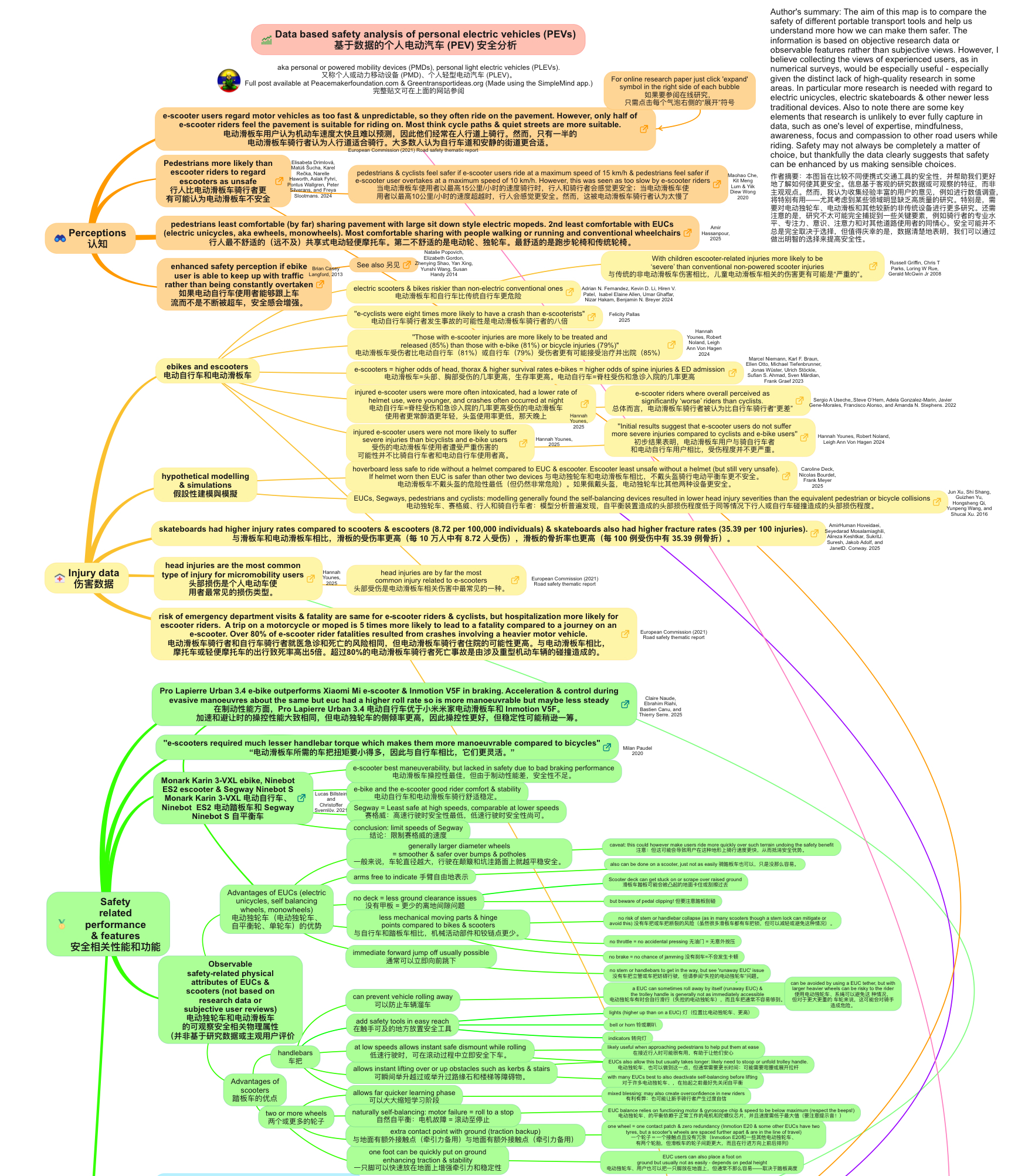
How would you design the city of the future?

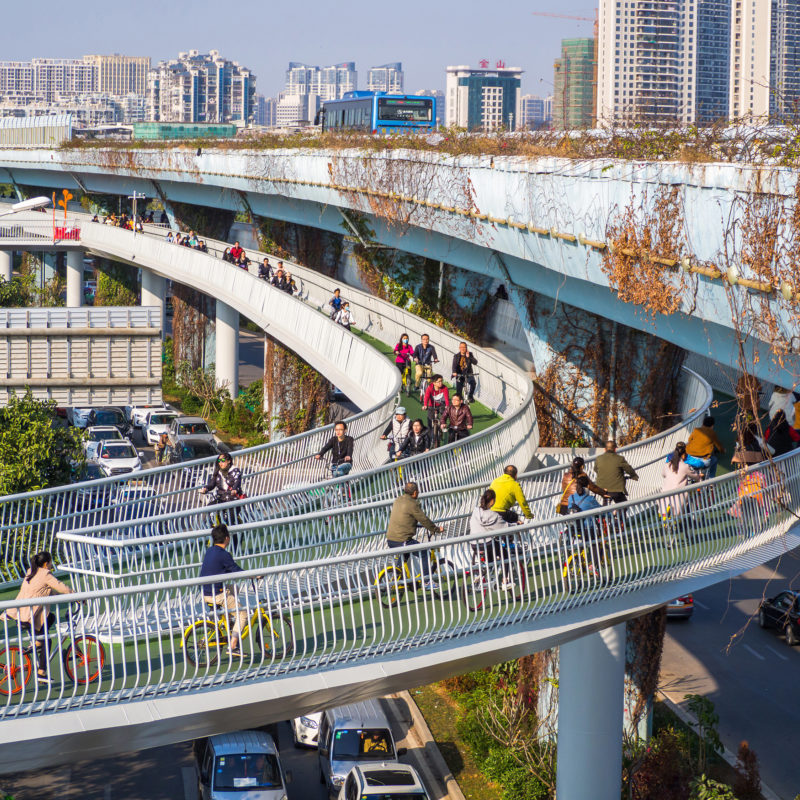
Rather than creating many low quality bike lanes I would devote a few entire avenues to lightweight portable transport and create cycle-scooterhighways.

Polluting vehicles.

Polluting vehicles.

Polluting vehicles but with more LPT (lightweight portable transport) such as bikes, escooters & so on.

Electric vehicles & more LPT (lightweight portable transport).

STEP 1 (OF URBAN FLOW PLAN)
One or two roads in a city chosen to become ‘Greenways’. Only open to non-polluting LPT. No large polluting vehicles other than emergency vehicles & essential large deliveries.

STEP 1.1 (optional extra)
As above but with improved flow.

STEP 2
Pedestrians above. Safety & continuous flow achieved: noone has to wait for anyone else. Pedestrians could be on travelators.

STEP 3
Pod cars or travelators above. An optional addition for later on pending popularity of earlier steps.

STEP 1 UNDONE (IN CASE NEED BE)
Greenway changed back to regular road but still with pedestrians & pod cars above. Step 1 is reversible at any time which is a huge safety feature of this plan.

View as a slideshow below

Another example of the Urban flow plan is shown below, this time using a junction in Hong Kong and adding extra options. To open slideshow viewer just click on any picture.

All pictures in this post were hand painted by the author over countless hours on an iPad using the Procreate app. (HK photo credit ze big-trip.com)

中英版請點這裡 For Mandarin English version click HERE

各種交通工具的優缺點心智圖

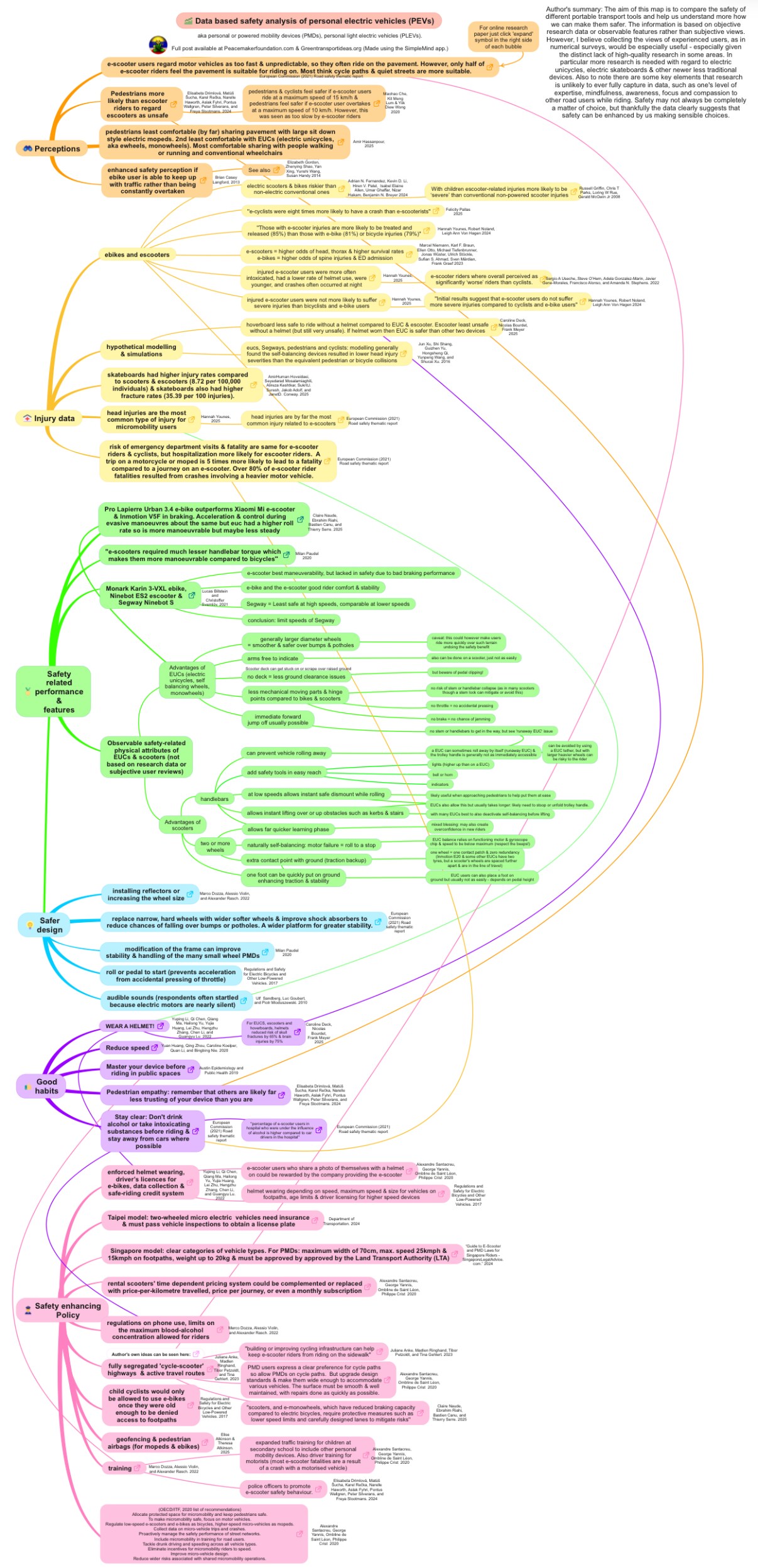
這兒有一些心智圖給你看不同的輕巧便携交通工具的好處與壞處。如果您覺得需要加上更多資訊就跟我們聯絡。 Here are some Mindmaps showing the various advantages & disadvantages of different lightweight portable transport (LPT) tools. Please let us know if you feel additional information needs to be included.

由原始英文心智圖使用 Google Translate 來翻譯。
若要查看更深入的各種輕便可攜交通工具的優缺點分析,請點此處

Translated from the original English mindmaps using Google translate.
To see a far more in depth analysis of the pros and cons of various lightweight portable transport gadgets click HERE.

英文版請點這裡 For English version click HERE

Humane, Safe & Effective Pest Control

Many pest control “solutions” are far more harmful than the pests they aim to get rid of. Here are some of the most effective, safe and humane methods. Please note that even natural foods and oils can be highly toxic to pets, so pet owners should use with caution and check for any toxicity.

General Advice

Prevention

Seal food.  Use boxes, bags and the fridge.  Use sealed containers for food scraps. Ensure garbage bags aren’t left open. 

Clean away all traces of food.  

Seal openings such as holes or cracks where the pests can come through, but make sure you don’t trap any of the creatures inside an enclosed space.   

Keep windows and doors closed.

Don’t leave areas of standing water (various creatures such as ants and cockroaches may survive by drinking the water).

Silicon lid over plug

Keep drains and plug holes covered.  Using silicone cup covers* is one way.  This can stop mosquitoes from laying eggs in the water, save insects from being washed away when the tap is running, stops them from drinking the water and possibly from coming in. 
(Henceforth any techniques marked * were invented by Luc the author and the founder of the Peacemaker Foundation)

How to catch pests 

Put some food at the base of a container and leave it for a while.  Once the creatures are in the container seal it and take outside to release.    

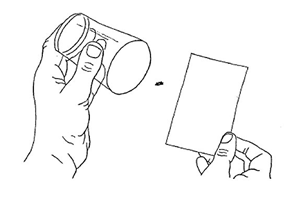
Pursue and trap the creature within a transparent plastic container and then slide card underneath. Hold the card in place, take outside and release. For creatures such as mosquitoes, spiders, ants and cockroaches a plastic tub or cup small enough to be held with one hand is usually big enough. Not a recommended method for catching rodents, however; this is also possible with a larger container

Bug Buster Insect Vacuum

Use a bug vacuum, such as the Bug Buster or Bug Zooka.  Especially effective with small cockroaches, spiders and mosquitoes.  

White walls make spotting many creatures easier, especially mosquitoes.  

Mosquitoes

Mosquitoes Prevention

Use mosquito screens (normally over windows). 

Use mosquito nets (usually over beds if needed).

Don’t leave areas of standing water where mosquitos can breed.

In order to not attract mosquitoes, avoid black clothing, smoking, alcohol and excessive amounts of perfume.  

Natural Mosquito Repellents (NOTE:  many essential oils are highly toxic to cats and dogs and other pets. Avoid using them if you have a pet or check toxicity carefully.)

• Lemon grass

• Rosemary

• Eucalyptus oil 

• Peppermint oil

• Lavender

• Basil

• Garlic

Mosquito Repellent Techniques

Apple Cider Vinegar (apply to bites on skin to help swelling go down and may also repel mosquitoes).

Mosquito lure: To reduce the chance of being bitten place some pieces of fruit right (apple works) near you on an ant free plate or in a bottle. This can attract the mosquito away from you. Especially suitable when sleeping, – place nearby your pillow. This could attract more mosquitoes so only do this if doors and windows are sealed and mosquitoes are already in the room!

Fans

Direct the breeze from a fan or air conditioning unit to just above where you will lie or sit.* The breeze will blow the mosquitos away as well as the carbon dioxide in your breathe to which they’re attracted.* *(invented by author)

Use a hand-held paper fan, umbrella, newspaper or similar object to waft away mosquitoes, especially when going in or out of a building.  You can dab natural repellent oils onto the fan’s paper or cloth but beware of any eye irritation from some oils.* *(invented by author)

When exiting or entering a building you can use the door as a fan: quickly open, partly close, and then reopen the door and quickly enter.* 

How to catch mosquitoes     

Use a bottle trap. Also works for other flying bugs.  The bugs often don’t survive for long in the bottle so check it frequently and release any bugs. You could set an alarm to periodically ring to remind you to check. To get more mosquitoes you can also wrap the bottle in a removable dark cloth, paper or sock (remove when checking). 

picture taken from thehealthyhomeeconomist.com


Ants, cockroaches & other crawling bugs

DIY Moat plates 

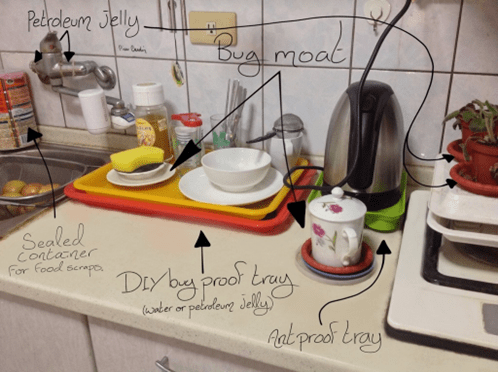
Although it’s often best to limit the amount of exposed standing water, water is also an effective barrier.  You can take a plate and fill slightly with water and then add another smaller plate on top to create a bug-free moat plate.*  The bigger the bugs, the bigger the moat needs to be.    


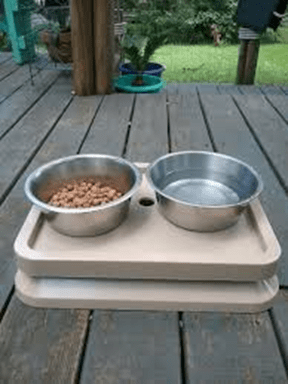
Push down five suction cups onto the top surface of a large tray.  To stop all crawling bugs fill the tray with water.  Then add a smaller tray on top to create a DIY bug-proof tray.*  A problem is that bugs may drink the water and ants may get trapped in it.  For ants only then instead of filling with water simply add petroleum jelly/Vaseline onto the suction cups.  

防蟲廚房(Ant and cockroach proof kitchen)

Ants

Ants Prevention

Ant proof trays.  Some ant-proof trays available to buy use water and are often effective.  If the ant-proof trays just use physical barriers within the design (without water) they may not be 100% effective.  However; you can add Petroleum jelly (henceforth P.J) to the barriers making them close to 100% effective.      

P.J or Vaseline is a great ant barrier.  Make a ring of P.J around ant holes.  This is preferable to blocking the holes because it won’t trap them inside. Put P.J around the legs of tables or beds to make them ant-proof.  Also put P.J under the rims of plant pots to stop ants from nesting in the soil.    


Other materials that can serve as ant barriers (but are usually less effective than P.J or water) are chalk, talcum powder, dolomite, hot chilli powder, cayenne pepper, cinnamon, and coffee grounds. Also effective are cinnamon oil, citrus oil, and lemon juice (all of which can also be soaked into a piece of string). These barrier materials are often unpleasant for ants so you can put some in corners of cubbies and drawers as a deterrent as well as the other natural repellents listed below. 

Natural Ant Repellents
(NOTE: many essential oils are highly toxic to pets)

• (Apple cider) vinegar

• Lemon juice

• Cinnamon 

• Garlic 

• Peppermint

• Sodium bicarbonate (Baking soda) 

• Cucumber (peels work fine) 

How to catch ants

Put vegetable oil around the rim of a jar. Place food that ants like inside the jar. Can also put the jar into a hole in the ground.  

Cockroaches

Cockroach prevention

Geckos eat cockroaches. So if you don’t want cockroaches and see a gecko just leave it be. 

Clean surfaces with vinegar mixed with water.  

Get rid of cardboard (cockroaches love it).

Natural cockroach Repellents
(NOTE: many essential oils are highly toxic to pets)

• Tea tree oil (highly toxic)

• Cypress oil

• Peppermint oil

• Mint

• Bay leaves

• Cucumbers

• Garlic

• Catnip
(but be aware of its effects on some cats)

Natural cockroach repellent techniques

Some plug-in devices are available which emit frequencies supposedly unpleasant for cockroaches (but results are often mixed).

How to catch cockroaches

Humane cockroach traps allow cockroaches in but not out.  To stop ants while still attracting cockroaches put the trap onto an ant-proof tray or draw a line of chalk or P.J around the traps.      

Rodents (Rats & Mice)

Rodent Prevention

It cannot be emphasised enough: prevention is better than cure. Prevent access to food, water, shelter and nesting sites. 

One way is to block holes. Using steel wool is a quick and effective way. Just be sure to not trap any animals inside an enclosed space. To reduce risk of this you could add one of the repellents below to the area you wish to seal off, wait a period of time for the animals to vacate and then seal the opening(s). 

Put sources of food and drink in sealed containers wherever possible, or if left open then on surfaces beyond jumping distance from any other ledges or surfaces that a rodent could access. For example, food on a  high table with a single central leg, placed in the middle of a large room would be safer than food on a table with adjoining furniture.

Natural Rodent Repellent

Peppermint oil. Place peppermint oil onto cotton pads and place in the corners of the space. Add more cotton pads every day or two for a week or two, and then seal any holes. You can also add some oil of Oregano for extra potency. Another way is to place the peppermint oil in a diffuser. Note that Peppermint oil, while generally safe for humans, is toxic to cats and dogs! They absolutely cannot be in the room if you use this method.

Balsam Fir Oil. This is used in the FDA approved ‘Fresh cab’ repellent available to buy.  (avoid use around dogs and especially cats).

In Africa the roots of the Whitethorn/Witdoring tree (Senegalia polyacantha subsp. campylacantha) emit chemicals that repel rats, snakes as well as crocodiles. 

Note that adding small amounts of cat urine to infested areas also works but the ammonia in the urine can be unhealthy to inhale beyond a certain amount and may also attract other animals. If you do this then use with caution and wear a good mask or ventilate as you place the urine. Alternatively, just get a cat, but the cat may not be a mouser, and with cats around rodents there is the risk of Toxoplasma.  

Rodent Repellent Techniques

Plug-in devices that emit frequencies unpleasant for rodents but supposedly inaudible to humans (this method does not always work, or sometimes only works for a short time).

Strobe lighting (limited effectiveness as the rodents can become used to it).        

Mix salad oil, horseradish, garlic and cayenne pepper. Let the oil sit several days, then strain. Use a spray bottle to coat surfaces.      

How to catch rodents

Note: The trapped creatures undergo a lot of stress and may not survive for very long in the trap, especially in extreme temperatures. So please do remember to check traps regularly and set the creatures free as soon as possible in a suitable place!

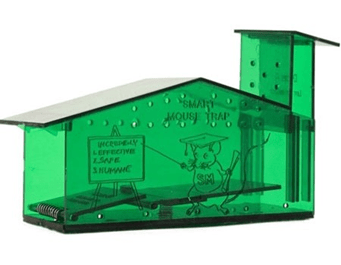
Humane mouse and rat traps are widely available. Add the bait and set so the door will shut once the rodent goes inside. Take to a suitable place and release. Some traps allow for capture of multiple rodents. 

https://www.amazon.co.uk/Motel-Mouse-Humane-Outdoor-Release/dp/B083SSDW4S?th=1


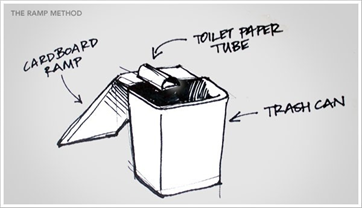
A large, smooth, plastic dustbin with food at the bottom or on a little walkway over the bin. The rats or mice may jump in, or be lured to fall in, but cannot get out as long as the bin is high and smooth enough. Please note: if there is even a little water in the container there is a very real risk of the animal drowning! If outside, then make sure it cannot catch the rain. Alternatively, you can place a stone or something for the rodent to stand on and check it regularly.

journal.chrisglass.com
Download this post as a PDF below

中英版請點這裡 For Mandarin English version click HERE

‘‘Work is love made visible’’ (Khalil Gibran)
(
工作是看得見的愛。)

原始文字與部分圖片由作者提供,翻譯由 ChatGPT 協助完成。
Original text & some images by author, translated with the help of ChatGPT

地球和事佬
The Peacemaker Foundation

促進健康與福祉的免費學習資料
Free Learning Resources to Promote Health & Well-being

人道、安全又有效的除蟲方法 Humane, Safe & Effective Pest Control 中英

許多所謂的除蟲「解決方法」比害蟲本身還更有害。以下是一些最有效、安全且人道的方法。請注意:即使是天然的食物與油品也可能對寵物具有高度毒性,因此飼主使用時需小心,並查詢是否有毒。
Many pest control “solutions” are far more harmful than the pests they aim to get rid of. Here are some of the most effective, safe and humane methods. Please note that even natural foods and oils can be highly toxic to pets, so pet owners should use with caution and check for any toxicity.

一般建議
General Advice

預防
Prevention

將食物密封保存。請使用盒子、袋子與冰箱。廚餘請放入有蓋的容器中。垃圾袋不要敞開放置。Seal food.  Use boxes, bags and the fridge.  Use sealed containers for food scraps. Ensure garbage bags aren’t left open. 

清除所有食物殘留。
Clean away all traces of food.  

封住害蟲可能進入的洞口或裂縫,但要確保不要把動物困在密閉空間內。
Seal openings such as holes or cracks where the pests can come through, but make sure you don’t trap any of the creatures inside an enclosed space.   

關閉窗戶與門。
Keep windows and doors closed.

不要讓水積在某個地方(螞蟻、蟑螂等會靠喝水生存)。
Don’t leave areas of standing water (various creatures such as ants and cockroaches may survive by drinking the water).

Silicon lid over plug

用蓋子蓋住排水孔或水槽。可以使用矽膠杯蓋*,這能防止蚊子在水中產卵,也能防止昆蟲在水龍頭開啟時被沖走,避免牠們喝水,或可能進入室內。
Keep drains and plug holes covered.  Using silicone cup covers* is one way.  This can stop mosquitoes from laying eggs in the water, save insects from being washed away when the tap is running, stops them from drinking the water and possibly from coming in. 
從現在起,所有標有*的技巧,皆由本作者和地球和事佬基金會創辦人 Luc 所發明。
(Henceforth any techniques marked * were invented by Luc the author and the founder of the Peacemaker Foundation)

如何抓住害蟲
How to catch pests 

在容器底部放些食物,放一段時間。當動物進入後,把容器封住並帶到戶外放生。
Put some food at the base of a container and leave it for a while.  Once the creatures are in the container seal it and take outside to release.    

用透明塑膠容器將動物圍住,再用卡片滑入底部。將卡片壓住,帶到外面釋放。對於蚊子、蜘蛛、螞蟻、蟑螂等小型動物,一隻單手可握的塑膠杯或小盒子通常足夠。但這方法不太適合抓老鼠,若容器夠大,也不是不可能。
Pursue and trap the creature within a transparent plastic container and then slide card underneath. Hold the card in place, take outside and release. For creatures such as mosquitoes, spiders, ants and cockroaches a plastic tub or cup small enough to be held with one hand is usually big enough. Not a recommended method for catching rodents, however; this is also possible with a larger container.

Bug Buster Insect Vacuum

使用吸蟲器,如 Bug Buster 或 Bug Zooka。對小型蟑螂、蜘蛛和蚊子特別有效。
Use a bug vacuum, such as the Bug Buster or Bug Zooka.  Especially effective with small cockroaches, spiders and mosquitoes.  

白牆能幫助你更容易發現許多動物,尤其是蚊子。
White walls make spotting many creatures easier, especially mosquitoes.  

蚊子
Mosquitoes

防蚊措施
Mosquitoes Prevention

使用紗窗(通常裝在窗戶上)。
Use mosquito screens (normally over windows). 

使用蚊帳(若有需要,通常掛在床上)。
Use mosquito nets (usually over beds if needed).

不要留下蚊子能產卵的積水。
Don’t leave areas of standing water where mosquitos can breed.

為了不吸引蚊子,避免穿黑色衣服、抽菸、喝酒與過多香水。
In order to not attract mosquitoes, avoid black clothing, smoking, alcohol and excessive amounts of perfume.  

天然防蚊劑(注意:許多精油對貓、狗及其他寵物具高度毒性。有養寵物者請避免使用或查詢毒性):Natural Mosquito Repellents (NOTE:  many essential oils are highly toxic to cats and dogs and other pets. Avoid using them if you have a pet or check toxicity carefully.)

• 香茅 Lemon grass

• 迷迭香 Rosemary

• 尤加利油 Eucalyptus oil 

• 薄荷油 Peppermint oil

• 薰衣草 Lavender

• 羅勒 Basil

• 大蒜 Garlic

防蚊技巧
Mosquito Repellent Techniques

蘋果醋(塗抹在蚊子叮咬處,有助消腫,也可能有防蚊效果)。
Apple Cider Vinegar (apply to bites on skin to help swelling go down and may also repel mosquitoes). 

引誘蚊子:放幾塊水果(蘋果即可)在無螞蟻的盤子或瓶子裡,靠近你放置。這可能吸引蚊子遠離你。特別適合在睡覺時使用,將其放在枕頭附近。這也可能吸引更多蚊子,所以僅在門窗密封、室內已有蚊子的情況下使用。Mosquito lure: To reduce the chance of being bitten place some pieces of fruit right (apple works) near you on an ant free plate or in a bottle. This can attract the mosquito away from you. Especially suitable when sleeping, – place nearby your pillow. This could attract more mosquitoes so only do this if doors and windows are sealed and mosquitoes are already in the room!

電風扇
Fans

把風扇或冷氣的風對準你將躺下或坐下的位置上方*,氣流會吹走蚊子及牠們所依賴的二氧化碳。
Direct the breeze from a fan or air conditioning unit to just above where you will lie or sit.* The breeze will blow the mosquitos away as well as the carbon dioxide in your breathe to which they’re attracted.* *(invented by author)

使用紙扇、雨傘、報紙等物品拍走蚊子,尤其是在出入建築物時。可在扇子紙面或布面上塗些天然防蚊油,但要小心部分油品可能刺激眼睛。*
Use a hand-held paper fan, umbrella, newspaper or similar object to waft away mosquitoes, especially when going in or out of a building.  You can dab natural repellent oils onto the fan’s paper or cloth but beware of any eye irritation from some oils.* *(invented by author)

出入門口時可用門當作扇子:快速打開,部分關閉,再迅速開門進入。*
When exiting or entering a building you can use the door as a fan: quickly open, partly close, and then reopen the door and quickly enter.* 

如何抓蚊子
How to catch mosquitoes     

thehealthyhomeeconomist.com

使用瓶子陷阱。對其他飛蟲也有效。瓶中昆蟲常不會活太久,請常常檢查並放生。可設定鬧鐘提醒你檢查。為了吸引更多蚊子,可在瓶子外包上黑布、黑紙或深色襪子(檢查時記得移除)。
Use a bottle trap. Also works for other flying bugs.  The bugs often don’t survive for long in the bottle so check it frequently and release any bugs. You could set an alarm to periodically ring to remind you to check. To get more mosquitoes you can also wrap the bottle in a removable dark cloth, paper or sock (remove when checking). 

螞蟻與蟑螂這類爬行昆蟲
Ants, cockroaches & other crawling bugs

自製護蟲盤(防蟲水盤)
DIY Moat plates 

儘管應限制積水,水本身仍是良好的防線。可拿一個大盤子稍微加水,再在上面放一個小盤子,就能做成防蟲水盤*。蟲越大,護城河要越寬。
Although it’s often best to limit the amount of exposed standing water, water is also an effective barrier.  You can take a plate and fill slightly with water and then add another smaller plate on top to create a bug-free moat plate.*  The bigger the bugs, the bigger the moat needs to be.    

在大托盤上貼五個吸盤。加水形成防蟲盤,再放一個小托盤在上面。* 若只針對螞蟻,盤子中不加水,而是在吸盤上塗凡士林即可。
Push down five suction cups onto the top surface of a large tray.  To stop all crawling bugs fill the tray with water.  Then add a smaller tray on top to create a DIY bug-proof tray.*  A problem is that bugs may drink the water and ants may get trapped in it.  For ants only then instead of filling with water simply add petroleum jelly/Vaseline onto the suction cups.  

防蟲廚房(Ant and cockroach proof kitchen)

螞蟻
Ants

防螞蟻措施
Ants Prevention

防螞蟻托盤。有些可購買的防螞蟻托盤使用水,效果通常良好。若僅靠設計中的物理障礙,效果可能不完全。但可加上凡士林,使其幾乎百分百有效。
Ant proof trays.  Some ant-proof trays available to buy use water and are often effective.  If the ant-proof trays just use physical barriers within the design (without water) they may not be 100% effective.  However; you can add Petroleum jelly (henceforth P.J) to the barriers making them close to 100% effective.      

凡士林是極佳的防螞蟻障礙物。可在螞蟻出入口畫一圈凡士林,比起封死洞口更好,因為不會把牠們困住。在桌腳或床腳塗上凡士林也能防螞蟻,盆栽底部也可塗,以防螞蟻築巢。
P.J or Vaseline is a great ant barrier.  Make a ring of P.J around ant holes.  This is preferable to blocking the holes because it won’t trap them inside. Put P.J around the legs of tables or beds to make them ant-proof.  Also put P.J under the rims of plant pots to stop ants from nesting in the soil.    

其他可作為障礙的材料(效果通常不如水或凡士林)包括:粉筆、爽身粉、白雲石粉、辣椒粉、辣椒、肉桂、咖啡渣。也可使用肉桂油、柑橘油與檸檬汁(可用線浸泡),這些也能放在櫃子角落作為驅蟻劑。
Other materials that can serve as ant barriers (but are usually less effective than P.J or water) are chalk, talcum powder, dolomite, hot chilli powder, cayenne pepper, cinnamon, and coffee grounds. Also effective are cinnamon oil, citrus oil, and lemon juice (all of which can also be soaked into a piece of string). These barrier materials are often unpleasant for ants so you can put some in corners of cubbies and drawers as a deterrent as well as the other natural repellents listed below.  

天然驅蟻劑
Natural Ant Repellents
(注意:許多精油對寵物有毒)
(NOTE: many essential oils are highly toxic to pets)

• 蘋果醋 (Apple cider) vinegar

• 檸檬汁 Lemon juice

• 肉桂 Cinnamon 

• 大蒜 Garlic 

• 薄荷 Peppermint

• 碳酸氫鈉(小蘇打粉) Sodium bicarbonate (Baking soda) 

• 小黃瓜(皮也可以)Cucumber (peels work fine) 

如何抓螞蟻
How to catch ants

在瓶口周圍塗植物油,在瓶內放螞蟻喜歡的食物。可將瓶子埋入土中。
Put vegetable oil around the rim of a jar. Place food that ants like inside the jar. Can also put the jar into a hole in the ground.  

蟑螂
Cockroaches

防蟑措施
Cockroach prevention

壁虎會吃蟑螂。如果你不想要蟑螂而看到壁虎,就讓牠留著。
Geckos eat cockroaches. So if you don’t want cockroaches and see a gecko just leave it be. 

用醋水清潔表面。
Clean surfaces with vinegar mixed with water.  

丟掉紙箱(蟑螂喜歡紙箱)。
Get rid of cardboard (cockroaches love it).

天然驅蟑劑
Natural cockroach Repellents
(注意:許多精油對寵物有毒)
(NOTE: many essential oils are highly toxic to pets)

• 茶樹油(毒性強)Tea tree oil (highly toxic)

• 柏樹油 Cypress oil

• 薄荷油 Peppermint oil

• 薄荷葉 Mint

• 月桂葉 Bay leaves

• 小黃瓜 Cucumbers

• 大蒜 Garlic

• 貓薄荷 Catnip
(但要注意對貓的影響) (but be aware of its effects on some cats)

天然驅蟑技巧
Natural cockroach repellent techniques

有些插電設備會發出蟑螂不喜歡的頻率(但效果不一定)。
Some plug-in devices are available which emit frequencies supposedly unpleasant for cockroaches (but results are often mixed).

如何抓蟑螂
How to catch cockroaches

人道蟑螂陷阱可以讓蟑螂進入卻無法逃出。為了防止螞蟻進入,可將陷阱放在防蟻盤中,或用粉筆或凡士林畫圈圍住陷阱。
Humane cockroach traps allow cockroaches in but not out.  To stop ants while still attracting cockroaches put the trap onto an ant-proof tray or draw a line of chalk or P.J around the traps.      

老鼠
Rats & Mice

防鼠措施
Rodent Prevention

預防遠勝於事後處理。阻止牠們接觸到食物、水、棲身處與築巢地點。
It cannot be emphasised enough: prevention is better than cure. Prevent access to food, water, shelter and nesting sites. 

封住洞口是一種方法。使用鋼絲絨快速有效。但要確保不會把動物困在裡面。可先在封住處放一些驅鼠劑,等待一段時間讓動物離開後再封口。
One way is to block holes. Using steel wool is a quick and effective way. Just be sure to not trap any animals inside an enclosed space. To reduce risk of this you could add one of the repellents below to the area you wish to seal off, wait a period of time for the animals to vacate and then seal the opening(s). 

將食物與飲料盡量裝入密封容器。若無法密封,則應放在老鼠無法跳上去的表面上。例如:將食物放在中間只有一根柱腳的高桌上,並且離其他家具有距離,這樣比放在可輕易攀爬的桌子上安全。
Put sources of food and drink in sealed containers wherever possible, or if left open then on surfaces beyond jumping distance from any other ledges or surfaces that a rodent could access. For example, food on a  high table with a single central leg, placed in the middle of a large room would be safer than food on a table with adjoining furniture.

天然驅鼠劑
Natural Rodent Repellent

薄荷油:滴在棉花球上,放在角落。每一兩天更換棉花球,持續一至兩週,然後封住洞口。可加牛至油提升效果。也可用擴香器散播薄荷油。但注意!薄荷油對貓狗有毒,用這方法時寵物絕對不能在室內。
Peppermint oil. Place peppermint oil onto cotton pads and place in the corners of the space. Add more cotton pads every day or two for a week or two, and then seal any holes. You can also add some oil of Oregano for extra potency. Another way is to place the peppermint oil in a diffuser. Note that Peppermint oil, while generally safe for humans, is toxic to cats and dogs! They absolutely cannot be in the room if you use this method.

香杉油:是美國 FDA 認可的「Fresh Cab」驅鼠劑成分。(避免在貓狗附近使用)。
Balsam Fir Oil. This is used in the FDA approved ‘Fresh cab’ repellent available to buy.  (avoid use around dogs and especially cats).

在非洲,白刺樹(Senegalia polyacantha subsp. campylacantha)的根會釋出可驅趕老鼠、蛇、鱷魚的氣味。
In Africa the roots of the Whitethorn/Witdoring tree (Senegalia polyacantha subsp. campylacantha) emit chemicals that repel rats, snakes as well as crocodiles. 

在遭鼠患處滴少量貓尿也有效,但尿液中的氨會影響健康,且可能吸引其他動物。若使用,請戴口罩並保持通風。或者直接養一隻貓,但貓可能不會抓老鼠,而且有弓蟲感染風險
Note that adding small amounts of cat urine to infested areas also works but the ammonia in the urine can be unhealthy to inhale beyond a certain amount and may also attract other animals. If you do this then use with caution and wear a good mask or ventilate as you place the urine. Alternatively, just get a cat, but the cat may not be a mouser, and with cats around rodents there is the risk of Toxoplasma.  

驅鼠技巧
Rodent Repellent Techniques

插電裝置可發出對老鼠不舒服但人聽不到的頻率(效果有時短暫或不穩定)。
Plug-in devices that emit frequencies unpleasant for rodents but supposedly inaudible to humans (this method does not always work, or sometimes only works for a short time).

閃光燈(效果有限,老鼠可能會習慣)。
Strobe lighting (limited effectiveness as the rodents can become used to it).        

混合沙拉油、辣根、大蒜與辣椒,靜置幾天後濾出,用噴瓶噴在表面。
Mix salad oil, horseradish, garlic and cayenne pepper. Let the oil sit several days, then strain. Use a spray bottle to coat surfaces.      

如何抓老鼠
How to catch rodents
注意:被困住的動物會承受極大壓力,尤其在極端氣溫下,可能撐不了多久就無法活下去。因此請務必經常檢查陷阱,並盡快在適當的地點將牠們放生
Note: The trapped creatures undergo a lot of stress and may not survive for very long in the trap, especially in extreme temperatures. So please do remember to check traps regularly and set the creatures free as soon as possible in a suitable place!

有許多可重複使用的人道老鼠陷阱可買。放好誘餌,設定機關,老鼠進入即關門。帶去安全地點釋放。有些陷阱可同時捕捉多隻老鼠。
Humane mouse and rat traps are widely available. Add the bait and set so the door will shut once the rodent goes inside. Take to a suitable place and release. Some traps allow for capture of multiple rodents. 

https://www.amazon.co.uk/Motel-Mouse-Humane-Outdoor-Release/dp/B083SSDW4S?th=1

可用一個大塑膠垃圾桶,裡面放食物或一座小橋引誘老鼠跳進去。桶子夠高又光滑時牠們無法爬出。但要注意!若桶內有一點水,老鼠可能會溺斃。若放在室外,請避免下雨淋入水。也可放一塊石頭讓牠們站立,並經常檢查。
A large, smooth, plastic dustbin with food at the bottom or on a little walkway over the bin. The rats or mice may jump in, or be lured to fall in, but cannot get out as long as the bin is high and smooth enough. Please note: if there is even a little water in the container there is a very real risk of the animal drowning! If outside, then make sure it cannot catch the rain. Alternatively, you can place a stone or something for the rodent to stand on and check it regularly.

journal.chrisglass.com

請在下方下載這篇貼文的 PDF。
Download this post as a PDF below

英文版請點這裡 For English version click HERE

‘‘Work is love made visible’’ (Khalil Gibran)
(
工作是看得見的愛。)

原始文字與部分圖片由作者提供,翻譯由 ChatGPT 協助完成。
Original text & some images by author, translated with the help of ChatGPT

地球和事佬
The Peacemaker Foundation

促進健康與福祉的免費學習資料
Free Learning Resources to Promote Health & Well-being

Personal Light Electric Vehicles Interactive Decision Matrix Comparison Charts

Thinking of buying an electric scooter or other transport tool? This is where you can numerically compare Personal Light Electric Vehicles‘ (PLEVs) based on your own specific needs. At the time of writing there is nothing like this anywhere else online. To understand how a decision matrix works see the 2 minute video below and then read on:

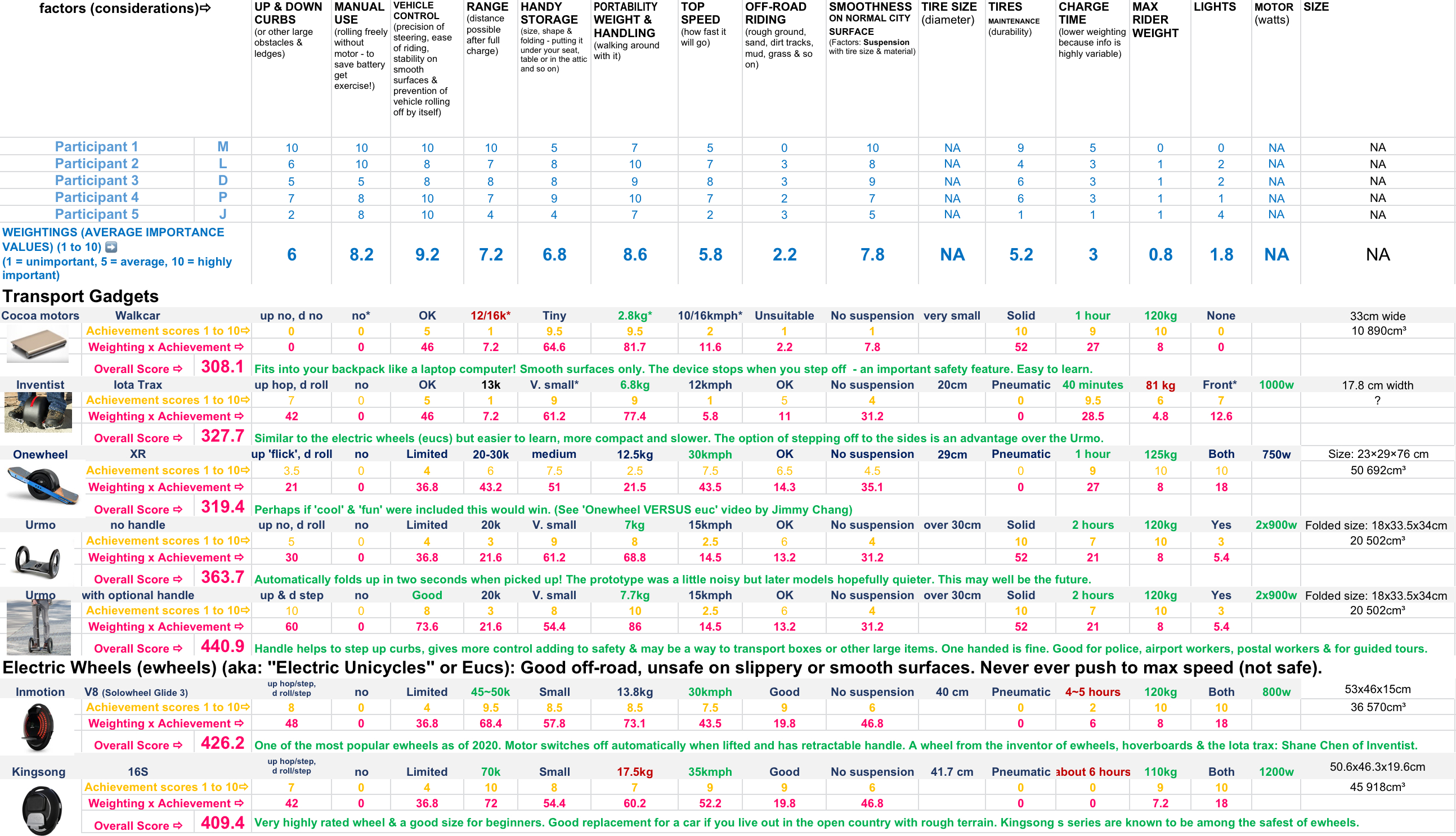
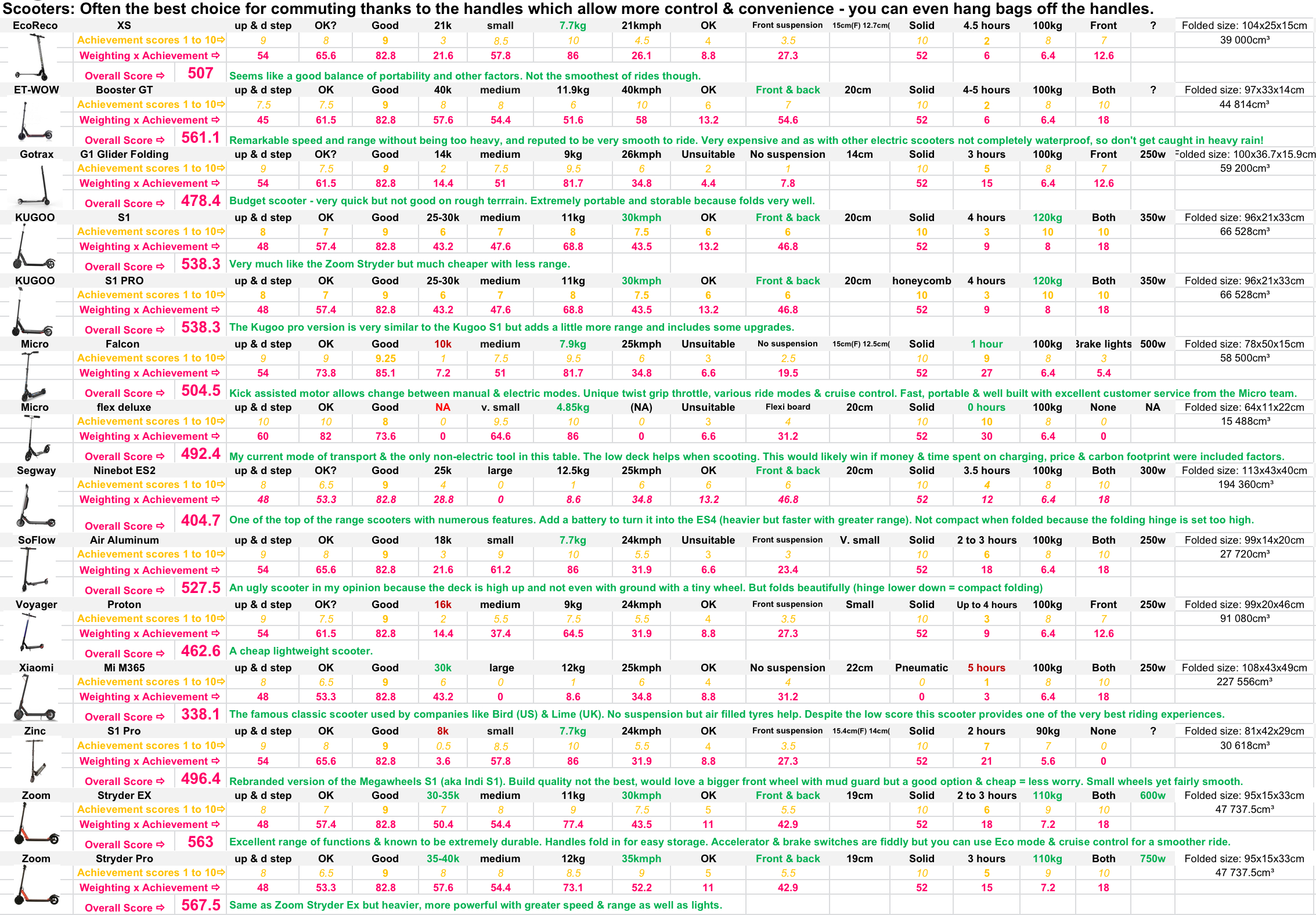
In the interactive self-adjusting decision matrix below, transport tools are shown in the left column and factors (considerations) are on the top row. For every factor you can enter a weighting (importance value) from 0 (totally unimportant) to 10 (essential). Just replace the default weighting of 5 with your own weighting (from 1 to 10).  For example, if you feel ‘Portability’ is quite important you might give it a weighting of 7. If you feel ‘Top Speed’ is fairly unimportant you might give it a weighting of 2. For each factor (consideration) a transport tool already has an achievement score which is how well it performs in that factor area. The achievement score is based on OBJECTIVE data (see base of table for explanations). For example, the Urmo gets a low achievement score of 2.5 for the ‘Top speed’ factor because it’s fairly slow. The objective achievement score is multiplied by your subjective weighting to produce a weighting x achievement score. So for the Urmo in the ‘Top speed’ category it would be 2 (your weighting) x 2.5 (achievement score) = 5 (weighting x achievement score). The overall score for each gadget is the sum total of all weighting x achievement scores. The tool with the highest score is likely to be the most suitable based on your needs. The table will update automatically as you enter the importance values (weightings).

See below for a quick example video (the chart no longer works on the webpage as shown in the video so just use the buttons below to open it in Google Sheets or Excel):

A STATIC (NON-INTERACTIVE) COMPARISON TABLE (LIGHTWEIGHT PORTABLE TRANSPORT TOOLS)

SAFETY UPDATE IN 2021 – MAKE SURE THE STEM IS LOCKED IN BEFORE RIDING! The main stem on my Kugoo S1 Pro once gave way while riding, I had already gone a couple of miles on it when it came loose. It’s possible that I didn’t click it in properly or it may have come loose while riding.  The result was not pretty and I’ve only just gained use of my right hand & wrist again so am typing this. The handlebar is a major reason why scooters outperform the other gadgets in safety, but please do make sure you check the handlebar stem is fully locked in place before riding, avoid riding at speed over rough terrain or at least check the stem lock after doing so. Also buy a scooter with an effective stem lock! NOTE: The Kugoo S1, both E-TWOW scooters and the Micro Explorer all use the same basic frame with the same stem lock!

UPDATE 2025
Having used the tables above to buy and try various transport tools I have settled on using my Micro Falcon scooter for short distance last mile transport. It rolls beautifully in active mode and actively kicking it along helps pedestrians to feel more at ease although usually I get off and walk past oncoming pedestrians. In places where escooters are banned so far I have always used the excuse that it is a ‘hybrid’ and so far that has worked. It’s so small and portable that it’s just less of an issue and I believe this has fantastic potential as an urban transport tool. It’s out of production at present but I hope that Micro produce an upgraded version with a light, a softer front tire and deck (I add jelly mats and rubber to help cushion the ride).
Also The Urmo is not currently available and production plans have come to a halt. ‘Zoom’ company seems to be out of business now. Also various other scooters not included here have been highly rated on Electric Scooter Guide.com so check them out as well HERE if interested. 

For scooter rental schemes

If you are looking here for a scooter to use in a rental scheme with a capped speed lower than all the top speeds of the scooters shown then you should enter ‘0’ as a weighting (importance value) for the speed factor. Likewise, you may wish to give ‘portability’ a lower weighting given that most users will dock their scooters rather than push or carry them around.

If you would like us to make a revised matrix with additional factors specific to your rental scheme or with other transport tools added just let us know – happy to help! 

OLDER CONTENT SHOWN BELOW

We believe that we now need to embrace lightweight portable transport to help slow global warming, boost people’s well-being through cleaner air & maintaining a safe social distance.

To see mindmaps showing pros and cons of different transport gadgets click HERE

Some older gadgets – a comparison chart made in 2015

ELPT, Electric Lightweight Portable Transport Tools, Electric Mobility Devices

Download
PDF: Transportables
Word File: Transportables

Gadget names

I suggested ‘Transportables‘ (transport tools that are portable)
& also ‘Lightweight Portable Transport‘ (LPT).
Here are some competing names:
Personal transport gadgets (PTGs?)
Personal Light Electric Vehicles‘ (PLEVs) (the term used by the UK government),
Powered Transporters‘,
Rideables‘ (possibly from Wired magazine).

”EUCS” or ”electric unicycles” involve no cyling so it’s a misnomer. Much better to call them Electric self-balancing wheels, electric wheels or just ewheels. Another suggestion I saw was motor wheels.

都市綠流計畫 The Urban Flow Plan 中英

造成汙染的汽車。
Polluting vehicles.

造成汙染的汽車(替代道路配置)。
Polluting vehicles (alternative layout).

造成汙染的汽車可是有更多LPT(輕便交通工具)例如自行車、電動踏板車、等等。
Polluting vehicles but with more LPT (lightweight portable transport) such as bikes, escooters & so on.

電動車還有更多的LPT(輕便交通工具)。
Electric vehicles & more LPT (lightweight portable transport).

都市綠流計畫 , 第一步驟
城市中選出一兩條道路成為「綠色通道」,僅開放給無污染的輕便交通工具通行。除了緊急車輛和必要的大型送貨車輛外,不允許大型污染車輛進入。
STEP 1 (OF URBAN FLOW PLAN)
One or two roads in a city chosen to become ‘Greenways’. Only open to non-polluting LPT. No large polluting vehicles other than emergency vehicles & essential large deliveries.

步驟 1.1(選擇性)
跟上面一樣,但交通流量更順暢。
STEP 1.1 (optional extra)
As above but with improved flow.

步驟 2
行人位於上層。實現安全與持續通行:沒有人需要等待他人。行人可以搭乘自動人行道。
STEP 2
Pedestrians above. Safety & continuous flow achieved: noone has to wait for anyone else. Pedestrians could be on travelators.

步驟 3
膠囊車或自動人行道設於上層。這是可選的後續加設項目,視前面步驟的受歡迎程度而定。
STEP 3
Pod cars or travelators above. An optional addition for later on pending popularity of earlier steps.

步驟 1 撤回(如有需要)
綠色通道改回一般道路,但上層仍保留行人與膠囊車設施。步驟 1 可隨時撤回,這是本計畫的一大安全特色。STEP 1 UNDONE (IN CASE NEED BE)
Greenway changed back to regular road but still with pedestrians & pod cars above. Step 1 is reversible at any time which is a huge safety feature of this plan.

在下方以投影片方式瀏覽
View as a slideshow below

另一個「都市通行計畫」的例子如下,這次是以香港的一個路口為示範,並加入更多選項。如要開啟投影片瀏覽器,只需點擊任意圖片。
Another example of the Urban flow plan is shown below, this time using a junction in Hong Kong and adding extra options. To open slideshow viewer just click on any picture.

本篇貼文中的所有圖片皆由作者親自以 iPad 使用 Procreate 應用程式手繪完成,耗時無數小時。(香港照片來源:ze big-trip.com)
All pictures in this post were hand painted by the author over countless hours on an iPad using the Procreate app. (HK photo credit ze big-trip.com)

英文版請點這裡 For English version click HERE

專心在你的目標上 Focus on your goals

Suggested use for most learners is to just enjoy the story & maybe gain some insight from it rather than try to learn all the related words. However, as you listen or read see how much of the meaning you can catch! You can highlight the text in a PDF reader & press speak or play if possible, or copy the text & paste into Microsoft word or Pleco & then play from there. See a text to speech video here: https://waylink.co.uk/mandarin-chinese/handy-learning-tricks-methods/

The Power of Determination

The little country schoolhouse was heated by an old fashioned, pot-bellied stove. A little boy had the job of coming to school early each day to start the fire and warm the room before his teacher and his classmates arrived. One morning they arrived to find the schoolhouse engulfed in flames. They dragged the unconscious little boy out of the flaming building more dead than alive. He had major burns over the lower half of his body and was taken to the nearby county hospital. From his bed the dreadfully burned, semi-conscious little boy faintly heart the doctor talking to his mother. The doctor told his mother that her son would surely die – which was for the best, really – for the terrible fire had devastated the lower half of his body. But the brave boy didn’t want to die. He made up his mind that he would survive. Somehow, to the amazement of the physician, he did survive. When the mortal danger was past, he again heard the doctor and his mother speaking quietly. The mother was told that since the fire had destroyed so much flesh in the lower part of his body, it would almost be better if he had died, since he was doomed to be a lifetime cripple with no use at all of his lower limbs. Once more the brave boy made up his mind. He would not be a cripple. He would walk. But unfortunately from the waist down, he had no motor ability. His thin legs just dangled there, all but lifeless. Ultimately he was released from the hospital. Every day his mother would massage his little legs, but there was no feeling, no control, nothing. Yet his determination that he would walk was as strong as ever. When he wasn’t in bed, he was confined to a wheelchair. One sunny day his mother wheeled him out into the yard to get some fresh air. This day, instead of sitting there, he threw himself from the chair. He pulled himself across the grass, dragging his legs behind him. He worked his way to the white picket fence bordering their lot. With great effort, he raised himself up on the fence. Then, stake by stake, he began dragging himself along the fence, resolved that he would walk. He started to do this every day until he wore a smooth path all around the yard beside the fence. There was nothing he wanted more than to develop life in those legs. Ultimately through his daily massages, his iron persistence and his resolute determination, he did develop the ability to stand up, then to walk haltingly, then to walk by himself – and then – to run. He began to walk to school, then to run to school, to run for the sheer joy of running. Later in college he made the track team. Still later in Madison Square Garden this young man who was not expected to survive, who would surely never walk, who could never hope to run – this determined young man, Dr. Glenn Cunningham, ran the world’s fastest mile!

By Burt Dubin from ‘Chicken Soup for the Soul’, copyright 1993 (Jack Canfield and Mark Victor Hansen)

SIMPLIFIED CHARACTERS (A TRANSLATION)

决心的力量

那是一間鄉下的小學校,靠著一個老式的肚子鼓鼓的爐子取暖。每天有一個小男孩負責早一點到學校,先把火生起來,好讓教室在老師和同學們來之前變暖和。

有一天早上,大家到的時候,發現整間學校都著火了。他們把昏迷的小男孩從火裡拖了出來,那時他幾乎已經沒有生命跡象了。他下半身嚴重燒傷,被送到附近的縣立醫院。

在病床上,這個小男孩雖然被燒得很慘、幾乎昏迷,但他模模糊糊地聽到醫生在和他媽媽說話。醫生對他媽媽說,她的兒子一定活不下來了——其實這樣也許比較好,因為大火燒壞了他整個下半身。

但是這個勇敢的小男孩不想死。他下定決心要活下來。結果他真的活下來了,連醫生都很驚訝。等他不再有生命危險的時候,他又聽見醫生和媽媽在小聲說話。醫生說,因為他下半身的皮肉幾乎都燒光了,也許他死了還比較好,因為他這一輩子都不可能再用到自己的腿,只能當一個殘障的人。

這個小男孩又一次下定決心:他不要當一個殘障的人,他要走路。但他從腰部以下完全不能動,兩條細細的腿只是掛在那裡,幾乎一點力氣都沒有。

最後他出院了。每天他媽媽都幫他按摩腿,可是他還是沒感覺,不能動,什麼都做不到。可是他要走路的決心一樣那麼強。

除了在床上的時間,他一直坐在輪椅上。有一天,天氣很好,他媽媽推著他到院子裡透氣。那天,他不想只是坐著,他從輪椅上跳下來,一點一點地爬過草地,把兩條腿拖在後面。

他慢慢地爬到院子邊上的白色木欄杆旁邊。他非常吃力地站起來,抓住欄杆,一根一根往前移動。他告訴自己:他一定要學會走路。從那天起,他每天都這樣練習,最後在欄杆邊上拖出一條光滑的路。他心裡最想要的,就是讓自己的腿重新有生命。

靠著每天按摩、堅持不放棄的心和強烈的決心,他慢慢地能站起來,然後一點一點地學會走路,後來甚至可以自己走——然後——開始跑步。

他開始走路上學,然後跑去上學,後來為了享受奔跑的快樂而跑步。上了大學以後,他進入了田徑隊。

後來,在美國麥迪遜廣場花園,這位原本被認為活不下來、永遠不能走路、絕對不可能跑步的年輕人——這位意志堅定的年輕人,格伦·坎宁安醫生(Dr. Glenn Cunningham),創下了世界上最快的一英里跑步紀錄!

決心的力量

那是一間鄉下的小學校,靠著一個老式的肚子鼓鼓的爐子取暖。每天有一個小男孩負責早一點到學校,先把火生起來,好讓教室在老師和同學們來之前變暖和。

有一天早上,大家到的時候,發現整間學校都著火了。他們把昏迷的小男孩從火裡拖了出來,那時他幾乎已經沒有生命跡象了。他下半身嚴重燒傷,被送到附近的縣立醫院。

在病床上,這個小男孩雖然被燒得很慘、幾乎昏迷,但他模模糊糊地聽到醫生在和他媽媽說話。醫生對他媽媽說,她的兒子一定活不下來了——其實這樣也許比較好,因為大火燒壞了他整個下半身。

但是這個勇敢的小男孩不想死。他下定決心要活下來。結果他真的活下來了,連醫生都很驚訝。等他不再有生命危險的時候,他又聽見醫生和媽媽在小聲說話。醫生說,因為他下半身的皮肉幾乎都燒光了,也許他死了還比較好,因為他這一輩子都不可能再用到自己的腿,只能當一個殘障的人。

這個小男孩又一次下定決心:他不要當一個殘障的人,他要走路。但他從腰部以下完全不能動,兩條細細的腿只是掛在那裡,幾乎一點力氣都沒有。

最後他出院了。每天他媽媽都幫他按摩腿,可是他還是沒感覺,不能動,什麼都做不到。可是他要走路的決心一樣那麼強。

除了在床上的時間,他一直坐在輪椅上。有一天,天氣很好,他媽媽推著他到院子裡透氣。那天,他不想只是坐著,他從輪椅上跳下來,一點一點地爬過草地,把兩條腿拖在後面。

他慢慢地爬到院子邊上的白色木欄杆旁邊。他非常吃力地站起來,抓住欄杆,一根一根往前移動。他告訴自己:他一定要學會走路。從那天起,他每天都這樣練習,最後在欄杆邊上拖出一條光滑的路。他心裡最想要的,就是讓自己的腿重新有生命。

靠著每天按摩、堅持不放棄的心和強烈的決心,他慢慢地能站起來,然後一點一點地學會走路,後來甚至可以自己走——然後——開始跑步。

他開始走路上學,然後跑去上學,後來為了享受奔跑的快樂而跑步。上了大學以後,他進入了田徑隊。

後來,在美國麥迪遜廣場花園,這位原本被認為活不下來、永遠不能走路、絕對不可能跑步的年輕人——這位意志堅定的年輕人,格倫·坎寧安醫生(Dr. Glenn Cunningham),創下了世界上最快的一英里跑步紀錄!

Do you feel there is a message in this story or any wisdom that you can gain from it?
你觉得这个故事有什么意义,或能给你什么智慧吗?
你覺得這個故事有什麼意義,或能給你什麼智慧嗎?

If you need inspiration before sharing your ideas, then here are some things that may help:
如果你在分享想法之前需要一些灵感,那么以下内容或许能帮助你:
如果你在分享想法之前需要一些靈感,那麼以下內容或許能幫助你:

Two quotes
两句名言
兩句名言

“Most of the important things in the world have been accomplished by people who have kept on trying when there seemed to be no hope at all.” (Dale Carnegie)
世界上大多数重要的事情,都是由那些在似乎毫无希望时仍然坚持努力的人完成的。’
「世界上大多數重要的事情,都是由那些在似乎毫無希望時仍然堅持努力的人完成的。」

“Nothing in this world can take the place of persistence. Talent will not; nothing is more common than unsuccessful people with talent. Genius will not; unrewarded genius is almost a proverb. Education will not; the world is full of educated derelicts. Persistence and determination alone are omnipotent. The slogan ‘press on’ has solved and always will solve the problems of the human race.” (Calvin Coolidge)  

「这个世界上没有什么能取代坚持。才能不行;有才华但失败的人比比皆是。天才也不行;得不到回报的天才几乎成了一句谚语。教育也不行;这世界上充满了受过教育却一事无成的人。唯有坚持与决心是无所不能的。『坚持下去』这句口号已经解决了人类的许多问题,也将继续解决下去。」
「這個世界上沒有什麼能取代堅持。才能不行;有才華但失敗的人比比皆是。天才也不行;得不到回報的天才幾乎成了一句諺語。教育也不行;這世界上充滿了受過教育卻一事無成的人。唯有堅持與決心是無所不能的。『堅持下去』這句口號已經解決了人類的許多問題,也將繼續解決下去。」

Here’s a video of him running at Madison Square Gardens:  https://www.youtube.com/watch?v=tiWB2mR3aPA
这是一段他在麦迪逊广场花园跑步的影片。
這是一段他在麥迪遜廣場花園跑步的影片。

PDF of the above text shown below
上面文字的 PDF 顯示如下
上面文字的 PDF 显示如下

(ethical & transparent AI use: This post was translated with help from chatGPT & then edited but
all text content is original and written by the authors specified)

The urban flow plan

Polluting vehicles.

Polluting vehicles.

Polluting vehicles but with more LPT (lightweight portable transport) such as bikes, escooters & so on.

Electric vehicles & more LPT (lightweight portable transport).

STEP 1 (OF URBAN FLOW PLAN)
One or two roads in a city chosen to become ‘Greenways’. Only open to non-polluting LPT. No large polluting vehicles other than emergency vehicles & essential large deliveries.

STEP 1.1 (optional extra)
As above but with improved flow.

STEP 2
Pedestrians above. Safety & continuous flow achieved: noone has to wait for anyone else. Pedestrians could be on travelators.

STEP 3
Pod cars or travelators above. An optional addition for later on pending popularity of earlier steps.

STEP 1 UNDONE (IN CASE NEED BE)
Greenway changed back to regular road but still with pedestrians & pod cars above. Step 1 is reversible at any time which is a huge safety feature of this plan.

View as a slideshow below

Another example of the Urban flow plan is shown below, this time using a junction in Hong Kong and adding extra options. To open slideshow viewer just click on any picture.

All pictures in this post were hand painted by the author over countless hours on an iPad using the Procreate app. (HK photo credit ze big-trip.com)

中英版請點這裡 For Mandarin English version click HERE

Donate to ICAN & make nuclear weapons illegal

Alongside climate change this I believe has to be our top priority. The ideas of the Dalai Lama in creating peace zones and disarmament are also well worth reading! https://www.dalailama.com/messages/world-peace/disarmament


“If you think you’re too small to make a difference try sleeping in a room with a mosquito.” (The Dalai Lama)


Personally I believe that allowing individual nations to have nuclear weapons as a means of keeping the peace is like allowing kids to carry guns to prevent fist fights at school. It’s time for the United Nations to become the headmaster and for our consciousness to evolve allowing our wisdom to catch up with our technology.


“Our scientific evolution has outrun our spiritual evolution. We have guided missiles and misguided men.” (Martin Luther King)

Presently we have enough problems to face, let’s all play our role in making sure that collectively we can at least get this one thing right by helping wisdom to triumph over cleverness by dismantling these terrible things and forever banning them. Success goes to the mug who has the bottle to say “I can.”

Donate to ICAN

Press HERE to donate to ICAN

”You have a unique chance to contribute to something that will be remembered by coming generations – making nuclear weapons illegal.”

You may also wish to donate to some of the following groups or just see the extremely valuable work they are doing:

UK based

Campaign for Nuclear Disarmament (CND – UK), donation page: https://cnduk.org/donate/

Scottish CND: https://www.banthebomb.org/donate/

Quaker Peace Witness: https://www.quaker.org.uk/give

Acronym Institute: https://www.acronym.org.uk/contact

US based

  • Ploughshares Fund: https:www.ploughshares.org
    • Funds dozens of disarmament initiatives globally.
    • Focuses on reducing the risks of nuclear conflict through policy reform, diplomacy, and grants.
    • Strong U.S. advocacy, which is critical since the U.S. has a large nuclear arsenal.
    • Long track record; trusted by philanthropists and policy experts alike.

  • Nuclear Age Peace Foundation: https:www.wagingpeace.org
    • Focus on education, youth engagement, and legal efforts to promote global denuclearization.
    • They also support international legal efforts to define nuclear weapons as a violation of humanitarian law and raise public awareness.

  • Reaching Critical Will (a program of WILPF – Women’s International League for Peace and Freedom: https:www.reachingcriticalwill.org
    • Provides critical analysis and policy tools to disarmament diplomats and activists.
    • Works from a feminist, anti-militarist perspective and does important behind-the-scenes work at the UN level.

  • Peace Action: https:www.peaceaction.org
    • Oldest and largest U.S. grassroots peace network.
    • Mobilizes public opposition to nuclear weapons and lobbies Congress to reduce spending on them so has real legislative influence.

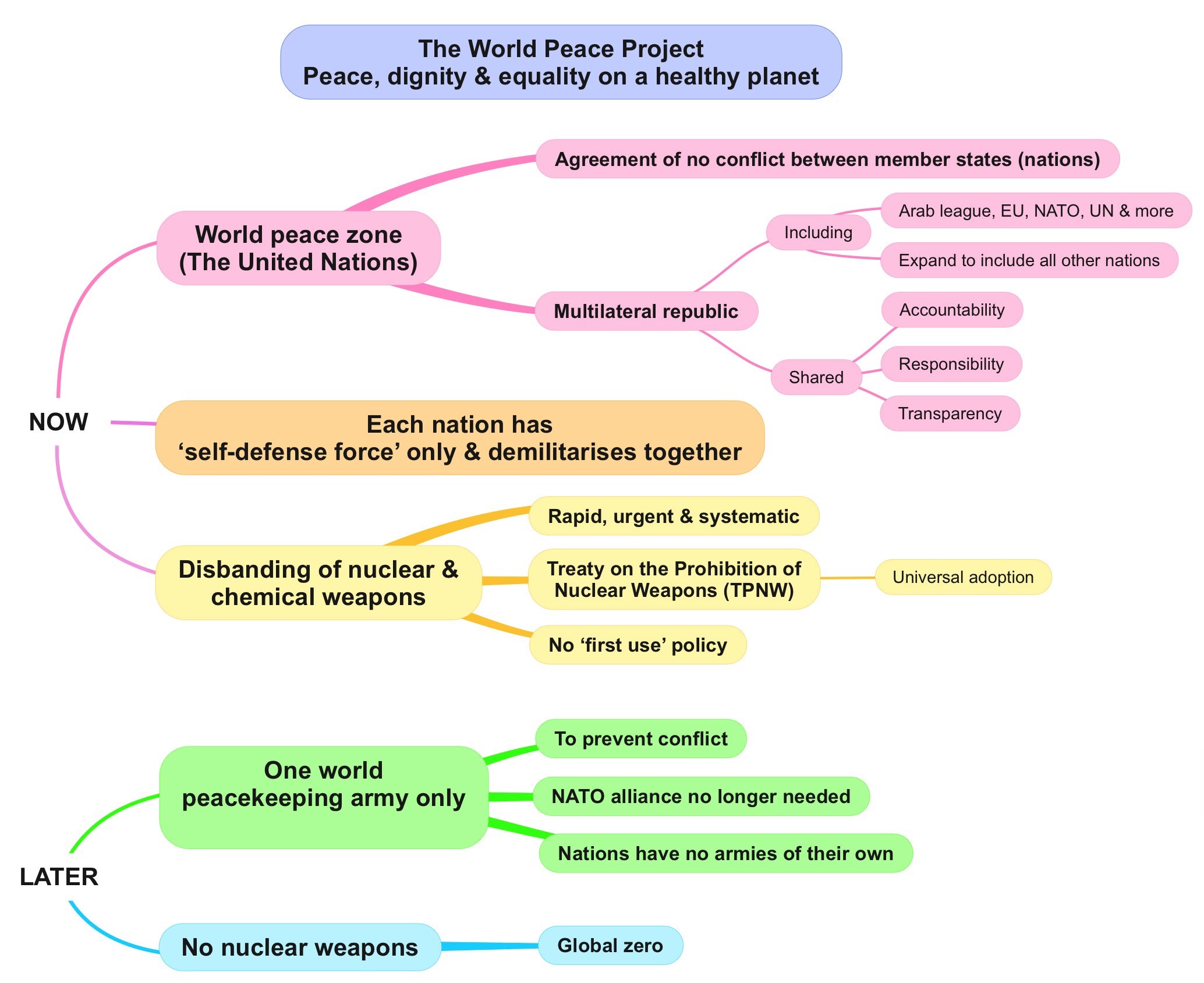
A mindmap summary of my own ideas on how to create a system of lasting peace (made in 2021):

中文版請點這裡 For Mandarin version click HERE

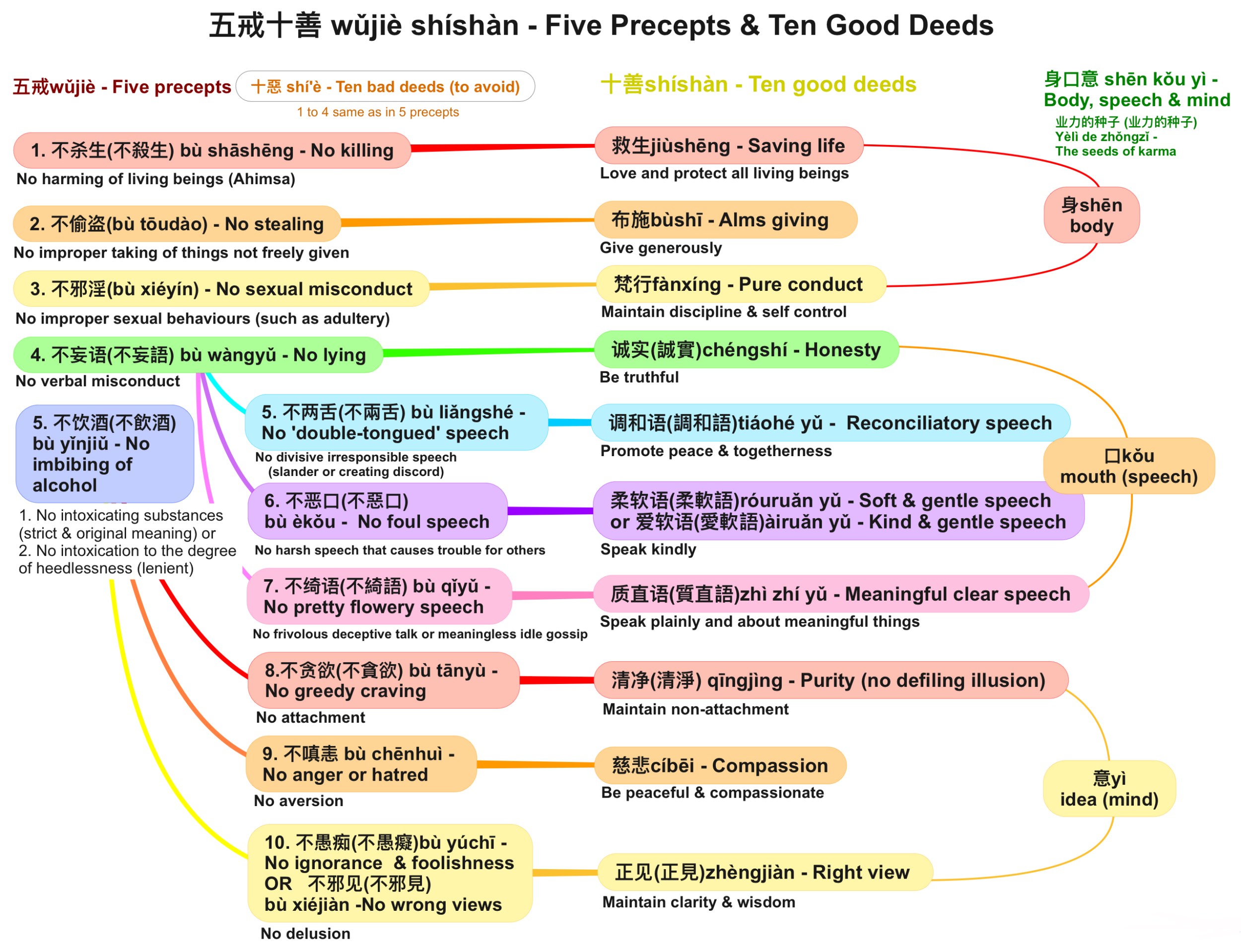
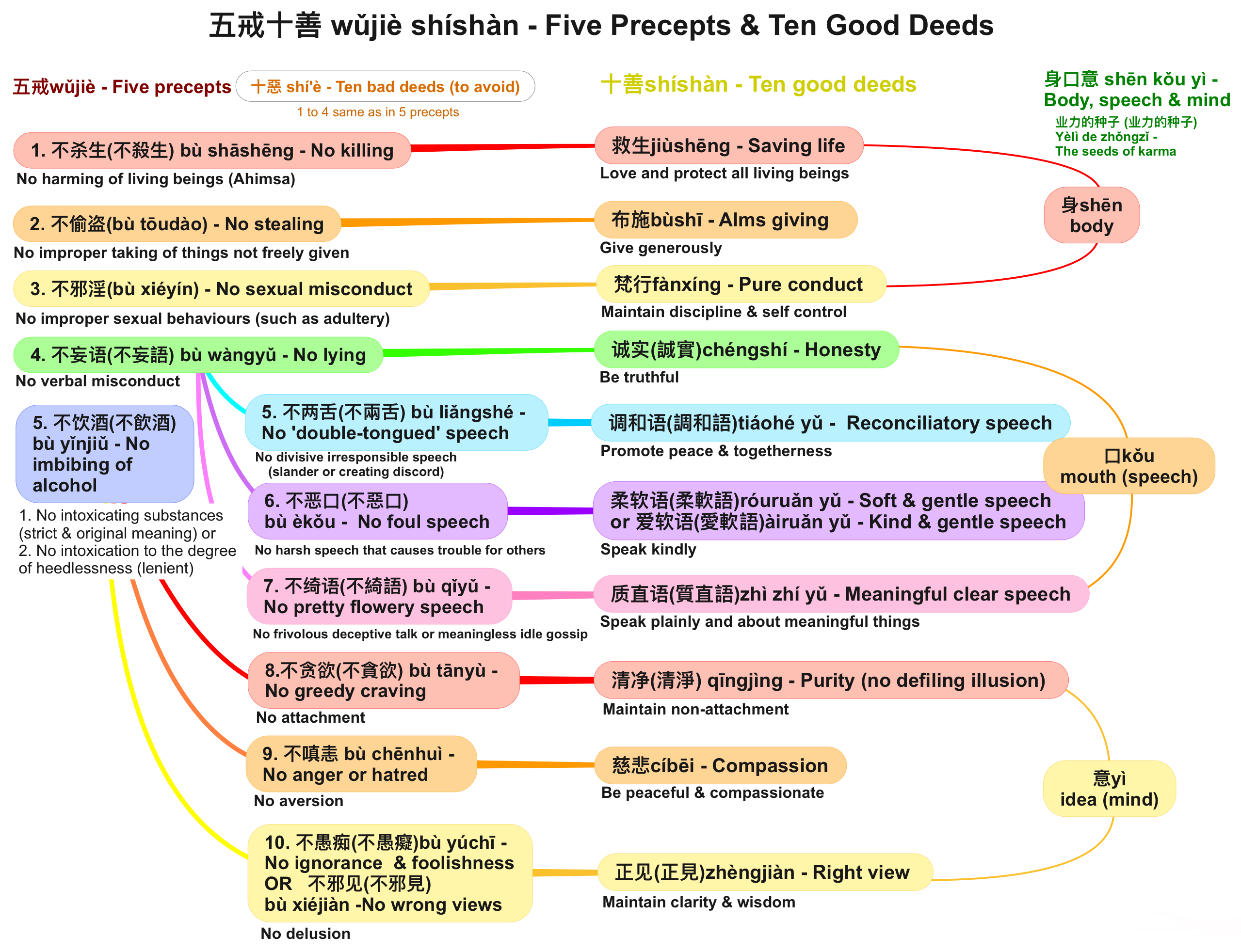
五戒十善 Five Precepts & Ten Good deeds (中英)

佛教傳統中的五戒與十善業道的圖像式整理。這份資料尚未經過具資格的老師審核,內容是根據我個人的粗淺理解以及部分網路資料整理而成。 如果您發現有任何錯誤,歡迎指正。希望這對您有所幫助!

A visual summary of the five precepts and ten good deeds in the Buddhist tradition. This has not yet been checked by a qualified teacher and is based on my own limited understanding and some online research. If you see any mistakes feel free to let me know. Hope it helps!

使用 SimpleMind 應用程式製作
Made using the SimpleMind app

我的十善總結嘗試如下:
愛護一切眾生(救生),樂於布施(布施),守戒自律(梵行),誠實不欺(誠實),促進和平與和諧(調和語),言語慈善(柔軟語愛軟語),說話坦誠且有意義(質直語),保持無執著(清淨),行為和善慈悲(慈悲),保持清明與智慧(正見)。

My attempt at summarizing the 10 good deeds:
Love & protect all living beings, give generously, maintain discipline & self control, be truthful, promote peace & togetherness, speak kindly, speak plainly & about meaningful things, maintain non-attachment, be peaceful & compassionate, maintain clarity & wisdom.  

Texts for Learning Mandarin 學中文的課文

Philosophy & Mind 哲學和心靈

Transport related 交通相關的

Advanced Mandarin 高級的中文

The value of bikes & bike lanes over cars & roads

Objective statistics  

over

subjective opinions

Showing the value of active travel using data. Statistics refer to the UK unless mentioned otherwise.

Money & the economy

Public sector spending on roads in the United Kingdom has been over 12 billion British pounds each year since 2021.
sources: Statista and Office for National Statistics

In 2019 it was estimated that ‘‘It costs around £50 million per kilometre to build the average road.’’
source: https://www.sustrans.org.uk/our-blog/news/common-myths-about-investment-in-walking-and-cycling-busted-by-research-report/

Some costs today are even higher.
https://www.sabre-roads.org.uk/forum/viewtopic.php?t=43131

For an elevated road the cost is generally many times higher.
https://www.bbc.co.uk/news/magazine-13924687

In 2017 the average cost of a two-way physically segregated cycle-superhighway ranged from £1.45 million per kilometre to around £740,000 per kilometre.
https://assets.publishing.service.gov.uk/media/5ba4c09ded915d2e2ea46815/typical-costings-for-ambitious-cycling-schemes.pdf

The cost of upkeep for bike lanes is far lower than for roads. https://www.bwbconsulting.com/insights/the-truth-about-cycle-lanes-investment-impact-and-public-perception/

This is because the vehicles using them are far lighter. https://www.reddit.com/r/AskEngineers/comments/1auz38x/what_makes_walking_multiuse_paths_bike_paths_less/?rdt=60455

Driving cars costs society money, while cycling costs society far less and even saves society money when health is an included factor.

Examples shown below:

The Department for Transport (DfT) has found that for every £1 invested in cycling and walking, the economy benefits by up to £6. This is due to multiple factors, including reduced congestion, improved public health, and increased spending on local businesses.  https://www.gov.uk/government/publications/economic-case-for-active-travel-the-health-benefits

Spending on walking, wheeling and cycling infrastructure can have a maximum return of up to £19 per £1 spent. The health benefits associated with increased physical activity are a large contributor to these returns. Investments in the strategic road network have an average return of £2.50. https://publications.parliament.uk/pa/cm5803/cmselect/cmtrans/1921/report.html

The best-case return can be up to £5. (https://www.sustrans.org.uk/media/5224/commonmisconceptions-of-active-travel-investment.pdf)

Some road building projects offer no return on investment at all.
https://ippr-org.files.svdcdn.com/production/Downloads/Stride_and_ride_Feb24_2024-02-05-162030_godi.pdf

Cycle infrastructure has a strong return on investment, with an average of £5.62 for every £1 spent. This means that a £2 billion investment would deliver £11 billion in public benefit on average, although this could be as high as £38 billion. https://assets.publishing.service.gov.uk/media/5a7dd183ed915d2acb6ee528/claiming_ the_health_dividend.pdf

According to a European study looking at a range of societal impacts, such as land use and cost pollution, as well as individual impacts, such as health benefits and travel time, driving a car was found to have a cost to society of €0.11 per kilometre (or 9 pence per mile). By contrast, cycling generated a €0.18 net benefit to society for every kilometre cycled (or 15 pence per mile), primarily due to the health benefits of physical activity and walking was found to generate the greatest net benefit to society. https://doi.org/10.1016/j.ecolecon.2018.12.016

Another earlier study by two of the same authors (Stefan Gössling and Andy Choi) calculated that one kilometre by car costs €0.15 (13 pence), whereas society earns €0.16 (14 pence) on every kilometre cycled. 
https://doi.org/10.1016/j.ecolecon.2015.03.006

Building more roads and car lanes to improve traffic flow only works temporarily, in the long term it usually increases car traffic.
https://doi.org/10.7922/G22805Z9

Likewise building more high-quality bike lanes increases the number of cyclists
https://www.sustrans.org.uk/our-blog/research/common-misconceptions-about-active-travel-investment/

A three-metre wide lane can move 700 to 1,100 people per hour in cars, but if used by people cycling or walking, that increases to 2,000 to 6,500.
https://www.sustrans.org.uk/our-blog/research/common-misconceptions-about-active-travel-investment/

Over time, giving more road space to bicycles and pedestrians does not make car traffic worse. In fact it often improves it.
https://www.sustrans.org.uk/our-blog/research/common-misconceptions-about-active-travel-investment/

Shopkeepers are often concerned about loss of business if bike lanes are built by their shops, but most research shows that business generally increases substantially.
https://www.cyclinguk.org/article/six-reasons-build-cycle-lanes

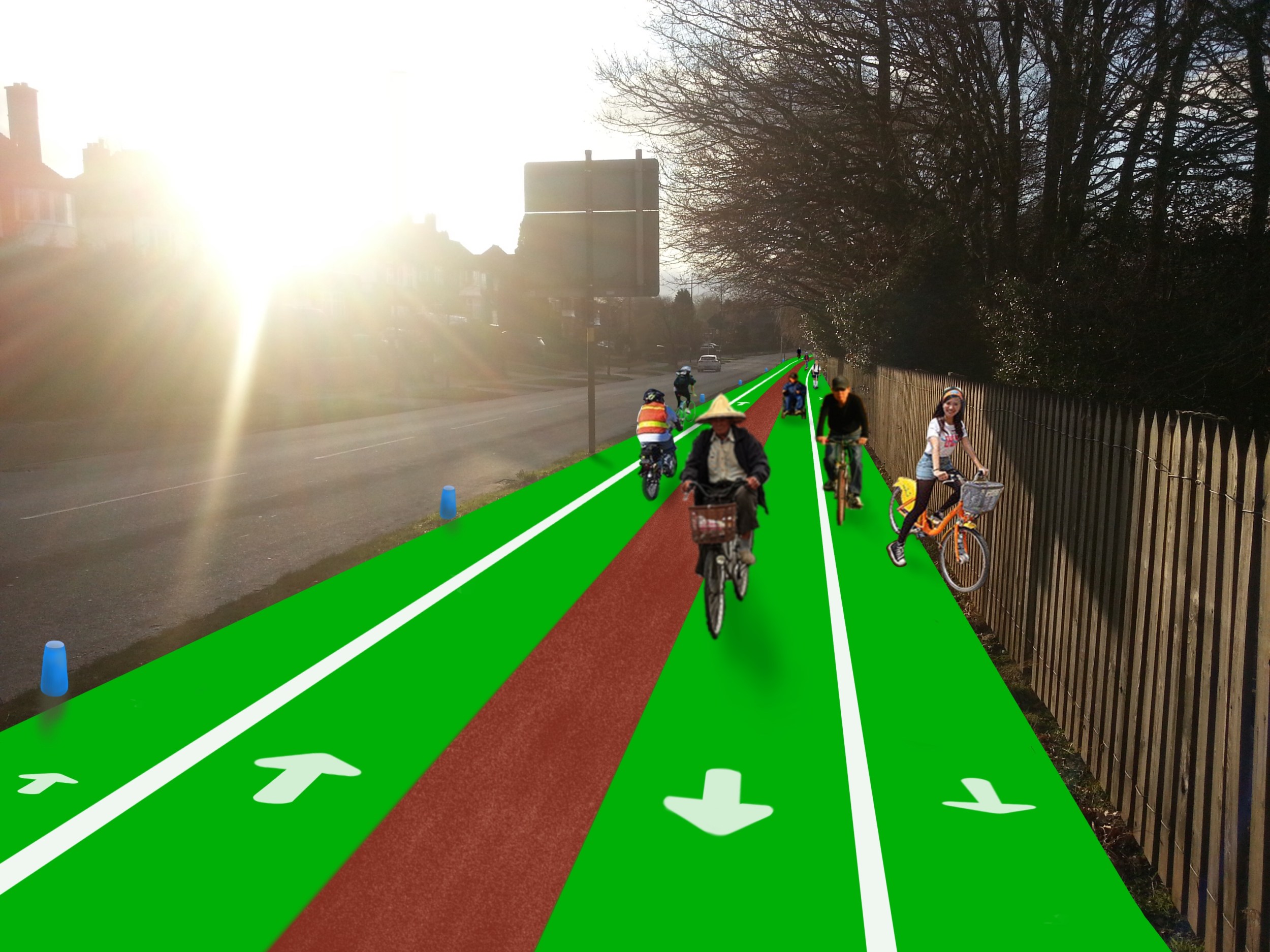
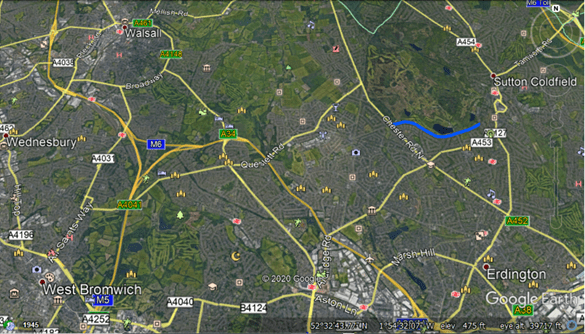
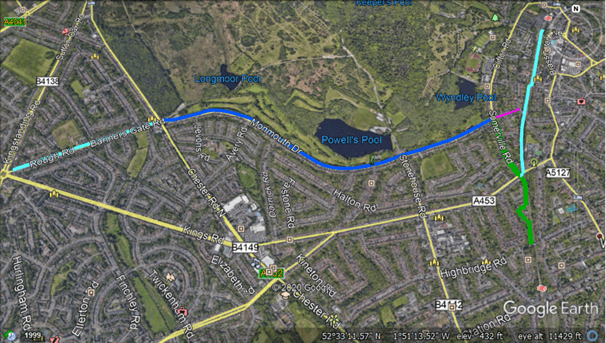
Sutton Coldfield, a large town north of Birmingham, has a population of nearly 100,000 and yet has no segregated cycle lanes. The local government installed one at a cost of £75,000, but following an outcry by local ‘motorists’ and Conservatives it was removed before it even had the chance to open. The removal meant even more expense. Many locals, likely some of the same people who complained, then said what a waste of money it was to build a bike lane and then never use it!  
https://suttoncoldfieldtowncouncil.gov.uk/wp-content/uploads/2020/10/email-response.pdf

Health

By reducing car traffic, the health and longevity of the people who live and work in the area increases owing to increased active travel1 and reduced pollution2 1https://drive.google.com/file/d/1BqGRWsN17qZNbvuqrMARql1QYu3_M7Rd/view?pli=1

2https://www.walthamforest.gov.uk/sites/default/files/2021-10/Waltham%20Forest%20Kings%20Report.pdf

Pollution claims far more lives each year than traffic accidents. https://assets.publishing.service.gov.uk/media/6570a68b7469300012488948/HECC-report-2023-chapter-4-outdoor-air-quality.pdf?utm_source=chatgpt.com

Just in Birmingham it claims up to 900 each year. https://www.birmingham.gov.uk/info/20076/pollution/1278/air_pollution_affecting_me_and_my_family

Every minute, an idling car produces enough exhaust to fill up to 150 balloons with harmful chemicals, including cyanide, nitrogen oxides (NOx) and tiny particulates called PM2. 5. An idling engine produces 20 times more pollution than a car travelling at 32mph.
https://www.solihull.gov.uk/health-and-wellbeing/vehicle-idling#:~:text=Idling%20facts,a%20car%20travelling%20at%2032mph.

The total NHS and social care cost due to PM2.5 and NO2 combined in 2017 was estimated to be between £42.88 million and £157 million.
https://assets.publishing.service.gov.uk/government/uploads/system/uploads/attachment_data/file/708855/Estimation_of_costs_to_the_NHS_and_social_care_due_to_the_health_impacts_of_air_pollution_-_summary_report.pdf

A team from the Netherlands’ Utrecht University surveyed 50,000 Dutch people, examining their mobility patterns. They found that one hour of cycling adds one hour to your life on average.
https://ajph.aphapublications.org/doi/abs/10.2105/AJPH.2015.302724

According to research, on average every year, walking and cycling in Birmingham, UK results in about:

  • 1,438 serious long-term health conditions prevented:
  • £454.5 million in economic benefit for individuals and the region:
  • 37,000 tonnes of greenhouse gas emissions saved:
  • Up to 220,000 cars taken off the road every day.

https://www.sustrans.org.uk/the-walking-and-cycling-index/birmingham-walking-and-cycling-index/

Lots more information here:

Author’s conclusion
The evidence clearly shows that well designed projects in the right places that allow for more cycling and active travel can benefit physical, mental, environmental and financial well being. Stopping such projects claiming that they are a waste of tax payers’ money and so on, is untrue and highly unhelpful. Our obsession with cars is fuelling the problem.

Do you agree?

Look at the quotes and pictures below. What are they trying to say and how do you feel?

“Either you’re part of the problem or you’re part of the solution.”
(a saying based on an original quote by Harry Emerson Fosdick)

Original quote attributed to Peter Drew

Picture made using chat GPT & then added to by author

Quiz!

True or false style quiz based on the above information:

https://create.kahoot.it/details/1cd50c5e-f145-48f1-a1c3-854c31d0cd55

https://quizlet.com/gb/1035555628/the-value-of-bikes-bike-lanes-over-cars-roads-true-or-false-quiz-flash-cards/?i=5v19u&x=1jqt

中英版請點這裡 For Mandarin English version click HERE

Download this post below

The value of bikes & bike lanes over cars & roads 自行車與自行車道相較於汽車與道路的價值

Objective statistics over subjective opinions
客觀統計勝於主觀意見

Showing the value of active travel using data.
利用數據展示積極出行的價值

Statistics refer to the UK unless mentioned otherwise.
除非另有說明,統計數據均指英國


Money & the economy
金錢與經濟

Public sector spending on roads in the United Kingdom has been over 12 billion British pounds each year since 2021.
2021年以來,英國公共部門每年在道路上的支出超過120億英鎊

sources: Statista and Office for National Statistics
資料來源:Statista 和國家統計

In 2019 it was estimated that ‘‘It costs around £50 million per kilometre to build the average road.’’
2019年估計,建造一公里普通道路的成本約為5000萬英鎊。 source: https://www.sustrans.org.uk/our-blog/news/common-myths-about-investment-in-walking-and-cycling-busted-by-research-report/

Some costs today are even higher.
如今,一些成本甚至更高。
https://www.sabre-roads.org.uk/forum/viewtopic.php?t=43131

For an elevated road the cost is generally many times higher.
高架道路的成本通常高出數倍。
https://www.bbc.co.uk/news/magazine-13924687

In 2017 the average cost of a two-way physically segregated cycle-superhighway ranged from £1.45 million per kilometre to around £740,000 per kilometre.
2017年,雙向實體隔離的自行車高速道每公里的平均成本介於145萬英鎊至74萬英鎊之間。
https://www.bbc.co.uk/news/magazine-13924687

The cost of upkeep for bike lanes is far lower than for roads.
自行車道的維護成本遠低於道路。
https://www.bwbconsulting.com/insights/the-truth-about-cycle-lanes-investment-impact-and-public-perception/

This is because the vehicles using them are far lighter.
這是因為使用自行車道的車輛重量輕得多。
https://www.reddit.com/r/AskEngineers/comments/1auz38x/what_makes_walking_multiuse_paths_bike_paths_less/?rdt=60455

Driving cars costs society money, while cycling costs society far less and even saves society money when health is an included factor.
駕駛汽車對社會造成成本,而騎自行車的社會成本則低得多,若考慮健康因素,甚至能為社會節省開支

Examples shown below:
以下是一些例子

The Department for Transport (DfT) has found that for every £1 invested in cycling and walking, the economy benefits by up to £6. This is due to multiple factors, including reduced congestion, improved public health, and increased spending on local businesses.
英國交通部發現,每投資1英鎊於步行和騎行,經濟可獲得高達6英鎊的收益。這是由於多種因素,包括減少擁堵、改善公共健康以及增加對本地企業的消費。https://www.gov.uk/government/publications/economic-case-for-active-travel-the-health-benefits

Spending on walking, wheeling and cycling infrastructure can have a maximum return of up to £19 per £1 spent. The health benefits associated with increased physical activity are a large contributor to these returns. Investments in the strategic road network have an average return of £2.50.
在步行、輪行和騎行基礎設施上的支出,每1英鎊的最高回報可達19英鎊。增加身體活動帶來的健康益處是這些回報的重要因素。相比之下,對戰略道路網的投資平均回報為2.5英鎊。
https://publications.parliament.uk/pa/cm5803/cmselect/cmtrans/1921/report.html

The best-case return can be up to £5.
最佳情況下的回報可達5英鎊。(https://www.sustrans.org.uk/media/5224/commonmisconceptions-of-active-travel-investment.pdf)

Some road building projects offer no return on investment at all.
一些道路建設項目完全沒有投資回報。
https://ippr-org.files.svdcdn.com/production/Downloads/Stride_and_ride_Feb24_2024-02-05-162030_godi.pdf

Cycle infrastructure has a strong return on investment, with an average of £5.62 for every £1 spent. This means that a £2 billion investment would deliver £11 billion in public benefit on average, although this could be as high as £38 billion.
自行車基礎設施的投資回報率很高,平均每投入1英鎊可產生5.62英鎊的回報。這意味著20億英鎊的投資平均可帶來110億英鎊的公共利益,最高可達380億英鎊。
https://assets.publishing.service.gov.uk/media/5a7dd183ed915d2acb6ee528/claiming_%20the_health_dividend.pdf

According to a European study looking at a range of societal impacts, such as land use and cost pollution, as well as individual impacts, such as health benefits and travel time, driving a car was found to have a cost to society of €0.11 per kilometre (or 9 pence per mile). By contrast, cycling generated a €0.18 net benefit to society for every kilometre cycled (or 15 pence per mile), primarily due to the health benefits of physical activity and walking was found to generate the greatest net benefit to society.
根據一項歐洲研究,考慮到土地使用、污染成本等社會影響,以及健康益處、旅行時間等個人影響,駕駛汽車每公里對社會的成本為0.11歐元(或每英里9便士)。相比之下,騎自行車每公里為社會帶來0.18歐元的淨收益(或每英里15便士),主要是由於身體活動帶來的健康益處,而步行被發現對社會產生最大的淨收益。https://doi.org/10.1016/j.ecolecon.2018.12.016

Another earlier study by two of the same authors (Stefan Gössling and Andy Choi) calculated that one kilometre by car costs €0.15 (13 pence), whereas society earns €0.16 (14 pence) on every kilometre cycled.
同樣由Stefan Gössling和Andy Choi進行的另一項早期研究計算出,駕駛汽車每公里的成本為0.15歐元(13便士),而每騎行一公里,社會可獲得0.16歐元(14便士)的收益。https://doi.org/10.1016/j.ecolecon.2015.03.006

Building more roads and car lanes to improve traffic flow only works temporarily, in the long term it usually increases car traffic.
建造更多道路和車道以改善交通流量僅在短期內有效,長期來看通常會增加汽車交通。https://doi.org/10.7922/G22805Z9

Likewise building more high-quality bike lanes increases the number of cyclists
同樣,建造更多高品質的自行車道會增加騎自行車的人數。https://www.sustrans.org.uk/our-blog/research/common-misconceptions-about-active-travel-investment/

A three-metre wide lane can move 700 to 1,100 people per hour in cars, but if used by people cycling or walking, that increases to 2,000 to 6,500.
一條三米寬的車道每小時可容納700至1100名汽車乘客,但如果用於騎自行車或步行,每小時可容納2000至6500人。
https://www.sustrans.org.uk/our-blog/research/common-misconceptions-about-active-travel-investment/

Over time, giving more road space to bicycles and pedestrians does not make car traffic worse. In fact it often improves it.
隨著時間過去,給腳踏車和行人更多道路空間並不會讓汽車交通變得更糟。事實上,這常常會改善交通情況。
https://www.sustrans.org.uk/our-blog/research/common-misconceptions-about-active-travel-investment/

Shopkeepers are often concerned about loss of business if bike lanes are built by their shops, but most research shows that business generally increases substantially.
店主常常擔心,如果店旁邊建腳踏車道,會影響生意,但大多數研究顯示,生意通常會大幅增加。
https://www.cyclinguk.org/article/six-reasons-build-cycle-lanes

Sutton Coldfield, a large town north of Birmingham, has a population of nearly 100,000 and yet has no segregated cycle lanes. The local government installed one at a cost of £75,000, but following an outcry by local ‘motorists’ and Conservatives it was removed before it even had the chance to open. The removal meant even more expense. Many locals, likely some of the same people who complained, then said what a waste of money it was to build a bike lane and then never use it!
Sutton Coldfield
是伯明罕北邊的一個大鎮,人口接近十萬人,卻完全沒有專用腳踏車道。當地政府花費七萬五千英鎊建了一條腳踏車道,但因為當地一些「汽車駕駛人」和保守黨人的反對聲浪,這條腳踏車道在啟用前就被拆除了。拆除反而造成更多花費。許多當地人,可能就是之前抱怨的人,後來又說:「建一條用不到的腳踏車道真是浪費錢!」
https://suttoncoldfieldtowncouncil.gov.uk/wp-content/uploads/2020/10/email-response.pdf


Health
健康

By reducing car traffic, the health and longevity of the people who live and work in the area increases owing to increased active travel¹ and reduced pollution²
減少汽車交通可以讓當地居民和工作者更健康、活得更久,因為他們會有更多「主動交通」¹,空氣污染也會減少²
¹ https://drive.google.com/file/d/1BqGRWsN17qZNbvuqrMARql1QYu3_M7Rd/view?pli=1
² https://www.walthamforest.gov.uk/sites/default/files/2021-10/Waltham%20Forest%20Kings%20Report.pdf

Pollution claims far more lives each year than traffic accidents.
空氣污染每年造成的死亡遠超過車禍死亡人數。
https://assets.publishing.service.gov.uk/media/6570a68b7469300012488948/HECC-report-2023-chapter-4-outdoor-air-quality.pdf?utm_source=chatgpt.com

Just in Birmingham it claims up to 900 each year.
光是伯明罕,每年就有多達900人死於空氣污染。
https://www.birmingham.gov.uk/info/20076/pollution/1278/air_pollution_affecting_me_and_my_family

Every minute, an idling car produces enough exhaust to fill up to 150 balloons with harmful chemicals, including cyanide, nitrogen oxides (NOx) and tiny particulates called PM2.5. An idling engine produces 20 times more pollution than a car travelling at 32mph.
一輛靜止但開著引擎的汽車,每分鐘會產生足以填滿150個氣球的廢氣,裡面有氰化物、氮氧化物(NOx)和極小的PM2.5顆粒。一部怠速中的汽車所產生的污染,是以每小時32英里行駛的汽車的20倍。
https://www.solihull.gov.uk/health-and-wellbeing/vehicle-idling#:~:text=Idling%20facts,a%20car%20travelling%20at%2032mph.

The total NHS and social care cost due to PM2.5 and NO2 combined in 2017 was estimated to be between £42.88 million and £157 million.
2017
年,PM2.5與二氧化氮(NO₂)造成的英國國民保健署(NHS)和社會照護成本估計在4288萬到1億5700萬英鎊之間。
https://assets.publishing.service.gov.uk/government/uploads/system/uploads/attachment_data/file/708855/Estimation_of_costs_to_the_NHS_and_social_care_due_to_the_health_impacts_of_air_pollution_-_summary_report.pdf

A team from the Netherlands’ Utrecht University surveyed 50,000 Dutch people, examining their mobility patterns. They found that one hour of cycling adds one hour to your life on average.
荷蘭烏特勒支大學的研究團隊調查了五萬名荷蘭人,分析他們的出行方式。結果發現,平均每騎腳踏車一小時,壽命就會增加一小時。
https://ajph.aphapublications.org/doi/abs/10.2105/AJPH.2015.302724

According to research, on average every year, walking and cycling in Birmingham, UK results in about:
根據研究,在英國伯明翰,每年步行和騎腳踏車平均會帶來以下成果:

• 1,438 serious long-term health conditions prevented:
 • 預防了1438個嚴重的長期健康問題:
• £454.5 million in economic benefit for individuals and the region:
 • 為個人和地區帶來了4億5450萬英鎊的經濟效益:
• 37,000 tonnes of greenhouse gas emissions saved:
 • 減少了37,000公噸的溫室氣體排放:
• Up to 220,000 cars taken off the road every day.
 • 每天減少最多220,000輛汽車上路。
https://www.sustrans.org.uk/the-walking-and-cycling-index/birmingham-walking-and-cycling-index/

Birmingham, UK
英國伯明翰

Lots more information here:
更多資料請見:

Author’s conclusion
The evidence clearly shows that well designed projects in the right places that allow for more cycling and active travel can benefit physical, mental, environmental and financial well being. Stopping such projects claiming that they are a waste of tax payers’ money and so on, is untrue and highly unhelpful. Our obsession with cars is fuelling the problem.
作者結論:證據清楚地顯示,在適當地點設計良好的腳踏車與主動交通設施,可以帶來身體、心理、環境和財務上的好處。說這些計畫是在浪費納稅人的錢是不正確也非常有害的。我們對汽車的執著正加劇這些問題。

Do you agree?
你同意嗎?

Look at the quotes and pictures below.
看看下面的引言和圖片。

What are they trying to say and how do you feel?
它們想表達什麼?你有什麼感覺?

“Either you’re part of the problem or you’re part of the solution.”
「你不是問題的一部分,就是解決方案的一部分。」
(一句出自 Harry Emerson Fosdick 的名言)

Original quote attributed to Peter Drew

Picture made using chat GPT & then added to by author

英文版請點這裡 For English only version of this post click HERE

Quiz!
測驗

True or false style quiz based on the above information (English only):
根據以上資訊的「是非題小測驗」
(英文)

https://create.kahoot.it/details/1cd50c5e-f145-48f1-a1c3-854c31d0cd55

https://quizlet.com/gb/1035555628/the-value-of-bikes-bike-lanes-over-cars-roads-true-or-false-quiz-flash-cards/?i=5v19u&x=1jqt

Download this post below
下載下方這篇文章

greentransportideas.org

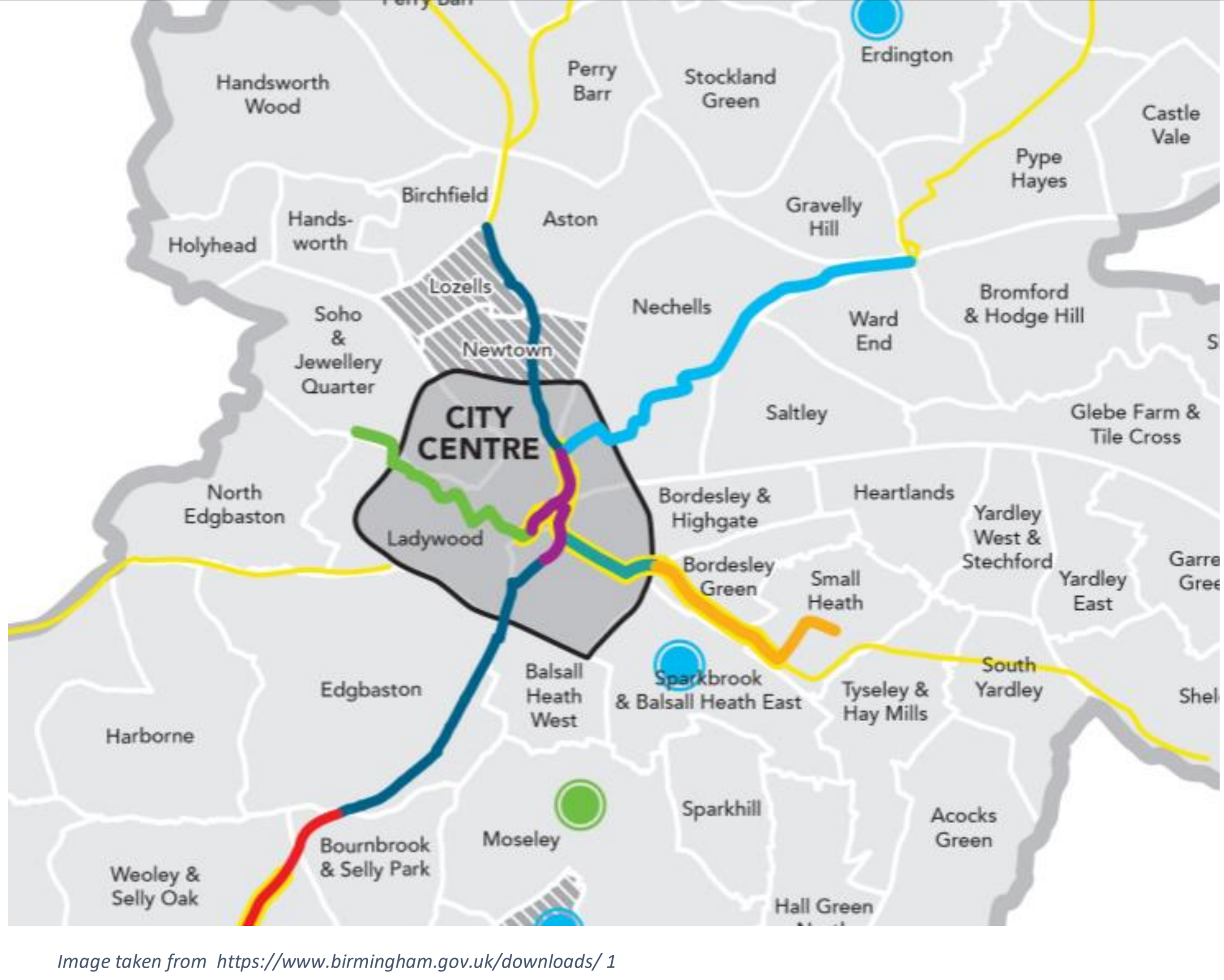
I’m hoping to resume focus on green transport and realize that a specialist website may serve this purpose somewhat better. Therefore please see here for a new site currently under construction devoted entirely to transport: https://greentransportideas.org/

I no longer promote the use of ewheels (”EUCS”) given that manufacturers are now making them with top speeds of over 50mph which is obviously completely unsafe. So focus is likely to be on scooters and urban commuter systems.

中文版請點這裡 For Mandarin version click HERE

HOW WE CAN BUILD PEACE  

This is an opinion piece providing ideas on how we can resolve the Ukraine conflict and build a lasting world peace for the future. Reading time just over 10 minutes. Section 1, including sub-sections, shares ideas for all of us. Section 2 is primarily for politicians and policy makers, but also contains ideas and philosophies which I regard as beneficial for all. For a quicker read you can simply read the parts most relevant to you or for ideas on systems to help ensure overall peace from now on, go straight to the ‘Maintaining a lasting world peace’ section.’

Disclaimer

The author is not an expert regarding the political issues discussed and has no political agenda or allegiances. The author does not wish to involve himself in controversial political situations from now on and wishes to resume focus on green transport and education. This text is not about saying who is right or wrong. These are just ideas shared in the sincere hope that others with more knowledge and experience can build upon them to help create, in any small way, a more peaceful existence for all of us.

This is written with goodwill and kindness as a starting point but apologies if anything is wrong or unhelpful, please just take what is useful.

Section 1: Ideas for all of us

See the bigger picture, read widely & be aware of echo chambers

The Russian media is often regarded as state controlled and highly biased but I believe we all need to rise beyond our little echo chambers and propaganda on both sides to free ourselves from dangerously partisan ways of thinking. The idea of ‘us and them’ is divisive and even more dangerous if it’s ‘we’re good’ and ‘they’re bad’. When large groups of people are fed vastly differing narratives thus colouring their perceptions it limits chances of overlap in views where common ground of agreement can be found. This is one of the dangers of propaganda. Any balanced views may then be regarded as dissent within that group so the extreme narrative becomes self-perpetuating given that people wish to conform within their group.

There is a saying in Chinese that listening to both sides leads to brightness (of understanding), but prejudice leads to darkness (兼听则明,偏信则暗). It’s especially important nowadays to read widely across different media sources from different countries and maybe even in different languages. I believe that raising awareness of echo-chambers, propaganda and the need to read widely needs to be part of our school education everywhere. Most teacher’s workloads needs to be made far more manageable, but this should still be included within measures to prevent radicalisation or in media studies and sociology.

Be aware of ‘controversy focus’ in the media

We should treasure and protect a free and open press this is vital in limiting the disparity in the narratives fed to different groups. But with freedom there comes responsibility and a need for reporters and news providers to be aware of cause and effect. Media coverage can cause more harm than good if there is excessive controversy focus – ‘stirring the spoon’ reporting negative things that one person or group has said about another. We seem to have become so obsessed with judgements that when a president shoots his mouth off and makes a critical comment this receives more coverage than the actual events they relate to. They know that controversy sells and so ‘sensationalist gossip’ has become so common we take it as the norm. This is especially the case in America where the political climate has become so divisive that it’s attracted so-called ‘tough-guy’ politicians who then give the media even more controversy to feed off. We need to de-escalate and tune down the rhetoric, less bar room banter from leaders. The more extreme the one side becomes the more extreme the other becomes, through our speech we can add to the snowball or through our patience, understanding and kindness we can melt it. Peace is the result of wisdom. Sensitive careful wording from a president or leader is even more important in times such as these and if they lack the wisdom to see this then at least the media need to focus less on the crass comments and focus more on the actual situation.

Sloppy wording in the press can also create false links in impressionable minds – for example to say that a given country or government ‘feels..’ is wrong, feelings belong to individuals. Be careful of the words you choose, each is a stone thrown into the lake of human consciousness and creates ripples. We also need more compassion shown for the other side – to describe this as a battle of ‘light against dark’ is unhelpful, that’s a false and dangerous analogy. The individuals in the Russian army are also valuable unique people with every right to happiness and wellbeing. Like many, I believe they should not be in Ukraine at all, but as individuals many of them are also victims of this situation. Also please do not describe Zelensky as ‘Ukraine’s Churchill’, this by extension refers to Nazi Germany, and is not at all conducive to the de-escalation we need to see. 

Recognise the value of the UN & multi-lateral cooperation

As with the Iraq war, this was done without a UN (United Nations) Security Council resolution. This is our wake up call to show us that it’s unsafe to have too much power concentrated in the hands of one individual. It’s also shown us that despite the farcical antics of many elections and what we call democracy, it still has value.  Most of all though, it shows the immense value and security afforded by peaceful multi-lateral organisations especially the UN and the EU (European Union). Even though the UN could not stop this conflict directly they are still the only nearly all-inclusive arena for dialogue with the collective power to offer help on a large scale. I vehemently disagree with any notion that their inability to stop this conflict indicates a lack of real value. The fact that UN security council members can veto proposals means that they can stop resolutions approving military action against themselves. This prevents UN approved military engagement between security council members which is of utmost importance and provides enormous incentive for continued membership. Also the UN is a unique platform for many (nearly all) voices to be heard to add new sounds into echo chambers and de-radicalise. The vote by the UN general assembly condemning the invasion sent a clear message that is far more powerful than any message from the leaders of any one member state. This cannot be dismissed as ‘bias’, as ‘rhetoric’ or ‘western propaganda’ – this was a united message with actual numbers to show the consensus.

Recognise the true heroes

Sometimes the worst can bring out the best in people, and we’re seeing that every day, in the bravery of Russian anti-war protesters, Greenpeace volunteers blocking passage of oil tankers knowing that our addiction to fossil fuels is fuelling this conflict. Also in the kindness of so many millions of people who are contributing their money, time, energy, homes and much more to help. This restores hope and it this kindness and love which helps us weather such storms and sometimes collectively come out the stronger for it.

Section 2: Ideas for policymakers

Focus on restoring peace through diplomacy & reason – not weapons (for politicians)

There’s no glory in war. This war needs to stop as soon as possible through diplomacy and negotiation. We need a peace agreement. Personally I agree with Germany’s former policy of not sending weapons to the side we hope will win, such actions keep arms dealers in business, add to tensions, cost money and set a precedent for others supporting the other side to do the same. Arming the underdog can also escalate and prolong a conflict causing more suffering and can cost many lives. Whether this situation constitutes an exception is open to debate but now that Ukraine has already been extensively armed through multiple donors, I believe governments need to shift the focus to diplomacy, negotiation, peacemaking efforts and economic tools. The immense benefit of economic integration and peaceful ways of expressing discontent through sanctions have been shown. Despite this Ukraine officials have been asking for weapons ceaselessly and often with little regard to the wider implications of this. This is not at all to blame them, they’re in an extremely difficult situation. This is just a reminder that great caution is required on the part of the countries who supply those weapons. At the very least provision of weapons to Ukraine must be done on strict condition that they are to be used for defence only and absolutely no long range weapons should be provided to Ukraine. NATO thankfully and very wisely said no to Ukraine’s repeated demands for a no fly zone, that would have been even more dangerous. We may be unable to stop the conflict right away but we can and must choose to not be militarily involved while making every other effort to help Ukraine. It’s not weakness, it’s wisdom and wisdom is knowing what to do and what not to do. Compassion must be combined with wisdom to form the pillars of world peace.

Whoever helps bring about peace through diplomacy and negotiation, wherever they are from, deserves the highest recognition possible. Likewise we need more recognition of the subtle actions and words of those who pave the way to de-escalation even if this means breaking from our obsession with the sensational. I believe we should venerate peacemakers more and glorify the fighters less.

Offer a path to de-escalation and cessation of conflict (for negotiators and policy makers)

To encourage Putin to withdraw the Russian troops a concession would be required – something that can be held up to the Russian public to try to justify the invasion and allay concerns. It may seem wrong to offer concessions to an aggressor, but this conflict needs to de-escalate and stop. Russia has already paid a huge price. Any notion that the Russian regime needs to be made to suffer for its wrongdoings at the expense of overall peace is misplaced and deeply unhelpful. We’re all interconnected and conflicts such as this have absolutely no place in our modern society. Justice must be served – war crimes must be investigated and those responsible held to account and sanctions can still be imposed, but our top priority must be the return to peace. Be very wary of anyone who claims fighting is the only way to achieve this.

As of late May the Russian plan seems to be to secure the Southern and Eastern parts of Ukraine and so immediate focus should be on cessation of hostilities and on preventing further advances beyond those areas already secured. The Ukrainian government could make proposals concerning Luhansk and Donetsk regions – for example, they could receive a special status as autonomous entities within Ukraine with right of self-governance within the sovereign jurisdiction of Ukraine and assurance of equal rights and safety for all those who live in these regions1. A compromise could see Russia maintain control for a given time in which it needs to rebuild and repair the places it occupies. However; at the time of writing the peace talks seem to have stalled and so the UN and NATO could offer a way out through some kind of concession or negotiation.

Some ideas from others include a formal declaration that Ukraine will not join NATO, a promise of no further eastern NATO expansion and an agreement that any military aid to Ukraine is to be restored to the same level as it was before the conflict began.

My own idea would be a vote by the general assembly as to whether the UN should have greater control over NATO. For example, an agreement and reaffirmation that all NATO military action must be in self-defence only, such as in response to an invasion of a NATO country. Any other military action of choice by NATO must be via UN security council approval. The UN general assembly could first vote on whether a situation constitutes self-defence or action of choice. This would be conducive to greater peace by dispelling NATOphobia. NATO claims to be a defensive organisation only so such policies would simply be a reaffirmation of that. A further step would be to bring NATO entirely under the control of the security council – however; it’s unrealistic to expect NATO leaders to agree to this at the present time but if and when relations improve in future this could be discussed. These are just general recommendations and the intricacies would need to be finalised, but the point is that an ‘olive branch’ or change in policy offered by the UN or NATO could provide a pathway to de-escalation.

Those involved in negotiations should read the ‘‘Possible Draft of a Framework Agreement on the Restoration of Peaceful Relations between Ukraine and the Russian Federation’’1 by Marc Weller and see which ideas are acceptable to both sides to restart negotiations with some common ground.

Maintain a lasting world peace

We need to realise that nowadays to win a war is likely as disastrous as losing one and that war has absolutely no place in our interconnected society and modern way of life. It will be essential to raise multilateral cooperation and the UN especially will have a huge role to play in creating a truly lasting world peace. We should urgently look at and implement ideas put forward by the Dalai Lama and others about demilitarisation & World peace zones. My own view on how this could be done is shown below. This is a work in progress and an outline without details of implementation – please get in touch if you believe any parts of it require improvement or omission.

1. Set up a World Peace Zone formed from UN member states. There would be greater emphasis on preventing conflict between member states with each member demilitarising together step-by-step. There would be more inclusivity, shared accountability, responsibility and transparency with a true sense of global citizenship. No incursions into any other country or contested territory would be allowed without UN Security Council approval. Any such incursions would be punishable by the UN as a whole and not by any individual country. Disputes between countries or groups, such as territorial claims, would be discussed openly, fairly and peacefully resolved through democratic voting in the UN. For example, after hearing from both sides the UN could vote on the status of a contested territory or vote on the best way to resolve it – referendums in those places overseen by the UN may be one option.

As each member state demilitarises their military infrastructure would step-by-step come under the control of the UN. The (UN) Peacekeeping force could be quickly created through voluntary recruitment of former army personnel in member states – as is currently the case the sole purpose of the Peacekeeping force will be to prevent conflict. The peace and security created by the UN and the Peacekeeping force would eventually take away the need for NATO military alliances. For now rather than just working together with the UN, NATO should be governed by the more inclusive UN.

2. Disband all nuclear weapons 

The current situation has made it even clearer that nuclear weapons are a tragic and dangerous idea. Allowing countries to have nuclear weapons to prevent conflict is like letting school kids carry guns to prevent fist fights. The nuclear deterrent is not supposed to mean that a nuclear power can unjustly walk all over another country while the world prays for the sanity of the leaders. Nuclear weapons need to be urgently and systematically reduced in number, with only the UN collectively having control of the few remaining ones. They must then be phased out altogether. All nations need to agree to and abide by the Treaty on the Prohibition of Nuclear Weapons (TPNW). 

Incentives for compliance could include more voting power in the UN, membership rights and the lifting or imposing of sanctions or travel restrictions on citizens from those countries. The UN needs to ensure NATO nations work together with China and Russia to reduce the nuclear arsenal systematically and openly to foster better relations. It may not be easy, but this is absolutely vital, nuclear weapons are quite simply the greatest threat we face. We people are good at doing the right thing once we’ve exhausted the other options, the UN for example was formed in 1945. But with nuclear weapons we simply cannot let things deteriorate, learn from our mistakes and then make better policies later on. In order to even have a ‘later on’ we must act now with the absolute highest level of urgency and determination to completely eradicate this threat and support the work of ‘Global Zero’ and other organisations trying to achieve this.

Visual Summary

Final thoughts

As the Dalai Lama has said, this needs to be the century of dialogue and world peace. Bringing about greater trust between East and West blocs will be key, this can be achieved through the UN, more constructive compassionate dialogue, through greater cooperation, through fairer more responsible media reporting in multiple languages and a greater sense of oneness and global citizenship. Language learning is a key aspect of this – especially Arabic, English, Mandarin, and Russian and especially for diplomats, negotiators and leaders.

Many nations have recently recorded their highest ever covid rates, let’s make sure our battle is against a virus and against climate change not ourselves and in so doing come together with greater trust and oneness.

Useful Links

If these ideas seem of value then please do read about and share how the UN are helping to create ‘Peace, dignity & equality on a healthy planet’.

https://www.un.org/en/about-us

The UN also has a news service viewable in many of the World’s languages https://news.un.org/

You can offer support via the UN Refugee Agency  https://donate.unhcr.org/int/en/ukraine-emergency#_ga=2.2591859.213436793.1648822811-964581140.1648822811

Read the various articles written by the Dalai Lama about the subject of World peace, the ideas are expressed with far more wisdom and eloquence than in the text above and are free from unnecessary intellectualisation. If you agree that these ideas and philosophies are now of paramount importance then please do share https://www.dalailama.com/messages/world-peace

References

1 Possible Draft of a Framework Agreement on the Restoration of Peaceful Relations between Ukraine and the Russian Federation, Marc Weller,

https://www.lcil.cam.ac.uk/researchcollaborative-projects-housed-lcilukraine-peace-settlement-project/draft-settlement

See also here

https://opiniojuris.org/2022/03/16/possible-draft-of-a-framework-agreement-on-the-restoration-of-peaceful-relations-between-ukraine-and-the-russian-federation/

PDF of this text is shown below

A Proposal to Build a Cycle Superhighway along Monmouth Drive in Sutton Coldfield, UK

Reading time about 5 minutes

Our current situation

Starting around March, 2020 the pollution levels in Sutton Coldfield, UK, went down considerably during the first lockdown and many of us started to appreciate cleaner air and birdsong as the noise levels went down. But with the dangers of public transport well documented many have resorted to their cars pushing pollution levels back up to where they were before and possibly beyond. Many drive alone which is hopelessly inefficient and wasteful. Some drive together with others in the vehicle which as of January 2021 is still often unsafe health wise (even though masks and open windows can help mitigate the risk).

The pollution problem in and around Birmingham has become steadily worse over many years with increased traffic anyway so we really do have a traffic and pollution crisis.

The solutions

In the long term we need more electric and hybrid vehicles as well as improved public transport such as trams or light railways. For now though, we also need awareness campaigns to remind people to turn off their engines when parked and waiting and we need the legalization of electric scooters including personally owned ones. But perhaps most importantly we need better cycling infrastructure.  

A cycle superhighway along Monmouth drive

Above: Illustration of the proposed cycle superhighway
Monmouth drive in January 2021

I have written about transport for a number of years and have never seen a more ideal location for a cycle superhighway (henceforth CSH). The wide grassy verge on the park side is almost entirely unused. The potential usefulness is shown by the sheer amount of traffic along this road.

The traffic is unsurprising given that it connects Sutton with the highly populated areas of Kingstanding and reaches out towards Walsall and Wolverhampton.

At least some of these drivers would sometimes cycle if this CSH were created therefore reducing pollution and noise for residents. The main benefit though would be vastly improved safety for cyclists compared to going on the road.

The one obvious question is ”Why bother? People can cycle in the park.” Taking a bike through the park to get to Sutton would be a detour for anyone going from some areas around Kingstanding and West of Wylde Green. Obviously those coming from Streetly and surroundings will likely still cycle through the park, but congestion in the park would be reduced enhancing safety and healthy distancing.  Importantly it would also provide a safe night-time cycling alternative to going through the park.

Map above showing the proposed route in blue

(All map images from Map data ©2020 Google Earth – used in accordance with Google’s attribution guidelines)

The bigger picture

This simple proposal would also create almost zero interference to drivers. Between Banners gate and Somerville Rd there are literally only two places where cars would have to pull out – the entrance to the Sailing club and golf club and then Stonehouse Rd. Drivers would in fact likely be happier given that many cyclists would be off the road altogether.

This is in contrast to the hastily removed Brassington avenue cycle lane which stopped drivers from taking a left turn along park road.

Lessons from Brassington Avenue

I personally was very much in favour of the pop-up cycle lane along Brassington avenue and used it frequently for the few weeks it was there. Going off a main road onto a well-designed separated cycleway greatly enhances the riders’ peace of mind. – this is something more of us need to experience to realise the true value of such bike schemes. The Brassington avenue scheme didn’t even last to the end of its trial period so very few people got a chance to experience this ‘bike-lane peacefulness’. We need to give some such schemes more time to gain traction and enter into people’s consciousness as alternatives. People need time to get used to them and to even be converted to liking them.

Designing for the future – extensions

In the case of Brassington avenue scheme one complaint was that it was isolated and not part of a network.

The truth is that it takes time for a network to emerge and it has to start somewhere. A CSH going along Birmingham Rd to Wylde Green and Chester Rd has been mentioned by others and this would still be both feasible and highly valuable.

In this case let’s be clear from the outset as to how this Monmouth Drive CSH could be extended in future.

Selection from the Starley Network taken from http://www.wmnetwork.co.uk

Note how Monmouth drive is already a highlighted road within the Starley network plan and how it connects with the TfWM (Transport for West Midlands) route going down to Perry Barr from where the cycle superhighway leads to the city centre.

Shown below is a picture of the various possible future extensions.

Luckily Rough Rd (light blue-left) is more than wide enough to accommodate a full CSH. On the Sutton side (right) one option would be for one small section of Somerville Road and then Wilkinson close (green – right) to be restricted to residents’ cars and cyclists only to form a safer route to Wylde Green train station. This may not be popular among some drivers but the busiest section of Somerville Road beside the park would still be accessible. Alternatively or additionally (and far more ambitiously) Digby Rd (pink – right) would be made one way only for vehicles and incorporate an extension of the CSH connecting to an elevated CSH alongside the railway line leading to Sutton train station and possibly even Wylde Green train station (light blue vertical line – right). This is just an option for many years into the future but would certainly put Sutton ‘on the map’.

Alternatively, a conventional CSH could be built going through the park towards Sutton station.     

The future extensions would be optional steps pending the popularity of the initial Monmouth drive scheme and consultations with the public.

Designing for the future – Accommodating transport gadgets

We’re currently witnessing unprecedented innovation in the field of lightweight transport devices with ever more transport tools, ever more features and constantly increasing range and speed. It’s obvious that lightweight portable transport tools – such as escooters – will play a role in our future so we need to allow for this. Legalisation of scooters in Sutton would warrant a name change, I would suggest ‘cycle scooterhighway’ (still abbreviated to CSH so no need to amend any maps).

It’s also absolutely essential that wheelchairs are also allowed on the CSH to create equality of access and equality of joyful peacefulness!

I strongly believe that any well designed CSH nowadays should be wide enough to have at least two people side-by-side going in either direction. I would recommend two lanes – fast and slow, in both directions making a total of four lanes with a total width of at least 4 to 5 metres.  

Separation between the two directions of travel is vital to enhance safety and distancing and I would recommend using an uneven or gritty surface for the central reservation making it unpleasant to ride over at any speed but still usable in emergencies.

Future CSH (cycle scooterhighway)
Alternative directions would be possible if found to be safer (I’m personally not sure yet)

Some thoughts

There are times when we need to be conservative, hunker down and resist new ideas. There are also times when we need to be liberal and progressive and embrace change. Now, in the middle of a pollution crisis caused by increasing traffic in the middle of a pandemic which threatens to make it even worse is absolutely the time to be progressive and think outside of our metal boxes known as cars. Obviously cars are going to be around given their convenience, but we mustn’t let ‘car fundamentalism’ stop the adoption of other safer, cleaner and more healthy solutions as well. Opportunity presents itself to those with an open mind.

If you think this idea is worthwhile please do share this article and also go to: https://covidmeasuresbirmingham.commonplace.is/overview

Then click ‘Suggest a change to improve walking or cycling’ and navigate to Monmouth drive in Sutton using the map tool and click ‘agree’ with this proposal or any others you would like to see happen.

You can also go to the following URL and ‘upvote’ this proposal.

https://www.widenmypath.com/birmingham/?category=closure#10/52.4066/-1.5391

Thank you for reading. If you can come up with another possibly better idea then please leave a comment. Wishing everyone all the best.

To download a PDF of this proposal click HERE

Urban Greenways, Greenlanes & Cycle-Scooter Highways for Birmingham

This is a brief summary of the proposal – reading time 5 to 7 minutes. Further information is available via the hyperlinks in the text. 

The current situation

In Birmingham, UK, car traffic has steadily increased in recent years leading to deteriorating air quality and various safety issues.

Given that during the current covid-19 crisis non-essential public transport is discouraged we face the possibility that even more people may be using their cars. This not only poses a danger to the environment and human health in terms of air quality, but also in terms of the virus because many of the extra car journeys will also be with groups of people in the same vehicle.

An additional problem is that many in the city are now turning to motorbikes (the most dangerous form of transport) and petrol scooters (many times more polluting than most cars and far more dangerous for the riders). The noise and anti-social behaviour that sometimes go with their use is also a problem.

The solutions

In March, 2020, we wrote an open letter with the following suggestions:

  1. Improve and widen cycleways/bike lanes.
  2. Legalise electric scooters & some other non-polluting lightweight portable transport tools & allow the scooters on the improved cycleways (or ‘cycle-scooter ways’).
  3. Devote just a few carefully selected long roads in each city to green transport gadgets to allow safer faster travel across the city.

Most local governments have voiced agreement with points 1 and 2 and escooters have now been legalised with a rental scheme beginning in Birmingham from the late Summer. (No doubt we were simply adding our voice to the existing chorus of calls for change).

More escooters and bikes require more space in which to ride them safely in order for their benefits to be realised so we believe suggestions 1 and 3 are now more important than ever. Therefore, we have created a map of suggested routes in the city to devote to bikes, scooters and other non-polluting lightweight portable transport (henceforth LPT)

Other research has been done in this regard and the local government also have a coherent and impressive network of proposed cycle-superhighway routes (shown later).  

After we created our first network of routes we referred to the above research and found that the local government’s plan already incorporates some of the routes we also found to be suitable. Furthermore, the local government’s current map of proposed pop-up cycle lanes uses the same system we have suggested – direct pathways converging in the city centre forming a radial pattern. This radial starfish design allows fair distribution of access for residents from all sides. We strongly support the local government in this excellent initiative and urge them to refer to our routes and those suggested by others to see whether they can also be incorporated. This work needs to be done as quickly as possible.  

We envisage three kinds of pathways for bikes, scooters and possibly other forms of LPT (lightweight portable transport).

  1.  The ‘cycle-scooter ways’. These are cycle superhighways allowing for some other forms of LPT. They should have at least two lanes in either direction (slow and fast) with clear space to divide the two directions further enhancing safety. All efforts should be made to separate riders from vehicle traffic and pedestrians – even if it means elevating the pathway over some or all roads. See a good example from Beijing HERE. The Beijing example uses a red zone between the lanes going in opposite directions. We should employ such measures and possibly make the intermediary space rougher to naturally limit rider’s speed if they stray onto it – like a subtle rumblestrip. This separation is not only important for physical safety but also for health because it will help prevent riders going in opposite ways from straying into each other’s slipstreams. 
  •  Greenlanes. These are single lanes taken from multi-lane roads. The lanes are devoted entirely to LPT by use of signs and barriers – like many pop-up cycle lanes. They have the advantage of requiring minimal to no infrastructure and are entirely reversible later if need be. However, the disadvantages are that air quality and safety is likely to be poor given the proximity to vehicle traffic.
  • Urban Greenways. Roads devoted entirely to LPT with no cars allowed other than emergency vehicles.

All three types of pathways above must allow for safe use by, or create alternative provision for, those using mobility scooters, electric wheelchairs and for disabled cyclists. This needs to be a top priority in all transport planning and is why we emphasize adequate width and use of speed lanes. Shown below are the pathways we suggest for the city. Where two or more pathways run in parallel then one of them needs to be chosen.

Thin blue=existing cycle superhighway

Wider blue=proposed cycle-scooter highway

Thin green=proposed greenlane

Wide green=proposed urban greenway

Specific information about each pathway will appear HERE very soon.

Shown above are the Birmingham emergency active travel plan routes – for more information see HERE). Note the similarity to our plans. These routes are longer given that our routes were designed to be extended later pending demand. In fact, given the urgency of the situation and to ensure adequate usage we agree with creating the longer routes right away.

Shown left: locations where temporary cycle lanes could be quickly created and would likely prove most useful as identified by research by Dr Robin Lovelace, Dr Joey Talbot, Dr Malcolm Morgan (University of Leeds Institute for Transport Studies) and Martin Lucas-Smith (CycleStreets). More information HERE and HERE.

These designs above also share some of the same routes but include a complete ring road as well.

Public views on where infrastructure amendments are required to allow for more walking and cycling can be found HERE

Our Methods & factors

Safety is paramount. Therefore we only chose routes with sufficient width space and where absolute separation from vehicles was possible. It simply cannot be emphasised enough how important it is to fully separate cyclists and pedestrians from vehicular traffic – both in terms of safety as well as health.

We also prioritised roads with less junctions and road crossings to allow for more speedy progress for the LPT users.

Another important factor was the creation of fair access to various areas of the city as well as future extendability of the initial pathways.

Also very important is to minimise disruption to drivers and especially to local residents. Any roads with large numbers of personal driveways are not suitable to convert into Urban Greenways unless we allow access to residents. We know this can work – as shown by the successful ‘school streets’ campaign – but it would mitigate safety, speed and air quality. Some urban greenways could allow resident access for the first phase until a review would determine whether to:

A: revert it back to a normal road

B: keep it as it is

C: transform it into a full ‘Urban Greenway’ by banning all large vehicles apart from emergency vehicles.

Our routes were chose using the above principles combined with intuition rather than using any mathematical formulae and so on.

However, we have created two methods of mathematical analysis to evaluate and compare the various pathway options – information about these methods will be provided HERE very soon.

The Value of Urban Greenways

Although more challenging to implement, we believe that ‘Urban Greenways’ are likely to be one of the safest and most effective solutions: minimal to no infrastructure required, maximum safety and social distancing, maximum encouragement to get people out of cars and onto bikes and scooters, massively enhanced air quality for residents on those roads and completely reversible in future if need be. Furthermore, the width is sufficient to allow for safe and comfortable use by those on mobility scooters and modified bikes.

Only a few long routes are required to allow for speedy and safe long distance travel across a city with minimal to no disruption to car drivers on the other roads. Although small-scale local projects and improvements are also valuable, overall we strongly believe this will prove far safer and more cost efficient than peppering a city with a multitude of narrow or hastily created bike lanes. This is also a future proof solution that will fit in well with future developments in transport – especially developments in lightweight transport gadgets or even forms of lightweight electric taxi services – such as electric tuk-tuks. More information on Urban Greenways can be found HERE.

This proposal fits with the Ghent model

Birmingham has sought to model itself on the Belgian city of Ghent with ideas to restrict car flow between adjacent areas to encourage more walking, cycling and possibly scooting. Although it ultimately proved to be very successful, the Ghent plan was highly controversial initially and would likewise cause discontent among some drivers in Birmingham (at least initially). If, however, we create a network of divergent green pathways using the radial pattern, and then limit the numbers of car crossings then we very naturally achieve the Ghent model because this would restrict car movement between areas. In this case it’s also likely that many drivers would be less inclined to complain given the clear visible reason for the blocks. Furthermore, some access routes could be maintained – at least initially and as usage of the green route goes up then some junctions could be blocked to cars, thereby enhancing health, safety and speed for the LPT riders on the route.

Overall conclusion
Hopefully, it’s very clear that this is a cost-effective, efficient and elegant solution that helps us achieve many goals at once and allows us to enhance safety, health and well-being.

Extra Notes

What scooters to use?

https://peacemakerfoundation.com/2020/07/27/transportables-portable-transport-tools/The local government must now choose which scooter vendors to use. For a thorough and objective evaluative comparison of scooters as commuting tools see our own unique interactive matrix evaluation chart HERE where you can quickly find some appropriate scooters based on your priorities. For an extensive specs comparison table see HERE. Although not the most important factor, we would also advocate using any scooters with quite low decks and minimal roll resistance so that riders can use them as regular kick scooters to get exercise or if out of battery. From personal experience I know that using electric scooters manually can also help oncoming pedestrians to feel more at ease. ET-WOW scooters seem especially suitable in this regard.

Alternative solutions

In the long term, perhaps the safest and most convenient approach will be to create elevated greenways or cycle-scooter ways as done in  BEIJING and XIAMEN (shown left) in China. https://dissingweitling.com/en/project/xiamen-bicycle-skyway

We could use the space above roads, canals, the river Rea or even above railways for this purpose.

We also previously proposed a network of automated pods to run above the canals in Birmingham, projects like this will be valuable in the long -term. Given current circumstances we believe the immediate focus should now be on safe travel using LPT.

Get in touch

This is still a work in progress and we may incorporate other pathways into the map and are open to suggestions. If you have any queries, comments or would like me (the author) to work with/for you as a researcher and advisor on transport plans, then please do get in touch with me at luc@peacemakerfoundation.com

If any local government would appreciate any input then I’m happy to work with them as one of the designers of the new transport plan or humbly take part in any online meetings.

Thank you for reading.

Personal Light Electric Vehicles (Specs Comparison Charts)

BELOW IS THE OLD VERSION OF THIS POST – TO SEE THE NEW UPDATED VERSION SEE OUR TRANSPORT WEBSITE HERE: https://greentransportideas.org/2020/07/27/transportables-portable-transport-tools/

Here is an attempt at providing the most rigorous, objective and accurate evaluative comparison of LPT (lightweight portable transport) gadgets to date (2020). They are rated as commuting tools using an extension of the ‘Pugh matrix’ known as the Group Average Matrix Evaluation (GAME) system invented by the author (Luc). Transport tools are in the left column & factors (considerations) are on the top row. Each factor has a weighting (importance value) which is the average importance number given by participants. For example, participants saw the portability factor as important so gave it high importance numbers with an average of 8.6 (weighting). The top speed factor was seen as less important & the average is just 5.8 (weighting). For each factor a gadget is given an achievement score which is how well it performs in that factor area. For example, the Urmo with a handle gets a perfect achievement score of 10 for the portability factor because it’s so light, small & can be pushed by the handle. The achievement score is multiplied by the weighting to produce a weighting x achievement score. So for the Urmo in portability it’s 8.6 (weighting) x 10 (achievement score) = 86 (weighting x achievement score) . The overall score for each gadget is the sum total of all weighting x achievement scores.

PLEVs LPT Transport gadgets comparison chart table 1
PLEVs LPT Transport gadgets comparison chart table 2
PLEVs LPT Transport gadgets comparison chart table 3

This will likely be regularly updated in future so best to come back to this page once in a while.To view or download a PDF of the above chart click HERE

LIGHTWEIGHT PORTABLE TRANSPORT TOOLS – INTERACTIVE COMPARISON CHART USING THE SELF-ADJUSTING MATRIX EVALUATION (SAME) SYSTEM (also invented by the author)

So which gadget is right for you personally or for your rental scheme? Simply click on the interactive chart below & enter your own weightings (importance values) for the factors. The scores automatically adjust every time you enter a value & when complete each tool will have an overall score to show how suitable it is likely to be for you.  We’re attempting the impossible – it will never be 100% accurate or comprehensive but should give you a clear objective picture on which to base your intuition. Just replace the default weighting of 5 with your own weighting (from 1 to 10).  Works best with a touchscreen – just swipe within the chart to move around. You can also use the scroll bar within the chart or arrow keys to move around. Your amendments will be reset if you leave this page. For more exact instructions swipe or scroll to the top of the chart.

For scooter rental schemes

If you are looking here for a scooter to use in a rental scheme with a capped speed lower than all the top speeds of the scooters shown then you should enter ‘0’ as a weighting (importance value) for the speed factor. Likewise, you may wish to give ‘portability’ a lower weighting given that most users will dock their scooters rather than push or carry them around. We advocate giving ‘manual use’ (pushing with feet) a high weighting given the importance of exercise, convenience of carrying on if out of charge. Using electric scooters manually can also help oncoming pedestrians to feel more at ease (personal experience) and a lightweight scooter suitable for manual use may also translate into enhanced pedestrian safety. Factors contributing to  ‘manual use’ but not included in the matrix are ‘deck height’ and ‘degree of roll resistance’. A low deck and minimal roll resistance allow a scooter to be used manually.  Among others ET-WOW scooters (AKA uscooters) seem especially suitable in this regard and they are being promoted as suitable scooters for rental schemes. Furthermore some of the ET-WOW scooters have received top ratings from users – see HERE.

If you would like us to make a revised matrix with additional factors specific to your rental scheme just let us know – happy to help. 

UPDATE JULY 2020 – The ‘Zoom’ company seems to be out of business now. Also various other scooters not included here have been highly rated on Electric Scooter Guide.com so check them out as well HERE if interested. 

We believe that we now need to embrace lightweight portable transport to help slow global warming, boost people’s well-being through cleaner air & maintaining a safe social distance while avoiding enclosed spaces with others. If you agree & wish to see more electric devices such as scooters legalised for personal use as well as in rental schemes then please sign this petition: http://chng.it/JgCQNW2pZW

To see mindmaps showing pros and cons of different transport gadgets click HERE

Some older gadgets – a comparison chart made in 2015

ELPT, Electric Lightweight Portable Transport Tools, Electric Mobility Devices

Download
PDF: Transportables
Word File: Transportables

So what should we call these things? I suggested:
Transportables‘ (transport tools that are portable)
& also ‘Lightweight Portable Transport‘ (LPT).
Here are some competing names:
Personal transport gadgets (PTGs?)
Personal Light Electric Vehicles‘ (PLEVs) (the term used by the UK government),
Powered Transporters‘,
Rideables‘ (possibly from Wired magazine).

We need greenways & electric scooters NOW

An open letter from the Peacemaker Foundation (Reading Time 2 to 3 minutes)

Update May 2020: Since the time of first sharing these ideas in early March 2020, more and more places have already started following some of these suggestions. We need to make sure we keep up the momentum and see these beneficial changes happen in more places.

THE PROBLEM

At present we face the challenge of providing people with safe forms of transport in which they do not occupy enclosed spaces with others and can maintain a safe social distance. The hazards of public transport right now are well documented, but many are falsely assuming that car journeys are safe. A car is an even more enclosed space than a train or bus, so the only way it’s going to be safer is if you travel alone or with people you know for sure to be virus free and take precautions.

Hordes of people avoiding public transport by travelling in cars alone is a scenario we must avoid for obvious health and environmental reasons. The virus may just be Mother nature’s wake up call, reminding us of our biggest problem – global warming.  We absolutely need to take this fleeting window of a chance to do better.

THE SOLUTION

1. Widen and improve existing bike lanes and cycle-superhighways now while we have less traffic in order to enhance cycling safety and allow greater social distancing. Any cycle superhighways should have at least two lanes in either direction (slow and fast) with clear barriers to divide the two directions and further enhance safety. All efforts should be made to separate cyclists from vehicle traffic and pedestrians – even if it means elevating the cycle pathway over some or all roads. See a good example from Beijing HERE.

2. Legalise electric scooters as a matter of urgency and other allow them to be used on the improved bike lanes and cycle-superhighways – henceforth ‘cycle-scooter ways’.

3. Make ‘Urban Greenways’. Rather than peppering a city with inadequate bike lanes, simply take a small number of roads and devote them entirely to green lightweight transport devices by banning cars: minimal to no infrastructure required, maximum safety and social distancing, maximum encouragement to get people out of cars and onto bikes and scooters, massively enhanced air quality for residents on those roads, maximum fun and completely reversible in future if need be. North-South and East-West routes converging in the city centre would be a perfect start to allow speedy and safe long distance travel!

THE TIME IS NOW

If local governments do this now there will be far less pushback than if they wait. This is what we should have done long, long before anyway, but we’ve been blinded by our obsession with cars for so long that it hasn’t happened in most places. Smoke gets in your eyes. Nevermind, we can do it now, we must do it now.

THE KINDS OF CHANGES WE NEED TO SEE:

In Germany, Paris, New Zealand and elsewhere local governments have created pop-up cycle lanes using various removable materials. Later on these widened bike ways could be made permanent. 

In Birmingham, UK, pollution has risen with excessive car use in recent years. The local government created two high-quality cycle superhighways which have been criticised for hardly being used. As soon as we legalise electric scooters it’s obvious that they will become well-used and this will help to clear the air. The existing two cycle-superhighways form a disconnected South-to-North pathway – we now need an East-to-West path as well please.

In London various cycle-superhighways are now becoming victims of their own success and are far too busy to allow for safe social distancing. They’re also often quite unsafe given that they’re bi-direction without separation – so cyclists pass each other at high speeds. Identical paths parallel to or elevated above the existing ones should be created without delay. Then each cycle-superhighway can  become one way only – safer in every respect. If parallel, then we could simple allocate one of the traffic lanes for now, and later on make the change permanent.

SUMMARY

We need to:

  1. Improve and widen cycleways/bike lanes – then give them a new name such as ‘greenways’ or ‘greenlanes’.
  2. Legalise electric scooters & some other non-polluting lightweight portable transport tools & allow the scooters on the ‘Greenways’.
  3. Devote just two or three long roads in each city to green transport gadgets to allow safer faster travel across the city.

Let’s do this now please. If we do, we may look back one day and see that in fact it was the virus that saved us.

To see our letter written in early March 2020 to the Future of transport team in the UK click HERE

OLD POST Thoughts on Covid-19 – behave responsibly, don’t blame China

The other day on my solitary run in the park I saw people holding hands, people sharing a spliff, some young guys sitting in a car (with the engine running) while drinking from a bottle. On my way to a lesson recently I had to get on a busy bus and there was a lady eating her supper. Snowdonia national park recently recorded its busiest day on record as people flocked there in their cars. And all of this as the UK started going into lockdown against a threat the likes of which we’ve never seen before.

We know the main solution – minimise contact with others as much as possible and stay home. But what has not come through clearly enough is that if possible you should still stay two metres apart from those in your home where possible – especially in the first weeks of the family isolation and especially if they have not been abiding by the guidelines themselves. There is a dangerous myth that if you’re all in a house together then you either all have it or not. This is wrong, it’s perfectly possible to share a house with someone who has the virus and not get it if you take the right steps (normally away from other people) and maintain your immune system. Your immune system can often deal with one-off attacks but do not overload it. This means avoid enclosed spaces with others – even family for now. Sorry, as of 30 March, unnecessary car journeys with others are really NOT a good idea. Wait a while. If it’s unavoidable then take the sensible cleaning precautions, wear a mask, and open a window (see HERE for more info). This is now a great time to walk or ride a bike to get to the park – we have cleaner air and less traffic than we’ve had in years.

Please, if enough of us do take these steps then we’ll get through this much more quickly and be stronger, wiser and more grateful for it.

So obviously the problem and the solution is our behaviour – this is what we can control in the present moment. So I believe that for any outsiders to blame the Chinese government for what it did or didn’t do in the past is deeply unhelpful – there are plenty of people in China doing that already (see HERE). China’s response, although perhaps initially flawed, has effectively mitigated the spread of the virus. The lockdown strategy was initially questioned – but thanks to China we can see that is the gold standard approach we need. In terms of searching for a cure or vaccine Chinese researchers have helped hugely. To start with Chinese researchers constructed the whole genomic sequence of the new virus and promptly shared it (See HERE). Also some of the most promising ongoing research into treatments is coming from China  – such as using convalescent plasma of recovered patients for example. China also sent the first aid to Italy with a plane packed full of medical equipment along with nine experienced doctors to help (See HERE)

It seems clear that this virus was just a quirk of nature, a new virus that arose randomly, probably in bats or snakes, as part of life’s great quest to exist by replicating and changing. But it would currently be hard to disprove anyone if they said an alien species shot a beam from outer space onto that Wuhan market and created the virus, or who said that it was the work of some mad scientist. Or maybe it’s Mother Nature’s grand call for us all to reconnect with the World, be wiser, more compassionate and perhaps more respectful. This may be a form of philosophical Darwinist evolution whereby compassionate and less selfish societies are less affected. In Japan and Taiwan the response has been relatively successful and in both places mask wearing is common practice. The reason is often not to protect the wearer but those around them. So maybe the real virus is selfishness and ignorance and it’s that which we need to overcome now.

Luckily most people are behaving admirably and there all sorts of true heroes around us – well over half a million people in the UK signed up to volunteer to help the national Health service. And luckily the vast majority of people out here in the West, or in the UK at least, do not openly condemn the Chinese government, far less the Chinese people. In such a situation it’s also often the case that members of an ethnic group (in this case Chinese) become hyper-conscious or hyper-sensitive which may lead to some false accusations of prejudice or stereotyping alongside the legitimate claims. But the golden rule is that we are all valuable. Any mindless stereotyping or disparaging and unfair behaviour towards an ethnic group is deeply wrong. All is one is all – in essence we are the same. And everyone is many (we each have various aspects to our character). So if you know any one trying to point the finger, tell them to point it at those not following the guidelines – not at China.

We cannot change the past we can only work with the present. A good sailor is known in bad weather and this is a storm we need to ride out spiritually together while staying apart physically. Let’s do this now and start creating a world with more love, awareness, respect, compassion and wisdom. This may be what Mother Nature is asking us to do.

Elevated Pod Cars for Birmingham

Introduction

In Birmingham, UK, car traffic has increased in recent years leading to increased pollution and congestion which pose a threat to health and well-being.[1]

This is a proposal to use small lightweight vehicles known as pods or pod cars on elevated tracks to help resolve the city’s transport problems.

Hanging Pod Cars For Birmingham

Ultra Prt For Birmingham

Pod car proposals for Birmingham

Pod cars

Pod cars are a form of personal rapid transport (PRT). They are automated pods which move on a track. The passenger simply steps in a pod at a station and selects the destination station. The pod will then move continuously to the destination without stops at other stations along the way. This is possible because stations are set alongside the main guideway track. Despite low speeds (often between 10 and 25 mph), journey times are quick thanks to the continuous motion. The pods are generally small and may accommodate only several people at once.

Benefits of pod cars on an elevated track

• Light

Given the relatively light weight of the pod cars an elevated track can be made using less materials than used for an elevated track for trains, trams or other large vehicles. Therefore the design can be less conspicuous, more elegant and the track can even be designed to let light through.

• Safety

Once elevated or separated from other traffic, pod cars are a far safer alternative to any other form of transport that shares the same road space with other kinds of transport. Rail transport such as trams and trains, are known to be a very safe mode of transport, however; when they share the road space with other vehicles this can cause accidents and delays.[2] Furthermore, the tram tracks are a serious risk to cyclists and those on scooters.

• Good views

An elevated track brings good views along the way.

• Air Quality

Air quality usually improves with height [3] – so the air quality for passengers on an elevated track is likely to be far better than on the ground.

• Security

With regard to crime and security concerns such as terrorism, pod cars offer one of the very safest forms of public transport. Given the fixed routes on a track there is no threat of them being used as weapons (as with cars or trucks). The small size of the pods also means there is no potential for attacks among large groups of people on the journey. Safety is further increased by the fact that the pods do not stop along the way. Areas where the pods run (such as canals) are likely to experience enhanced safety owing to the increased visibility, especially if the pods are raised above the ground allowing passengers a good view of surroundings.

• Long-term utility

An elevated track is more future proof because we avoid future interference when ground-level infrastructure undergoes repair or change. Also whether or not innovations such as driverless cars become very popular, the elevated pod car network will retain its value as a way to reduce congestion on ground level – and the capacity of the network can be adapted to suit the city’s changing needs.

Reliability

Transport on a well designed elevated track is less likely to be influenced by leaf fall, trespassers and so on.

Benefits of pod cars in general

Environmentally friendly

Pod cars are a sustainable and pollution free alternative mode of transport.

• Cheap

Pod cars are relatively cheap to build and offer higher rates of return than many other transport modes. The cost of constructing the pod car network is far lower than for the equivalent length of subway or elevated rail track.[4]

Relaxation

Once a destination is selected, the pods move with no driving necessary, so the passenger can relax and enjoy the view.

Even more Safety

The low but continuous speed enhances safety yet further.

• Efficiency

The continuous motion saves energy – starting and stopping is hugely wasteful in terms of energy. They are also more energy efficient than large vehicles or mass transport tools at times of low usage. This is because running a whole train, bus or tram with few people on is obviously inefficient and wasteful. Usually only those pod cars with passengers are in motion, while the other pods remain at stations ready for other passengers, however; empty pods can be directed to busy stations if need be.

• Tried & Tested

The ultra PRT pod car network in Heathrow airport has been running since 2011 and has proven itself to be efficient, reliable and highly popular.[5] The system was ‘‘voted by customers as their favourite airport passenger service’’.[6] Other systems are running elsewhere, such those in Masdar city, Suncheon, Korea and Morganstown, United States.[7]

• Simultaneous entry

A number of pods can wait for passengers at every station so that potentially several groups of people could get on at once. So wait times would likely be far less than for many bus, tram or train services. In the Heathrow pod car system the average weight time is around 10 seconds. [8]

Quiet

The pods are far quieter than most trains or other large vehicles.

• Novelty

The novelty and convenience of the pod cars would help boost the fame of the city and bring in more visitors.

• Gradual construction in stages

The pod car network could be built in stages allowing for a trial period before a full scale network is constructed. Likewise, we could add more pods to the network if or when the demand rises.

• Compatibility

Given the relatively low cost of the network it can be built in addition to other transport solutions. So it need not, and should not, replace other recent worthwhile initiatives such as the cycle superhighways, the tram network and so on.[9]

Disadvantages of pod cars

• Large numbers of pods required

Because pod cars are small, many pods are required to provide a high-capacity service. This increases likelihood of mechanical failure or some other problem with a given pod on the network. However, the technology has already proven itself to be extremely reliable and if a pod car breaks down on the main track then there is a way to ‘‘push failed vehicles from behind to the nearest station.’’[10] Furthermore, given the small size and relatively low cost of each pod compared to a train or tram, each pod can be moved, taken away, serviced or even replaced with far greater ease than many larger transport tools.

Given the large number of pods required, the track will likely experience a high volume of pod traffic. So the pods will probably pass by people’s homes and offices with more regularity than trains or trams. However; the fact that the pods are relatively quieter, small and pollution free should help them to gain acceptance or favour.

• Ugly?

Some may find them visually unappealing especially if on an elevated track. Hopefully the lightweight construction and light permeability of the design will help increase acceptance. A strategically located track above a pedestrian path, canal tow path or bike lane, could even serve as a very useful rain shelter while allowing enough light in from the sides and a good view of the surroundings.

Recommendations for Birmingham – pod cars over canals & rivers

We propose putting a pod car network above the canals, and possibly the rivers, in Birmingham. This would bring yet more benefits in addition to those already mentioned.

Benefits of pod cars above canals

• Space & ownership

There is enough space so no infrastructure needs to be moved. Also none of the space is privately owned.

• Less negative impact

The canal boat traffic is far less than vehicle traffic, so any inconvenience caused by the elevated track or construction will influence far fewer people than if the track were constructed above a road.

• Direct routes

The canals offer extremely direct routes into the city centre from various locations – many not served by trains.

• Regeneration

The small size of the stations means they would be numerous and be built in various neglected parts of the city, helping regeneration.

• Serving new developments

The main areas of large scale building projects such as Broad Street, Eastside, Smithfields and Paradise Circus will all need improved public transport access. Luckily these areas are all in close proximity to canals so would be served by the pod cars. This will then reduce pressure on other the transport services.

Map of canals (2020 Google Maps Data)

Image taken from 2020 Google Maps Data & highlights added. A map showing some possible pod car routes above canals in blue and major building projects in yellow. The river Rea route (narrower) could be a future extension pending demand.

Map of canals (2020 Google Maps Data) (2)

Image taken from Google maps data (2020) & amended. Map showing a possible initial pod car network in blue. Extensions could be added in future, perhaps going over rivers or some roads like the A4540 to form a loop around the city centre.

• Improving canal-side safety

Thanks to the resurfacing of the canal towpaths, the canals are now used regularly by cyclists and pedestrians. However; this brings obvious safety issues when there is competition for space.[11] It’s likely that many of the pedestrians and some of the cyclists would use the pod car service thereby reducing the canal side congestion and improving safety.

A very helpful addition to the city, even without the pod cars, would be an elevated walkway for pedestrians running over the canal towpath. This would separate cyclists and pedestrians. The pod car stations would be easily accessed from this walkway using stairs and ramps or lifts (for disabled access).

• Enhanced security on the canals

There have been various reported incidents of robberies on the canals in Birmingham. The enhanced visibility the pods would bring, will increase personal safety for those walking or cycling along the canals as well as for those in canal boats. It may be that the canals outside the city centre even become pleasant places for a night stroll, presenting new business opportunities such as canal-side cafes and so on.

• Less disruption

The construction of the network above the canals would bring less disruption to traffic than if it were constructed above roads. In addition, air quality for construction workers will be far better than alongside busy roads.

• A major tourist attraction

The canals are a scenic attribute of Birmingham and an important tourist attraction. Riding along the canals in a pod car will likely become a popular activity for tourists and residents alike.

• Integration into existing infrastructure

Bridges over the canals can support the structure of the track and lead to pod car stations. This could potentially reduce construction time, costs and materials.

Disadvantages of pod cars above the canals

• A high track

The track would need to rise over the canal bridges such as road and rail crossings so would need to allow safe passage for all vehicles driven over the bridges. Either the entire track is made high enough or gentle rises can take it over the bridges. Where space allows, the track could also be diverted under the bridges although the height may actually add to the novelty and enhance views from the pods.

• Peace and tranquility of the canals

Some may view the pods as an ugly distraction from the peace and tranquility of the canals. But equally many may regard the pods as a welcome visual addition that adds life to otherwise dull areas.

Alternative or complementary transport solutions

1. Greenways over the canals

To help combat pollution, big cities around the world will need to cater to the increased popularity of small electric transport devices such as scooters and electric bikes, as well as bicycles. An alternative to having an elevated pod car track would be to have elevated ‘greenways’ – green gadget super-highways reserved only for small lightweight non-polluting transport devices such as bikes and scooters.[12] This could also be built over the river Rea, and perhaps along some roads, while the pod cars run above the canals.

Bike Lanes Over The Canals

A greenway over a canal

Birmingham’s population is rising, so it’s likely that in future we would benefit from a combination of both elevated pod car and greenways. The hanging pod cars network could be adapted so the space above is used as a greenway or walkway. This may require further bolstering of the structure to support the increased weight but is a clear advantage of this design and ensures yet further future-proofing (long-term utility).

Hanging Pod Cars & Bikescooter Lane For Birmingham

Dual purpose pod car track & greenway (bike & scooter path)

2. Turning roads into greenways

In addition to the pod cars and other ideas we strongly believe that a necessary solution for many cities around the World is to take a select few roads leading into the city centre and convert them into greenways. In 2019 the local Birmingham government wisely chose to build two cycle-superhighways instead of six bike lanes. Likewise, several greenways with complete segregation from vehicular traffic would be far safer and more worthwhile than a myriad of bike paths alongside roads. A greenway would be entirely reversible if need be, but if popular then more infrastructure could be added such as pedestrian bridges enhancing safety and allowing continuous flow for pedestrians and those on the greenway alike. See HERE for more information.

Above: A proposed greenway with pod car track as an optional later addition 

3. An elevated light rail system

File:Bham3.jpg

DCC Doppelmayr Cable Car / CC BY-SA  (http://creativecommons.org/licenses/by-sa/3.0/)

An elevated monorail, or tram system could also be built. For example, Birmingham airport’s people mover (see image) would be a good option for the city because elevated, but this would require heavier more costly infrastructure and the trains/trams would have to stop at every station along the way. Therefore we believe it makes more sense to use elevated pod cars while reopening unused railway lines or transforming them into tramways, greenways or a combination.

A conclusion

Whatever we choose to do, we need to segregate pedestrians, bikes and other vehicles wherever possible. We believe that pod car tracks over canals and possibly rivers is clearly a very good answer to Birmingham’s traffic and transport problems. Even if built over roads many of the benefits would be kept. By looking logically at the various aspects of this idea the potential benefits become clear. We have shown how this is a low cost, sustainable and safe transport option. Even the main design issue of how we can incorporate the bridges into the design are entirely resolvable. So the greatest hurdle to overcome will be people’s apprehension towards new ideas. In Birmingham, the traffic has now become so busy, with air quality so poor in certain areas, that we now need to overcome our apprehensions and look for solutions urgently.

If you also feel this is a valuable proposal, for Birmingham or any other city, then please do share with others. If you have any recommendations, comments or queries please get in touch and help get our transport on the right track!

[1] https://www.greaterbirminghamchambers.com/research-campaigning/hot-topics/transport-and-congestion/.

[2] https://assets.publishing.service.gov.uk/government/uploads/system/uploads/attachment_data/file/623366/light-rail-tram-ending-march-2017.pdf

[3] http://www.wsp-pb.com/PageFilesn/80156/WSPPB%20City%20Air%20Quality%20at%20Height.pdf

[4] https://www.ultraglobalprt.com/how-it-works/costs/

[5] https://www.ultraglobalprt.com/wheres-it-used/

[6] http://www.futureairport.com/features/featuremy-pod-heathrows-capsular-travel-system-4377991/

[7] https://en.wikipedia.org/wiki/Personal_rapid_transit

[8] http://www.bbc.com/autos/story/20140910-hands-off-with-heathrows-pods

[9] https://www.business-live.co.uk/opinion-analysis/dont-think-birmingham-solving-traffic-10914789

[10] https://www.railway-technology.com/projects/personal-rapid-transit/

[11] https://www.theguardian.com/cities/2019/jul/27/on-roads-cyclists-are-vulnerable-but-on-towpaths-theyre-the-menace.

[12] https://peacemakerfoundation.com/category/world-health/urban-flow-plan/

To download this proposal in PDF form please click HERE

All images & writing by Luc@Peacemakerfoundation.com unless credited otherwise